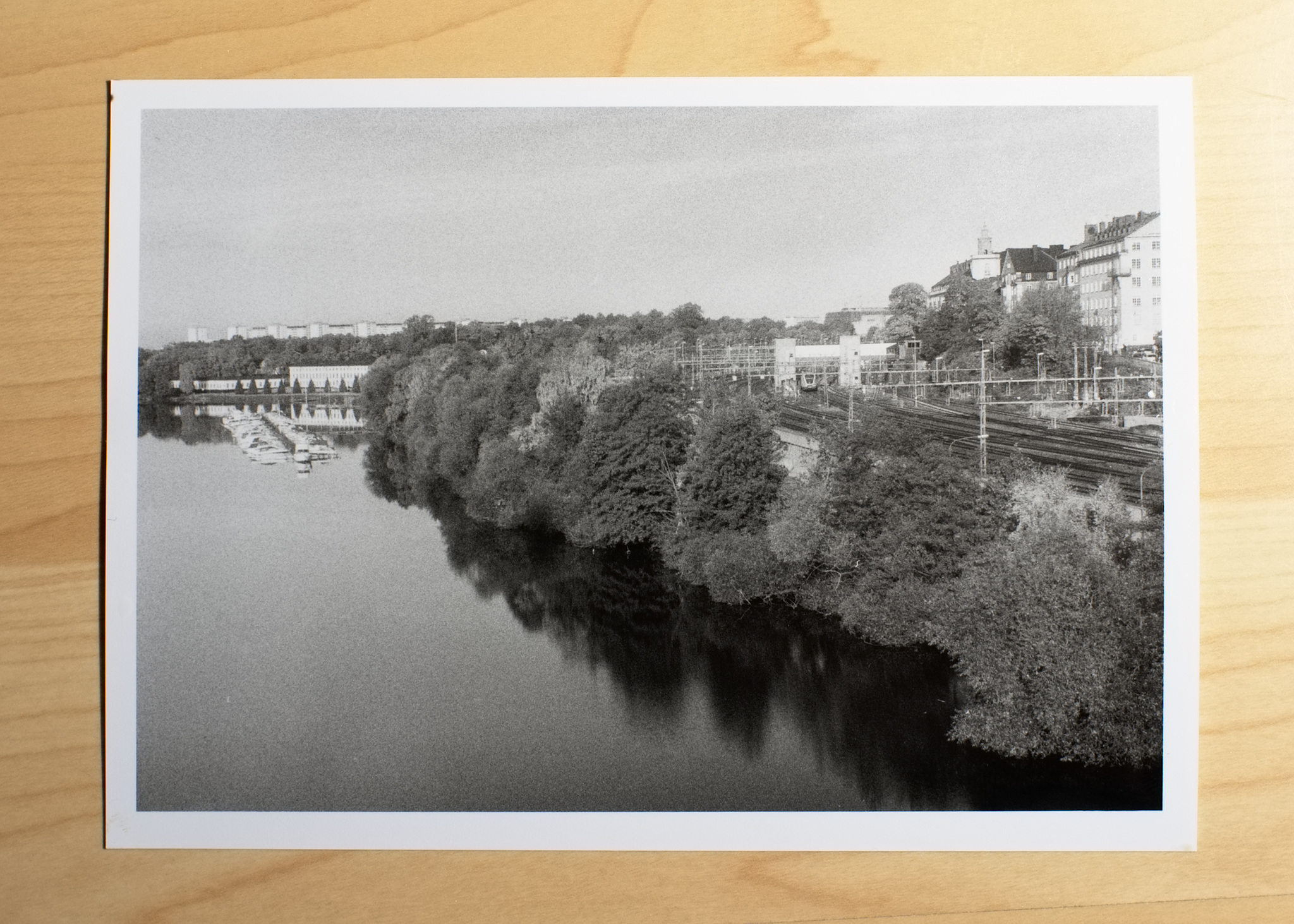
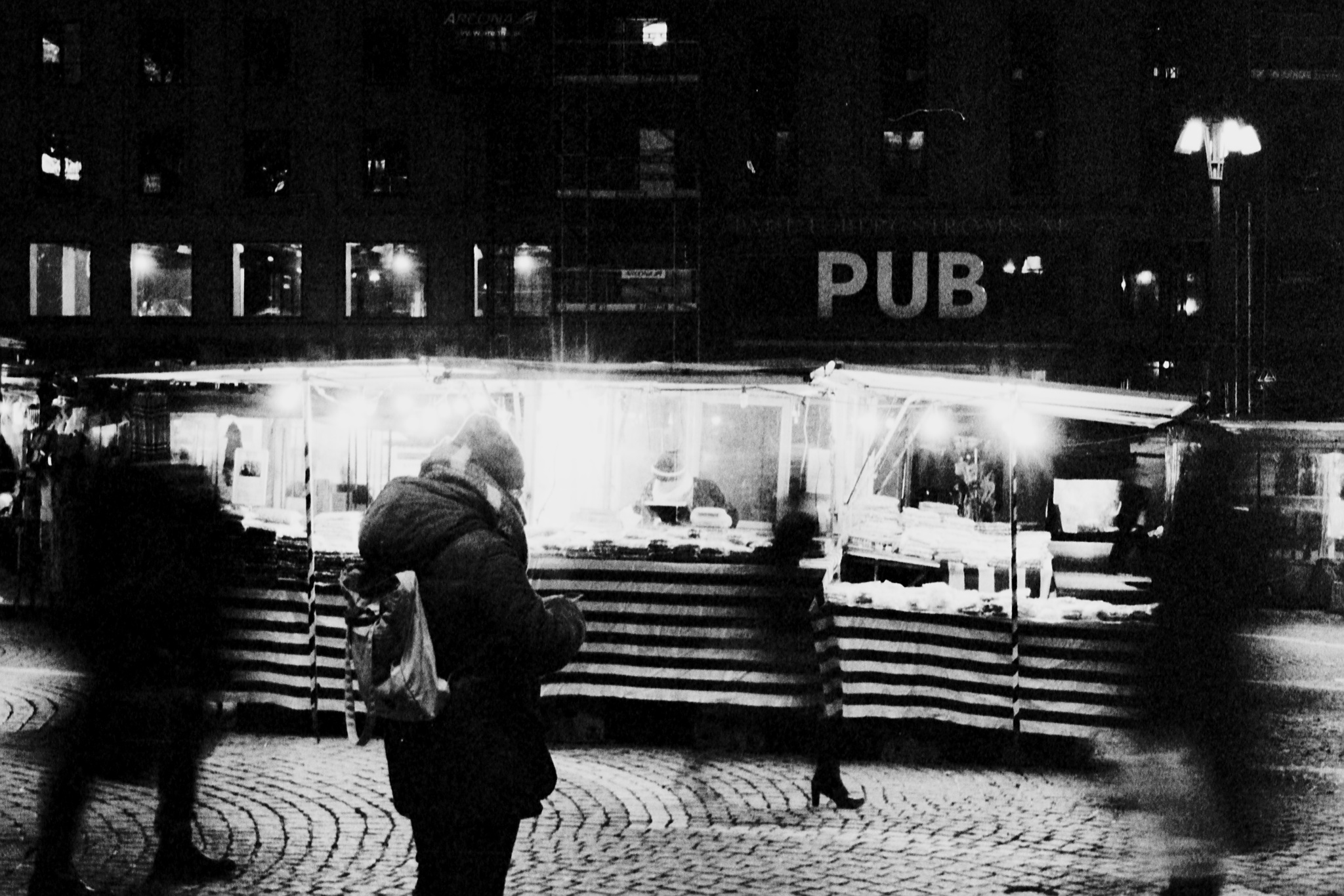
It's such a pleasure to use them: compact form factor, requires deliberation, they smell good too :)
The aesthetic quality of the images they produce is well worth the effort - pretty sharp when you need it but soft around the edges when aperture is wide open which can look lovely, nice color rendition, amazing bokeh.
I take a lot of digital photos but for me using vintage cameras is so much more rewarding.
I recently processed a box of old films I had been storing at room temperature for >15 years. Got some beautiful effects from the expired emulsions. Best (wackiest) results came from cross processing the old Velvia 50 medium format films.
Velvia is known for its strong colors and I was very impressed with how colorful the films were after all that time. Their longevity is probably why they still cost about $90-100 for a 5 pack of expired 120s.
Here's an example image https://imgur.com/a/nQ0ltav
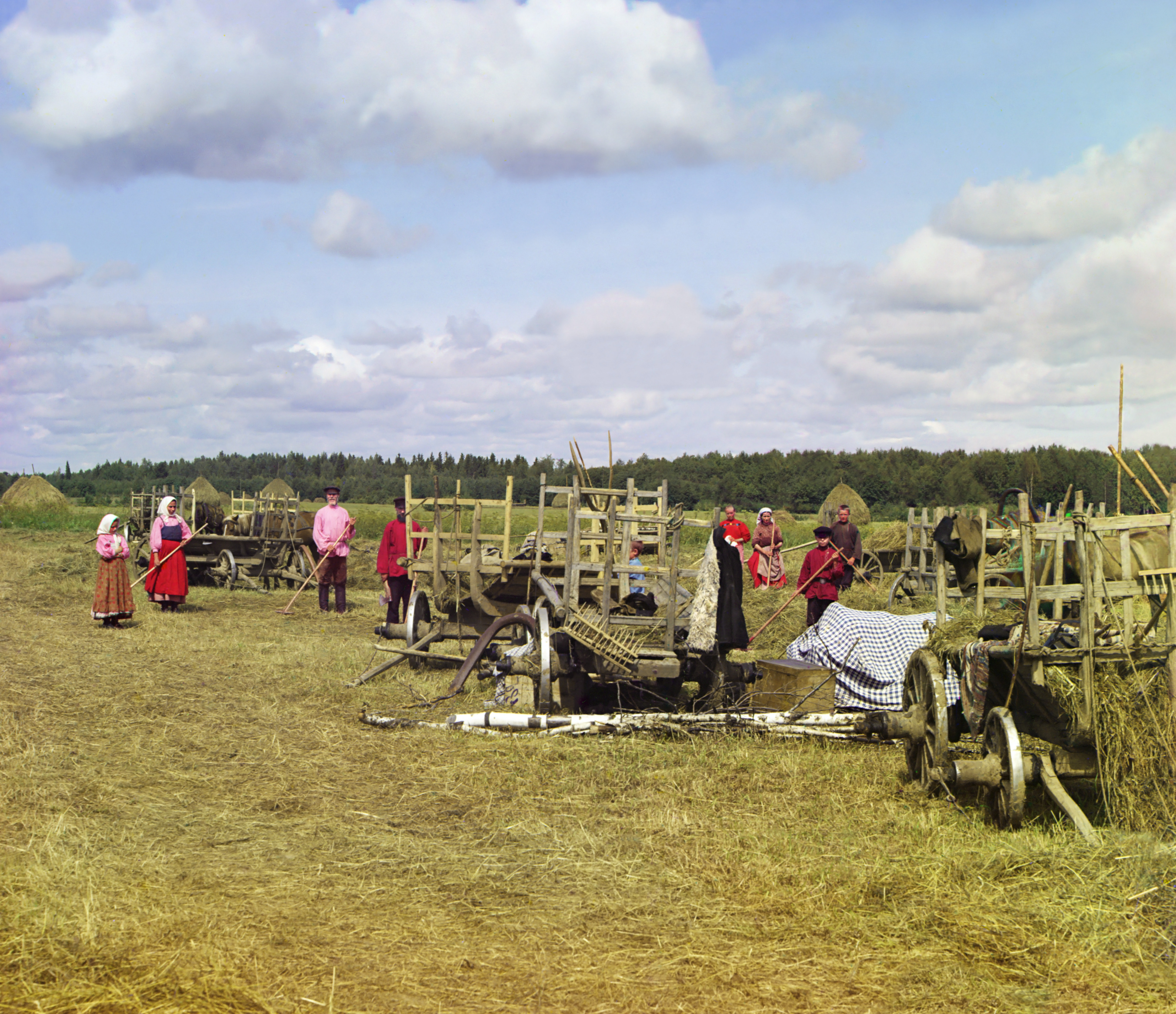
You should have a look into Autochrome photography. The photos look amazingly realistic for their age. For example, these are from 1913:
https://edition.cnn.com/2015/06/03/world/gallery/autochrome-...
Wikipedia also has an amazing collection of works by Sergey Prokudin-Gorsky:
https://en.wikipedia.org/wiki/Sergey_Prokudin-Gorsky#Gallery
From 1909:
https://upload.wikimedia.org/wikipedia/commons/f/ff/Gorskii_...
Autochrome of the 1909 Paris Air Show:
https://blogger.googleusercontent.com/img/b/R29vZ2xl/AVvXsEg...
Also Paris, 1910:
https://the-public-domain-review.imgix.net/essays/albert-kah...
[0] https://en.wikipedia.org/wiki/File:Portrait_of_a_Daguerreoty...
Even what is considered “full frame” today is ridiculously small from a historical point of view, when 8x10 plates were common (that’s 60x the surface area!) and not even the largest format in use.
Cell phone photography has made us used to imaging surface areas that are not even a centimeter on each side - it’s a miracle of engineering we can get decent pictures out of those constraints, but image quality is as low as it gets, even though the marketing tells us those are the most advanced cameras ever.
1: see the achromatic Takumar with quartz elements that was produced in a very limited run for scientific laboratories. And aspherical low aperture lenses like the leica noctilux which required hand grinding the aspherical element.
I'm going to dispute that. Given some constraints in both the subject and the use of the image, certain cell phones can really take pretty good pictures. I have a bunch of bigger gear and I mostly don't find it worth taking on trips any longer. Yes, it's older gear but I doubt I'd find it worth spending thousands of dollars to upgrade. I know other serious photographers who feel similarly.
They look pretty on LCD screens but once you print them they look awful compared to professional gear. Like light and day.
Cameras and lenses were technically capable of high-quality images, but actually making such a photograph required skill or luck; the results were otherwise blurry and poorly-focused. Studio portraits in those days used extremely bright lights to compensate.
With digital, ISO of 3200 or 6400 is nothing (probably better today with full frame). B&W film really topped out at about 400 in normal use and couldn't really be pushed past 1600 and even that required chemistry tricks and resulted in noticeably lower quality.
Pushing does increase grain; but using a larger format (6x7 or 4x5) reduces the apparent grain in resultant prints.
I can't say enough good things about HC-110 as a developer: pushes well just by increasing development time, shelf-stable for years as a concentrate, and not particularly toxic compared to other developers.
But it's been decades since I have done film processing. After I graduated, did a brief stint using an apartment half bathroom and drove me crazy after good school darkrooms.
[ADDED: I've never used B&W film emulsions from the past 40 years or so; they're presumably at least a bit faster than what I used. 1600 was pretty much the practical limit when I was shooting B&W on film.]
Rangefinders from that era are not point-and-shoot. They have two separated windows allowing light into the viewfinder and you turn the focusing mechanism until the two views of the subject merge perfectly. They use parallax to find the distance to the subject with a mechanism linked to the lens focus, hence the name rangefinder.
Point-and-shoot cameras from that era were fixed focus.
I have digitized family photos from a tintype in 1880 or so all the way to Polaroids from the 1960's and it is clear to me that peak consumer-photography was late-stage B&W photography.
I shouldn't have mentioned the tintype above (I just wanted to indicate the temporal range here) because I would exclude professional "portrait" photos. And my relatives were blue-collar farmers and factory workers in the Midwaste, so their "gear" was modest for the times.
The oldest "home photos" look poor and likely came from a Brownie or similar. But then a decade or so on and the photos take on a whole new level of clarity and sharpness. That level of quality persists until the arrival of color, Polaroids....
It seems we traded color for quality sometime mid-Century.
Absolutely. My parents have crisp B&W snapshots from their baby years in the early 60ies. They even have old B&W party snapshots from my grandparents in the 50ies, all of which look still great. Then around 1965, the snapshots become colored (not Polaroids), and the quality is... not as good. I wonder of the photographs just aged badly, or if they already looked like that 60 years ago. I also suspect that color film was much more expensive back then than B&W film, and the average consumer just bought the cheapest color films they could get.
There was definitely a period, when there were really crappy cameras (e.g. Instamatics) for the mass market which were far crappier than any random smartphone these days. And there were really good, often (West) German-made, cameras. I'd have to look up exactly when the good Japanese cameras came along.
I own some several Japanese medium format and love the photos they take.
I seem to recall that ergonomically it was a bit iffy too, but that may have just been the fact that I was more familiar with the Yashica.
I'd also speculate that because color film on average is less sensitive to light than b/w film, it led to more blurry photos at the time, especially when taken by the many amateur photographers with their cheap cameras.
Their first SLR, the Nikon F, came out in 1959 and quickly became a sensation with professionals. They’re built like tanks, and still very usable.
But, yes, even Leicas aside, Kodak Retinas among others where pretty darn good. I got my dad's Retina IIIc which I used until it just wore out eventually. And both the Nikon and Canon SLRs in particular were great once they came on the scene though some of the rangefinders from Olympus, Pentax, Canon, etc. weren't half-bad either.
As well as convenience for quality. 35mm -> 126 -> 110 -> Kodak Disc
I think most people would have had contact with old pictures from newspaper and books that did not prized image quality so you mostly see bad quality pictures with low dynamic range.
The most important pictures of the olden eras, in an artistic setting, would also be experimental photography which is not necessarily concerned with sharpness and traditional qualities, so you see weird stuff.
And, the main culprit, as for most of society misconceptions. Movies and tv shows, you have to age and crap out a picture to look old. I am certainly that the screwed up videotape effect will skew a lot of the expectation of old footage from the 80s-90s.
Put all of that together, there is where I think the expectation comes from.
I have the book Great War, Photographic Narrative. With images from the first world war, the quality of some of the images is outstanding. Those same images would've look terrible on old mass produced books and newspapers.
It probably comes from all the crappy dim, faded family photos from the 70's and 80's
Age can also be unkind to old photo's. Especially color I swear the dyes fade causing the colors to be muted and muddy. And tend to slowly bleed making them blurry.
Usually the cameras themselves are fine – we perfected optics enough to not be a problem on 35 mm film in the 1800s – it's the medium on which the image is recorded that is more finicky. However, if we put the old optics onto modern sensors, we would start to notice its problems too. I don't have an example at hand, but there's noticeable chromatic aberration (no problem on black and white film!) among other things.
One of the funnest things I've bought on eBay was a photograph of a circus elephant that he did.
I find it surprising and often understated how good is the UX of old film cameras and how well it holds up when compared to modern digital gear.
Simple, well designed, often very portable - you can take these for your next trip or for a street photography session and depending on your approach the process and the results can be very enjoyable.
One fun camera :D
It belonged to the grandfather of a friend. I sent it and the collapsible 50mm lens off and had the rangefinder mirror resilvered and everything cleaned and lubricated. Then I shot some pictures of my friend's daughter with what was her great grandfather's camera.
It's pretty cool that I can mount these lenses on many cameras like my new Nikon Z camera with a $10 adapter.
https://www.photo.net/forums/topic/483606-for-those-of-you-w...
https://rangefinderforum.com/threads/how-do-leicas-break.173...
I have wished for some means to deduce the camera a photo was taken with — or at least reduce it to a range or family of cameras.
In terms of aspect ratio though, as an example, a lot of that will come down to the lab the processed the prints as the negatives are no longer available to me.
EDIT: Some family photos from the 1920's. In the 3rd one, dated 1924, a woman sits with a 1920's camera on her lap.
Also, if there is a lot chromatic aberration and the image perspective seems somewhat corrected in one axis but not in the other, chances are it's from a disposable camera. (They often have a curved film plane to compensate for simplistic lens distortion.)

-FranceLeMoulin-Rouge-boulevarddeClichy_A7462-edit-double.jpg?fit=max&w=1200&h=850&auto=format,compress)
.jpg)