▲BloondAndDoom7 hours ago
[-] I feel like we lost humanity somewhere in modern world. I grew up in 3rd world country and if this were to happen, train would literally stop somewhere, anywhere. (With the assumption it’s safe from crewing into another train).
But the idea that you go 55 minutes just because of policy; and skip 15 stations is crazy to me. Again with the assumptions that it can safely stop somewhere for 5m and I’m pretty sure the answer is yes.
I have fond memories of train stopping close to my house for various random reasons and I’d just get out so I don’t have to walk back from the station. The modern world where everything is “safety issue” and “someone else’s problem” is where we lost our ways, and it’s never coming back.
I worked for a massive German company you heard of, this sounds more like the typical German philosophy of strictly following the process -- as absurd as it might be -- and refusing to take initiative for anything that is not explicitly defined as one's responsibility.
As a French, the culture shock was brutal and I never really got around that work attitude. I went through a similar issue back when I used to take a regional train in France, and the crew swiftly adapted by bending rules to accommodate a difficult situation caused by bad weather. I'm not sure this could happen today, but it was a thing 10 years ago, we used to trust the operators back then.
So much in German work culture - and also culture in general - is about covering your own arse. If you follow the procedure, even if the outcome is disaster, you are not at fault; you were just implementing the rules, and you cannot be held accountable. It's the fault of whoever came up with the rules, except that is usually not a single person, but some amorphous entity that ran through some decision making process years in the past. So, no one is really at fault or can be held accountable.
It's always some magical higher power preventing you from doing the sensible thing. One favourite excuse is insurance liability. We can't do the sensible thing, because the insurance wouldn't pay if something bad were to happen, even though the odds of something bad happening are virtually nil.
You can also observe this in German politics. "Oh, we absolutely cannot do <common sense thing> because the rules won't allow it." Well, you could change the rules, but then you would have to take some actual responsibility, and we can't have that.
That sounds a lot like industrial safety culture: blame the process, not the worker, so we can iterate on the safety built into the process if there is a failure, because doing so lessens the chance of future failures. It’s a great way to build airplanes.
reply▲The idea in the aerospace industry is that you should not blame the pilot, since pilot error became a all-catch rule no matter if there was design or system errors. The classical example is the button for the landing gear, where pilots continued to accidentally press it and crashing the plane. The engineers added guardrails to the button and the pilot error rate went down.
reply▲That's my dad who worked at NaSA doing aeronautics stuff said.
Pilots fuck up all the time so blaming them doesn't excuse anything.
And I find myself butting heads with people over that all the time. Coworker (smug satisfied voice) well if the end user fucks up it's not our fault. Me (trying not to sound really annoyed) yeah it's still our problem.
Theoretically ... in practice, Boeing's most rigorous days in the 80s and 90s were directed by empowered individuals in the manufacturing org, and when it went full "strict process only" in the 2000s and 2010s the quality fell.
reply▲I don't think that's due to following the process but rather systemic cultural issues. The process doesn't exist in a vacuum. There's a good faith meta process that needs to be followed to incrementally fix issues as they arise.
Bad faith actors and cultural dysfunction can break pretty much anything no matter how well thought out it might be.
> Bad faith actors and cultural dysfunction can break pretty much anything no matter how well thought out it might be.
U.S. politics today in a nutshell.
actionfromafar2 hours ago
[-] McDonnell Douglas merged with Boeing in 1997. Timeline checks out.
reply▲It's also leaving out that system only works (worked) for building airplanes because it happens (happened) to be an industry with a hugely passionate workforce. Switch it to contracted out wage slaves and 'the system' doesn't work. Because the system never 'worked', many passionate people worked via sheer force of will/desire/care/investment into the final product. It was about the people all along.
reply▲Industrial safety must (if it is to be effective) recognise that people are an important part of the process! They're so often forgotten, with disastrous results.
People need to be given timely information, communication channels, and authority to straighten things out when they go awry. That's good for safety!
Sort of, but the difference here is that it's really "blame the person who created the process, not the person following it". The people with the authority to alter faulty processes don't want to change it, even if it's clearly bad, because then they become "the person who created the process".
reply▲potato37328424 hours ago
[-] It's also a crap way to run a culture when you scale it.
You need to make the people best positioned to notice something is stupid responsible enough to make them say no fuck you because otherwise every oversight and edge case will be substantially more likely to cause harm because they have less skin in the game.
See also: Cops getting "paid vacations" for bad stuff.
Except a lot of the safety in any given process comes from the people: if technicians, pilots, and air traffic controllers were not empowered to assess the situation and make decisions then there would a heck of a lot more accidents.
reply▲potato37328424 hours ago
[-] >If you follow the procedure, even if the outcome is disaster, you are not at fault; you were just implementing the rules, and you cannot be held accountable. It's the fault of whoever came up with the rules, except that is usually not a single person, but some amorphous entity that ran through some decision making process years in the past. So, no one is really at fault or can be held accountable.
Worse. You can't even take responsibility even if you want to, that's usually against the rules too.
My favorite part of German work culture is watching an excel sheet together and going over the numbers.
My actual favorite part of German work culture is that meetings always have an agenda, that part is a delight when doing business with German customers.
Your meetings have an agenda? We just debate something and are stuck on some minor unimportant point that doesn't matter and the meeting goes into overtime and then we schedule 2-3 follow-up meetings where everything we said is now completely irrelevant because our assumptions were incorrect from the start. And then you finally get to work and you can't implement it like it was specified since everyone forgot that you can't really do X so you have to it some other way making everything that was discussed completely moot.
reply▲Sorry, the zoom meeting link has changed so now the meeting will take 4 hours and you must get the agenda by FAX.
(this is what happened to OP)
As a German I envy your meetings with Germans
reply▲... I had to take out a special insurance when working from home as a freelancer, and share evidence I had done so with my client as -- if someone slipped outside my house because I'd not swept up the snow somehow the company who was paying me would be liable for the insurance claim...
... Yep.
It's for similar reasons why everyone is up at the crack of dawn frantically shovelling snow outside their homes.
Rather spoils the fun of towing the kids to school on a sled when every 5 meters there's a perfectly swept bit you have to drag it across.
Don’t worry. You can drag them on the street! Safety first and all that.
reply▲> you were just implementing the rules, and you cannot be held accountable
That kind of explains why they tried to pull it of at Nuremberg. And why some nazis that weren't sentenced internationally got good jobs in post-war Germany. For Germans they weren't really at fault if they were just following procedures.
That's not the main reason though. The reason the denazification was mostly a sham is because a lot of federal positions required good contacts and experience in that field and you couldn't find anyone qualified who wasn't in the party. Based not just on first hand accounts on the family side but also lots of research. A lot of higher ups also were well connected so they got an already short conviction halved to released early in order to get a position in the government.
reply▲bratwurst30003 hours ago
[-] yes but there are so many
cases where they took the worst of the worst and gave them high profile jobs with way way way to much power for high ranking nsdap members.
Rheinhard gehlen and everyone around him is a something that could have been prevented.
And so many high class nazis where in such good positions because they where experts on anticommunism. For the americans and brits it was "safer" to give positions to exnsdap officiers then people from the SPD(socialists)
Gehlen kicked even the only high ranking spd member in secret service out
for god sake they even hired klaus barbie. that guy had entertainment partys where the guests could
torture jews homosexualls etc... and he killed most of french opposition.
Got hired from the bnd and cia as expert on anticommunism
Germany didnt change much..
fuck we even voted a full member of the nsdap as chancelor. Kurt kiesinger. Yes we had two Nazi chancellors!!
honestly the only reason the denazification was shit was because most people at power at that time where kind of nazis.
edit:// btw the DDR had somehow solved the problem and didnt had as much nazis in high position.
"I was just following orders," is a bit of a meme, but it's also true, and even more so in the context of Prussian-style military discipline. Disobeying an order was not an option. You carry it out no matter what, but the responsibility lies with the commander. It gets more murky for the civilians who theoretically could have walked away, but a lot of them had a similar mindset that they were just doing their jobs. And you have to keep in mind that all of the Nazi's racial ideology had been codified into law at the time. So you were once again just implementing the rules, even if those rules were actually harmful.
But what this episode also highlights is the opposite of this in the form of the American approach that is much more flexible and willing to bend the rules if necessary. Rightfully, the Allies could and probably should have brought everyone to justice, but they realised that a lot of the Nazi scientists were extremely valuable assets that they needed to get a leg up on the Soviets. So rather than execute them or put them in prison and throw away the key, they recruited them.
They got good jobs because the Allies did not really care about punishing the Nazis.
At the end of WW2 a strong West Germany to oppose the USSR was more important than punishing some middle manager and the quickest way to get the West German state together was to use a lot of the existing bureaucracy.
Didn't the Germans get in trouble for "just following the rules" back in the mid-20th century?
reply▲"I was just following orders." --Any German soldier after 1945
reply▲As far as DB goes, I'm pretty sure it's mostly an issue of systemic technical and consequently social collapse.
The system runs beyond its limits and consequently the culture collapses because the people inside learn they have no agency.
The German rail network is quite good on paper, with dense and high frequency connections even to relatively remote locations.
But keeping that functional (particularly with constantly rising demand) requires far more investment than it receives.
All the examples of great rail systems (France, Switzerland, Japan) are both simpler in network structure and invest more relative to their passenger load.
The privatization of the train system in Germany was a particularly insane disaster that is only now, 30 years later, being undone/repaired.
If you look at an org chart of the DB these days, the most fascinating part is that DB consists of almost 600 separate corporate entities that are all supposed to invoice each other.
Speaking with insiders, it appears that when the privatization happened, the new corporate structure took what was essentially every mid-size branch of the org chart and created a separate corporate entity, with cross-invoicing for what would normally normal intra-company cooperation. I think the (misguided) goal was to obtain some form of accountability inside a large organisation that had been state-funded and not good at internal accounting.
This fragmentation lead to insane inflexibility, as each of the 600 entities has a separate PnL and is loathe to do anything that doesn’t look good on their books.
Add to this a history of incompetent leadership (Mehdorn, who also ran AirBerlin into the ground, and who was also responsible for the disastrous BER airport build-out), repeated rounds of cost-cutting that prioritized “efficiency” over “resiliency of the network” etc. etc.
DB is currently undergoing a massive corporate restructuring to simplify the 600+ entity structure, but there has been a massive loss of expertise, underinvestment in infrastructure, poor IT (if you see a job ad for a Windows NT4 admin, it’s likely DB), etc. etc. — it’ll take a decade or more to dig the org out of the hole it is in.
wolframhempel4 hours ago
[-] It was a privatization in name only. The German state held 100% of its shares since the beginning. As such, it might have no longer been subject to the state specific demands of hiring etc. - but instead found itself in an uneasy tension as the only supplier of services to an entity that was something between a customer and a shareholder.
Which brings up an interesting question: How do you structure something with a large piece of infrastructure like a rail network in a way that could benefit from the market forces of competition and innovation?
> Which brings up an interesting question: How do you structure something with a large piece of infrastructure like a rail network in a way that could benefit from the market forces of competition and innovation?
A rail network is near to a natural monopoly. You can build overlapping rail networks, but it's complex and interconnecting instead of overlapping would usually offer better transportation outcomes and there's a lot less gauge diversity so interconnection is more likely than overlap.
All that to say, you can't really get market forces on the rails. Rails compete with other modes of transit, but roads and oceans and rivers and air aren't driven by market forces either.
Transit by rail does compete in the market for transit across modes. You can have multiple transportation companies running on the same rails, and have some market forces, but capacity constraints make it difficult to have significant competition.
> capacity constraints make it difficult to have significant competition
Thirty years ago, you would be correct. In the modern day, you could tie switch signalling to real-time auctions and let private rail's command centers decide how much to bid and thus whether or not they win the slot for putting their cars onto the shared rails. The public rail owner likely needs to set rules allowing passenger rail to pay a premium to secure slots in advance (say, a week) so that a timetable can be guaranteed to passengers during peak rush hour, but off-peak slots can and should be auctioned to naturally handle the difference between off-peak passenger rail and not-time-sensitive, more-cost-averse freight rail.
I believe modern economists are studying how ownership should be assigned. The thinking is that contracts and rules handle the majority of situations but emergencies and edge cases require an owner who has authority and whose interests align with the thing they control. And you want a mechanism to reassign ownership when the previous owner is incompetent.
In the case of a national train system, you may want to create a national entity to develop, coordinate, and make the physical trains and support technologies. You would create regional or metro entities to control the train network for their local area including the train stations. They coordinate with each other via negotiated contracts. Any edge cases or emergency falls under the purview of the owning entity. For example, the national entity controls the switch from diesel locomotives to the newest engine. The local authority is responsible for repairing the lines after a natural disaster.
If an entity is egregiously incompetent or failing, the national regulatory authority, with support of the majority of all the different train entities, takes control and reforms it.
> It was a privatization in name only.
Not, that "insight" again. Yes it was privatized and yes it is still completely owned by the state. "Privatization" is a term of art (in German) that refers to the corporate structure not the ownership. There are also public corporations in Germany, that are fully owned by random people: e.V. = registered association.
marxisttemp3 hours ago
[-] You can’t. Every attempt at privatizing rail is a failure with worse performance, higher prices, and an inevitable level of special treatment by the state due to the monopolistic utility-like nature of rail infrastructure. Not everything needs to or should be privatized.
reply▲This 100%. It should be seen as critical infrastructure because of everything it can enable when run well.
reply▲>invest more relative to their passenger load.
For Switzerland does this account for the almost double salaries or only absolute spending?
If you spend 1€ in Switzerland I imagine you get much less work output than for 1€ in Germany.
Raw investment numbers don't
necessarily matter, but the productivity of said number. Even if things are more expensive in Switzerland, if they make efficient use of said investment, then it can work out ok (or even better).
I have no idea if this is actually the case, but you have to take that into account or Switzerland would not be as successful as it is. Higher incomes have historically been a symptom of productivity (and while median incomes and productivity have decoupled, especially in the angosphere, it is still usually correlated).
>Higher incomes have historically been a symptom of productivity
If I go to Zürich I get a burger for 30Fr that I can get in Southern Germany for 15€ and in Berlin for 8€. That is with roughly the same quality.
I'd say past productivity leads to network effects and investments in one area that boost local salaries and decouples them quite strongly from current productivity.
My previous company had a per-dollar extremely unproductive location in silicon valley. The people there weren't at fault. You don't magically become more productive because you live next to SF.
That's the crux: we must invest in trains instead of planes.
reply▲I have no idea how planes are the dominant form of transport for relatively short routes (like within the bounds of a large country or to an adjacent one) and how even in Europe the train networks can be a bit of a mess.
Like surely it’s easier to run a railway network when compared to the insane complexity to safely operate an airport and all the work that goes into plane maintenance and pilot training and so on.
peterfirefly4 hours ago
[-] You need a lot of infrastructure for trains (and a lot of it isn't even used all that much -- it's not like all rails have a train passing by every 5 minutes). You also can't get much use out of your rolling stock because the speeds are fairly slow. You also don't have the same flexibility as planes have regarding routes.
The upshot is that trains are a lot costlier than most believe think and most railway routes require state subsidies (with goods transport usually being an exception), whereas air traffic works so well it can be taxed heavily.
Air traffic is not taxed heavily compared to other modes of transport - on the contrary, it is
very heavily subsidized (at least in Europe): Regional airports often strongly depend on state subsidies, airlines are exempt from petroleum taxes, flight tickets are VAT-exempt.
In Germany (and also e.g. Switzerland), long-distance trains are expected to run either at cost (or make a profit). Short-distance trains (regional transport) are usually subsidized.
Another factor is that building new rail lines requires eminent domain and acquiring land across multiple jurisdictions etc.
reply▲SilverElfin3 hours ago
[-] Why not invest in a vast 24/7 high frequency electric bus network instead of the big infrastructure costs of trains?
reply▲Sounds neat but what kind of range limits would that impose on each trip? Switching from one means of transportation to another, even if both are buses, increases the total travel time significantly. Not to mention all the hassle involved for passengers.
reply▲bratwurst30002 hours ago
[-] trains can be superfast. For example a tgv from strassbourg to marseille is 5-6h. Same with car is for me 8h. Bus is even slower so I would wildy guess 12h. Plan is btw 1 1/2 hour.
reply▲No amount of money will overcome the fundamental issue: monopoly.
Airlines are subject to market competition since any competitor around the globe can spot a poorly run route and buy their planes into those slots. If they can execute more efficiently than you, they can afford to lower prices (or increase the level of service) more than you, and thus put you out of business.
Trains do not work this way. No amount of investment can overcome the cushy institutional-rot, laziness, and demotivation that inevitably results from being a monopoly, as most train routes are not subject to competitive forces due to the real world constraints of the infrastructure needed.
China and Switzerland seem to drive fine with trains.
reply▲Why?
Planes are faster, and there is actual competition keeping prices down. There is no competition on railroads, no accountability, no nothing. More importantly, railroads have to be managed centrally to work. And this makes them overwhelmingly complex, resulting in an ever-growing bureaucracy.
Air travel is decentralized, and while individual airports (cue: BER) can get screwed up, it doesn't cascade through the whole system.
We just need to add a bit of carbon pricing to reflect the true price of flights.
The German rails network went downhill when they decided to socialize the losses and privatize the profit. Failure is blamed on the grunt workers, which are absolutely not interested in taking responsibility as a result of this. The fact that there are rotting railways everywhere and the DB waits until it gets so bad for cities to step in and take over part of the cost is a wonderful example of this. The new ICE's speed is actually lower than previous generations.
I have seen this systemic problem in other domains I worked in. The problems are very similar, and at the end of the day I can somewhat relate to the workers attitude of "why should I lean out of the window if I get punished anyway". But in some cases the workers are unfireable and oftentimes it is exactly that attitude that let the management get away with the terrible working conditions (most of the times more psychological than physical abuse) so it feeds into each other.
Just an aside, as a railway-nerd:
> The new ICE's speed is actually lower than previous generations.
While not the fastest ICE, the new ICE-L (assuming you refer to it) with a top speed of 230km/h, is not actually slower than what it is supposed to replace on most routes: InterCity trains, topping out at 200km/h.
ICE-L, btw, was planned to be a IC train, but just like before with IC-T/ICE-T (same top speed of 230km/h), and IC X (ICE 4), DB management has a tendency to decide next-to-last minute, that new vehicles must earn money and thus get rebranded ICE, which is both more prestigious and (at least in a fictional world without "Sparpreis") pricey.
TL;DR: This would be outrageous if ICE-L was to replace ICE 3 (neo; 320km/h +) services - but it is not.
darubedarob6 hours ago
[-] Add to that the transport buisness beeing marginal to the company who is mainly a immo speculation company trying to sell the strips of inner city land they hold.
reply▲Immo being real estate (Immobilien), for the curious.
reply▲Could be. It used to be that to get phone service in Germany could take up to a month after putting in the order, that’s when it was state controlled. After the reforms installations were quicker.
So to me, there doesn’t seem to be a panacea except to hold the services accountable in some way.
That's a different situation / scenario and addressed a different problem.
The government is the most efficient and effective at big capital spending and with what I would call static operations. Competitive private entities are the best at delivering value on the front-end.
Monopolist/cartel private entites combine the rapacious nature of rent seeking with the lazy inefficiency of bureaucracy to great a giant ball of failure. Effective privatization requires either creating a framework for a robust competitive landscape OR tight, effective regulatory control. There's no universal correct answer.
If competition is in place and companies can win or lose, they will move mountains to yield marginal gain. If you let them get fat & lazy, you will need to move a mountain to do anthing -- even make more money!
> If competition is in place and companies can win or lose, they will move mountains to yield marginal gain.
... in the short term, happily screwing over society at large and possibly even themselves in the medium to long term. Perverse incentives are everywhere.
> After the reforms installations were quicker.
And everybody has the same "market" price.
PurpleRamen6 hours ago
[-] The general reason is, the rule exists for a reason, and the "low worker" does not understand the bigger picture, so you should follow it blindly before doing something harmful you can't foresee. It's not always working well, but to be fair, also not always bad. Knowing how much you can stretch the rules can be an art which takes a long time to acquire.
reply▲Some cultures are more sticklers for creating and following rules and bureaucracy than others, though.
A good example: Here in North America I'll jaywalk without a thought if there's no traffic. In Germany, you'll get grandmothers calling you a child-killer for setting a bad example if you did the same.
Another example: Both France and Germany spend roughly the same amount (in raw Euros) on their militaries. France (which ALSO spends and develops a lot of their own kit) has a functional and effective military, including the only non-American nuclear aircraft carriers, and a bunch of nuclear attack and ballistic submarines and it's own nuclear deterrent. Germany is barely able to maintain their much smaller infrastructure because of its ineffective bureaucracy (there was a scandal a few years ago where over 80% of their euro fighters were combat ineffective due to lack of maintenance).
Of course, the very idea of jaywalking was created to remove the obligation to not kill people from drivers and shift it to the very people being killed, but this doesn’t seem to bother the meddling grandmothers.
reply▲potato37328424 hours ago
[-] These are generally the same boot licking demographics who'll sit and wait out a 2min light cycle at 1:45am rather than treating it like a 4-way stop. Putting their money where their mouth is puts them head and shoulders above the types that tend to dominate the discussion on such issues.
reply▲systemtest53 minutes ago
[-] I was in Germany once at a red light for a pedestrian crossing. After the last pedestrian had fully crossed the street and the pedestrian light turned red I drove off. I did not wait for my own light to turn green which is typical in my country.
The person behind me flashed their lights. Cultural difference I guess. Why wait when there is nothing to wait for.
That’s not boot licking, that’s “I don’t want to get a ticket, and just because I don’t see a cop doesn’t mean there isn’t one.”
reply▲potato37328424 hours ago
[-] Fine then. They drive the speed limit in the left lane or whatever. Point is that the people who advocate for the rules in obscenely trivial situations when deviating them them is in fine taste tend to be drawn from the pool of "robotic rule follower with no extra thought given" type people. Which has the side effect of making them consistent with what they preach.
reply▲> "In Germany, you'll get grandmothers calling you a child-killer for setting a bad example if you did the same."
Yeah, some Bavarian villagers can be hylariously weird. I, personally, have jaywalked all my life growing up in East and West Germany, and I only got "the lecture" twice: once in deeply pious Bavaria, and once in... Spain. Both involved the rolemodel-shaming routine as kids were to be seen, but only one came with a small fine attached.
> "Here in North America I'll jaywalk without a thought if there's no traffic."
Most likely not a POC and not from NY or Washington D.C., I see (I'm reporting for a friend). Ah, anecdotes. The spice of life!
> A good example: Here in North America I'll jaywalk without a thought if there's no traffic. In Germany, you'll get grandmothers calling you a child-killer for setting a bad example if you did the same.
This varies wildly in Germany. In Hamburg, at 7 - 9 in the morning near schools or kindergartens with kids around, many people are following good traffic behavior. At 9 on a university campus, or at 9 at night no one really cares.
Note that what is eschewed and illegal is crossing at a traffic light when it is red. Just walking 50m away and crossing there is fine.
reply▲Nobody cares if you jaywalk as long as no children are around. If there are children around, most people will avoid crossing a red light even if they otherwise would cross. But that's not a rule-following thing, it's a "don't set a bad example to children" thing. It's easier to teach children the rules about how to behave in traffic if you have fewer adults obviously violating them.
reply▲That would make sense, except that one of the universal rules of childhood is, "Adults get to do things you don't get to do, usually for damn good reasons, so get used to it." Every child knows this in their bones, even when they don't like it.
reply▲bratwurst30002 hours ago
[-] Kids are stupid and follow what adults do. If I judge that I have the time to cross the street at red light without getting hit by the incoming car doesnt mean that the kid standing next to me is even seeing the car and crossing right after me.....
Showing kids good example is good. What you mean is showing them bounderies.
Getting shit drunk in front of kids and telling them how much fun it is but they cant do it is behaving like a child
For anyone who likes trains I can recommend The Train (1964), it's a fun little war movie with Burt Lancaster about French resistance in 1944
reply▲Yeah, I think people who have not experienced the system have no idea how absurd the German process mindset is. If it's not part of the process, it's impossible - damned what the reality on the ground is
reply▲Although Germans are famously methodical, my experience with German bureaucracy was that it's quite flexible. They will break you, and when you finally give up and seem like you're about to cry, they will roll their eyes, and oblige you, stressing how exceptional and magnanimous they are for letting you get what you want. In reality, they were rooting for you the whole time, but did not want their flexibility to be taken for granted.
I document German bureaucracy for a living. I cannot stress enough how "vibes-based" the entire thing is. Half the job is convincing bureaucrats that you're either overprepared or litigious to be worth the trouble.
mothballed35 minutes ago
[-] The best strategy I've found with such bureaucrats is to bike shed them with an obvious but easy problem that you fix with much adieu so they can feel like they've found you out and feel like they've done something. Meanwhile they will ignore all the subtler things that might be much harder for you to deal with.
reply▲coderatlarge2 hours ago
[-] i love that meme which shows three identical paper clips in a row but one is upside down relative to the others which is a minute difference. the caption reads “chaos German style”
reply▲> "[...] this sounds more like the typical German philosophy of strictly following the process -- as absurd as it might be -- and refusing to take initiative for anything that is not explicitly defined as one's responsibility."
Neither absurdity nor "German philosophy", but just stock-standard safety and security culture in action. Or more specifically in this case: generelle and objektspezifische Dienstanweisungen (general and location-specific administrative instructions or regulations) [1]. You don't follow them, it's you who's on the hook. :)
And when was the last time anyone here visited a railway control centre in a metropolitan area? Yeah.
1. [https://de.wikipedia.org/wiki/Dienstanweisung]
potato37328426 hours ago
[-] Reminds me of this.
https://www.youtube.com/watch?v=B3EBs7sCOzo
What really ought to bother people more than it does is that within just about any white western country/culture you can run the same comparison with "decently well off" being the german side and "everyone else" being the english side.
Reminds me of being en route with Lufthansa to Germany, needing an emergency landing in Turin, being shepherded onto a new working plane by Italians, then continuing to Germany where the whole plane load arrived without tickets from Turin...
The gate people tried to tell us it was impossible to be there without tickets, as if we were somehow collectively hiding them and a bit of persuasion would convince us to find the non-existent tickets! Not one person found they had a ticket, despite this allegedly being impossible.
The German philosophy is also very much prevalent in Sweden.
reply▲HolyLampshade5 hours ago
[-] I worked in the Swedish office of a multinational for a couple of years and the one experience I had where Swedes were selling a complex multi-million euro project to Germans was one of the most bureaucratically filled initiatives I’ve ever experienced in my life. Not sure if the project ever really took off, but I’m thankful I was able to avoid it beyond the initial week of discussions.
reply▲<the typical German philosophy of strictly following the process -- as absurd as it might be -- and refusing to take initiative for anything that is not explicitly defined as one's responsibility>
you summarized my 5+ year experience living in Germany with one sentence in a way that I have never found the words for - thank you, really, thank you
I feel that in Germany, the original intent of the many rules, processes, and procedures has been lost. Employees are trained to operate such that every situation is governed by a rule/process/procedure, and their job is to look up the situation in a massive leather-bound book of branching rules, see which rule applies in the given situation, and then… apply the rule. But, they will do this only if they assess that helping you falls under their job’s responsibilities. Sometimes your situation is neat and clean, and was what the rule-writers thought about when they wrote the rules. Sometimes, not.
TLDR: if you have an edge case in the German bureaucratic system (forms at the doctor’s office, Deutsche Bahn travel troubles, closing a bank account), you are f***
It is certainly my biggest dislike factor with my stay in Germany, and I'm still struggling to come to terms with it: do I dislike it enough to compel me to move away? is this something I can accept? How much can I influence and improve things that I directly interact with?
It seeps in everywhere too, with almost all aspects.
Day-to-day with restaurants, cafe, shops. Almost all interaction feels like it's actively checked if it's in their process or job description. Shop staffs are typically disengaged and can't really help you with anything outside the normal process.
Healthcare, both receptionist and doctors. You can see the rushed service because they are only compensated for limited amount of time by the state insurance. This took me a while to figure out; the process really defines what treatment you get, with what equipments, as well as the duration, and they have to do their best with the constraints put by the process.
An example: with Wurzelkanalbehandlung, the process says (at least back then) only 1 hour of Laborkosten can be compensated by the state insurance. This means if the dentist took more than 1 hour to work on you, that would be done at their personal loss, and thus the incentive to rush the procedure.
Going private helps (they tend to be more relaxed after the mention of of Privatzahler, and gives you access to newer equipments not yet acknowledged by the state insurance processes), but you still have to research, find, and pick the right practice.
Bureaucracy, administrative. You often have to deal with clerks that just go "I just work here", the rules says this and there's nothing I can do, throws hand in the air. Goodbye, next person please!
In day-to-day work, I can also see it. New hires tend to be more into the work, and questions things, but the system does push everyone to just follow the process and not do anything more. I've seen my colleagues slowly shift into this mode, delivering what is outlined, nothing more, not questioning the intent behind the work (or at least, doing it much less than before, because the system does not incentivise that).
I would summarize Americans (and perhaps most English speaking countries) as perceiving this mindset to be callous, ineffective, and a dereliction of autonomy.
But I'm interested in how Germans perceive Americans in reverse? If shop staff went out of their way to help them find a product, shoot the breeze, or recommend a lunch spot, would Germans tend to see this as being overzealous? Would it cause embarrassment, or be a pleasant surprise? Just curious.
I tend to view shop staff having a random talk with someone while I’m waiting to purchase or ask something as a dereliction of duty. If you want to catch up with a friend you can do it on your own time.
reply▲The difference in healthcare between private and public insurance is, as far as i know, because if a doctor sends you for some test or something that your insurance feels was unnecessary then the doctor has to pay for it with the public flavour. At least, that’s what I heard but could be wrong.
reply▲Kim_Bruning5 hours ago
[-] Every country is different and you need to learn slightly different ways of dealing with them in each. On a bad day it can be pretty exhausting.
It turns out, people everywhere want the same things, in the end. They just go about them differently.
In Germany, it often helps frame it as both of you trying to work with the rules together; as a framework to build within and on, rather than a cage to hold you in.
Doesn't always work. Nothing works all the time, (especially if the other person is having a bad day themselves and just wants it to be over). But if it helps even once eh?
bratwurst30003 hours ago
[-] Frenchman here and so true. I was taking the bus and it was stuck in traffic and I was like "hey can you let me out I life right in that street and shit aint moving" .... no fucking way. had to wait 10 minutes and then walk back to my place... driver was completly
ghostinh me after he said the magic german words " I am not allowed to do this".
In france they Busdrivers let me out between stops if I ask them before.
Germany is crazy rule
obsessed. they also have the crazy mentality that if you put it into rule problem is solved xD
If you don't know german culture, this story might be hard for you to imagine. Fact is, germany has a massive stick up its ass. If there is a written rule, they will follow it, no matter what.
reply▲A German saying "I was just following orders" sounds scary if you think of certain olden times.
reply▲I feel the same. I was in Kuwait city a few days ago and decided to learn their public transport system which is buses only but was pretty extensive and abundant with good google maps integration.
When you get on the bus there's a big sign stating the rules of riding the bus which include strictly stopping at designated bus stops ONLY and threatening fines. For the rest of the day I watched every bus driver stop anywhere they like if a person hailed the bus, allowing people to get in while waiting in red traffic lights, and if you talked to the driver he'd drop you off anywhere you wanted as long it's possible. Those drivers make nothing from this so they are doing it because this is life and also because there's no real enforcement against it. Also you can get in through the exit doors and leave through the entry doors, whatever you like.
I decided I feel ok about this and don't want it to change
Why NOBODY pulled emergency stop
reply▲Venkatesh Rao offers the following definition of the "Fourth World"
Fourth world: Parts of the developed world that have collapsed past third-world conditions because industrial safety nets have simultaneously withered from neglect/underfunding, and are being overwhelmed by demand, but where pre-modern societal structures don’t exist as backstops anymore.
This is what this story reminds me of.
Isn't that basically what happened to the USSR? (Yes not technically "first world" but highly industrial and bureaucratic)
reply▲reply▲I think this is relevant because the colloquialism of it meaning "developed" versus "undeveloped" doesn't work when you try to build on top of it
it's impossible to build on what Third World means or add lore like Fourth World when the definition is on a shaky and now non-existent foundation, while much of the unaffiliated world is highly developed now.
Yes. Also, fitting the USSR into the extended framework, by not recognizing that it already was
in the framework to begin with.
IIRC Wikipedia says the term was coined ca. 1950s, so it could be argued that the USSR's decline was already factored into the term.
> IIRC Wikipedia says the term was coined ca. 1950s, so it could be argued that the USSR's decline was already factored into the term.
What? The Soviets got the bomb in 1949 and launched Sputnik in 1957. That makes no sense.
That success was not evenly distributed.
reply▲QuercusMax47 minutes ago
[-] Regardless, the Soviet Union was very far from collapsing in the 1950s. Again, what are you talking about?
reply▲People in the USSR at least had the good fortune of already living in a world where they were highly adept at recycling and barter and maintenance, and in the case of the chechens also community self defense.
I think most of America would be fucked as most people don't know to how to do anything but their job plus buy things with money from their job. The top 25% of handy people might be able to change their own oil and that is it (not that they can't learn more, but it takes time).
potato37328424 hours ago
[-] >I think most of America would be fucked as most people don't know to how to do anything
Most of America would be substantially less fucked than the slice of mostly officer workers who mostly have enough money that "spend money rather than upskill or barter" is their default mode of operation you see via HN.
Someone already assigned "Fourth World" to stateless nations, so it's probably fifth world by now.
The developed world does have decaying infrastructure but moving it between the private and state sector has caused problems. As has lockdown and other international policies. Our local government's main interest seems to be in shutting streets off and designing bad cycle infrastructure that is little use to cyclists (I am one by the way). It is letting our streets fall to pieces and spending lots of money erecting physical blocks.
This is just silly. The German train system has problems. Does that mean total civilizational collapse? No, it doesn't.
reply▲Collapse is the other end of the spectrum. This is an institution whose practices/policies only serve itself instead of its customers/purpose.
It's progress, taken to its extreme. From a certain point of view it's effectively the same as collapse.
I am sorry but this is not Rao's but Umair Haque's and he considers the UK and the US Fourth World.
reply▲Scotland, Wales, and Cornwall are fourth world stateless nations.
reply▲There's no indication of any failures of the industrial layer in this story. The train was working, it didn't crash into anything, everyone was safe.
reply▲Safety failures are not the only type of failure.
reply▲The train worked, the railway did not.
reply▲I feel like we lost humanity somewhere in modern worldI feel the same. It is easier to hide behind rules, regulations, bureaucracy etc. Not saying we should stop following rules, but using a bit of common sense and having a bit of compassion would go a long way.
I also remember reading about a train that Japanese railways kept running, just for one kid, she took the train to school. They kept it running until she finished school, just for her (I know, someone is going to point out the inefficiency, cost etc about this story, but that is a separate conversation). I suppose stories like these are going to become rarer and rarer as time goes by, as everything has to be "efficient" and everyone has to follow some "rules".
reply▲I think you are mentioning a viral but incorrect story: a station was scheduled to close at a given date, a student mentioned in an interview that it will close after her graduation, but then some news sites claimed that the date of the closing was related to the graduation. The station was also used by a few residents.
https://en.wikipedia.org/wiki/Ky%C5%AB-Shirataki_Station#In_...
The story is a bit suspect in that surely it would be more efficient to just hire her a taxi once a day. Even an expensive Japanese one.
I suppose it would be slightly inconvenient to her to change habits, as well as a bad precedent. Still, hard to accept there was no additional factor involved in the decision.
> I grew up in 3rd world country and if this were to happen, train would literally stop somewhere, anywhere.
I'm from Bangladesh, and the attitude you're describing is one reason why the country is poor and a mess! Deviating from the schedule for the sake of a single person is completely insane and maddeningly inefficient. It's classic third-world mentality. In a good country, the system would never tolerate such deviations. In a really good country, someone wouldn't even ask for such accommodation for themselves, because it would be shameful to inconvenience others even slightly for one's own sake.
That seems pretty wildly orthogonal to me.
Did the individuals and industries that truly drove fabulous innovation and development in the first world REALLY do it from a mindset of "it would be shameful to inconvenience others even slightly for one's own sake"? There are an awful lot of stories of rulebreaking out there... "The Wild Wild West" turned into some of the richest parts of the world, that name doesn't suggest that a society needs to follow the rules to the point of extreme shame to avoid staying poor.
It's not orthogonal. If you look at societies that industrialized early, their social development diverged hundreds of years before industrialization actually happened. When my dad was born in 1951, 90% of the population of Bangladesh lived in villages in extended kinship networks and multi-generational households. In such an environment, the informal rules of families dominate society. Bangladeshis have a very relaxed attitude towards time and rules. It's not a big deal if you're late in my dad's village, because everyone knows you and that you'll arrive an hour or two after the official time and will plan accordingly. If you inconvenience someone, it's not a big deal, because you're all family and you'll reciprocate the accommodation another time. (That's a key point! Kinship bonds form a kind of collateral that ensures that accommodations will be reciprocated in the future.) Plus, the country is blessed with three growing seasons, so nobody is in a hurry anyway! And if you're persistently causing problems, it will percolate to higher ups within the families and they'll set you straight through informal processes.
Contrast somewhere like England, where, for whatever reason, extended family networks began breaking down as far back as the middle ages. People in England were living in small nuclear family units back in the 14th century. When your neighbors aren't related to you, that forces people to rely on formal rules and procedures. You can't count on future reciprocity backed by the collateral of kinship ties. And if someone is causing problems, you need formal systems, based on rules and procedures, to deal with them.
These formalized systems are, in turn, far more scalable! You can plan and organize civilization building when everyone is socialized to follow formal timetables in a way that you cannot when people are socialized to follow the informal timing consensus. And the lack of individual accommodation is a feature when you scale from small networks of a dozen or so related individual to millions of people moving through the London Tube every day.
A small amount of rule breaking is tolerable, even beneficial, within a society where everyone otherwise rigidly adheres to rules.[1] But there is no developed society that isn't rule-based at the baseline level. In some places, like England, this rule-focused culture developed organically. In other places, like Japan, there was a deliberate effort to destroy extended family networks and clan structures and replace those frameworks with systems of formal rules and procedures.
[1] America is a good example of a society that is less rules-oriented than say Japan, and arguably derives some benefits from that. But even in America, we pay a price for that. Americans just aren't as good at large scale social organization as the Japanese or Taiwanese, and we compensate by structuring our society in a more decentralized way where less such organization is required in the first place. Ronny Chieng has a funny bit about how New Yorkers try to force open subway doors that have already closed: https://www.youtube.com/watch?v=ifX0oafDe3Q. This behavior, multiplied by thousands of occurrences per day, slows down the whole system.
low_tech_love6 hours ago
[-] I’d say it’s mostly a North-European thing, not the whole world. I am a latin american living in Sweden and the overwhelming lack of empathy and humanity you’ll experience in the healthcare system is borderline unbelievable (until you learn to expect and deal with it). They trust the system so much that whenever it doesn’t work, it’s basically ”well bummer”. You become the 1% for which the system has failed, and you’re supposed to just take one for the team (since everyone else is having a good time anyway). The thing is simply that you have to learn to see the good side of the system and understand that you can’t have the cake and eat it too, unfortunately.
reply▲igsomething3 hours ago
[-] As another 3rd world citizen living in Northern Europe, I usually describe it as "processes and rules over common sense". They understand your situation, they agree with you, they can solve your problem, but they will not do it because it goes against some obscure rule, or it would not follow a specific mandatory procedure step by step, and who knows what are consequences.
reply▲> I’d say it’s mostly a North-European thing,
I think it's a "busy tracks" problem in general, which yeah, is a problem in Europe in general. You can't just stop a train in the middle of some track, there are a bunch of other trains coming too, who can't just pass unless you get to a place where that is possible, which isn't everywhere.
None the less, the rest of what you say is true of Sweden, but I don't think it's the reason a train refuses to stop on some train tracks.
> the overwhelming lack of empathy and humanity you’ll experience in the healthcare system is borderline unbelievable (until you learn to expect and deal with it).
Curious to hear what strategy you've learned over time.
There's a saying
"In a developing country nothing works but everything is possible. In a developed country everything works but nothing is possible"
In Lord of the Rings, fellowship of the ring when Gandalf arrives in Shire and Sam runs to meet him he says, "you're late!" to which Gandalf replies, "Deutsche Bahn is never late but arrives precisely when it means to".
potato37328423 hours ago
[-] The quality of culture and people you're dealing with has a huge multiplicative factor as well.
"I'm going to manufacture precision optics at competitive prices, right here, and I'm gonna tool up a factory to do it" is bold but believable in Houston or Dallas. It's a fucking joke in Trenton or Newark.
Likewise there's a whole bunch of ex-soviet 'stans and random east asian countries where such a statement is far more believable than middle easter, african and latin american ones that are of comparable GDP.
And in Germany - it seems - nothing works and nothing is possible?
reply▲> I feel like we lost humanity somewhere in modern world. I grew up in 3rd world country and if this were to happen, train would literally stop somewhere, anywhere. (With the assumption it’s safe from crewing into another train).
While Iran is not a third-world country per se, you'd be surprised how many times the bus driver would stop at random locations closer to passengers' destinations as well as bus stations.
There's more flexibility in day-to-day life of Iranians; people are expected to follow the rules but there's also this ancient concept of "morovvat" in the culture which encourages self-sacrifice for the betterment of others. Ask any tourist who's traveled to Iran and they tell you about the hospitality of Iranian people; e.g., you ask someone how to get to a place and they literally pause whatever they were doing and walk you to that place so you don't get lost!
It's strange how the image of Iran has been stained by the theocratic government (which Iranians protest against many times...).
This has nothing to do with lost humanity.
In my experience, this doesn't always happen, and I say this as someone who traveled very often on that same RE5. The situation is what it is (poor maintenance, etc), but the main issue is that the tracks are shared with freight trains impossible to stop given their weight, so to avoid collisions and have a nice (albeit late) Christmas, they made that call to play it safe, rather than have a freight train crash into a train full of people.
I wouldn't blame it on the person, I would rather blame it on the shitty system the train driver has to rely on - apparently so unreliable they had to do what they did.
Of course, just to be clear, there is always the German ready to save the world by following an idiotic nonsense procedure, but that's everywhere in the world.
> I have fond memories of train stopping close to my house for various random reasons and I’d just get out so I don’t have to walk back from the station. The modern world where everything is “safety issue” and “someone else’s problem” is where we lost our ways, and it’s never coming back.
You got lucky many times. All it takes is that one time someone makes the wrong call and you get smashed by a train. In Europe this is very rarely the case, because exactly of these "nonsense" rules.
The main issue is the shitty maintenance/sync with other trains etc. "Digitalization".
Anywhere doesn't help you much. You want to stop at a station with sufficiently good connections to continue your travels.
This situation seems pretty unusual, even for the DB. A regional express train should have many more stops than that. It sounds a bit like they switched the train to a direct connection to the final stop because they switched to the other side of the rhine (so you can't make any of the other planned stops anyway).
The major mistake here was not making the stop in Troisdorf. At the point where they missed that they should have planned the earliest usable stop for the passengers that needed to leave there.
I would also assume that there is no safe way for the conductor to halt at any earlier stop. A safe halt would need to be planned at a higher level.
I mean, to an extent... like it would still give passengers an earlier opportunity to correct course.
If they got off at the next stop after troisdorf they could take the local bus back to Troisdorf (ten minute wait worst-case).
At later stations they could get on the train in the opposite direction (30 min wait worst-case).
Not if you live near the tracks! Obviously that’s a bit of a safety issue, though, not to mention taking a few minutes time from (potentially) hundreds of people to gain a few tens of minutes for yourself.
reply▲> bit of a safety issue
OK, so you disgorge however many people, at what age, with or without babies in ipushchairs or people in wheelchairs, onto the tracks, and they avoid the passing 100mph trains, they then walk along in the dark and rain for a few miles looking for a gap in the fence?
Sure, just a "bit" of an issue.
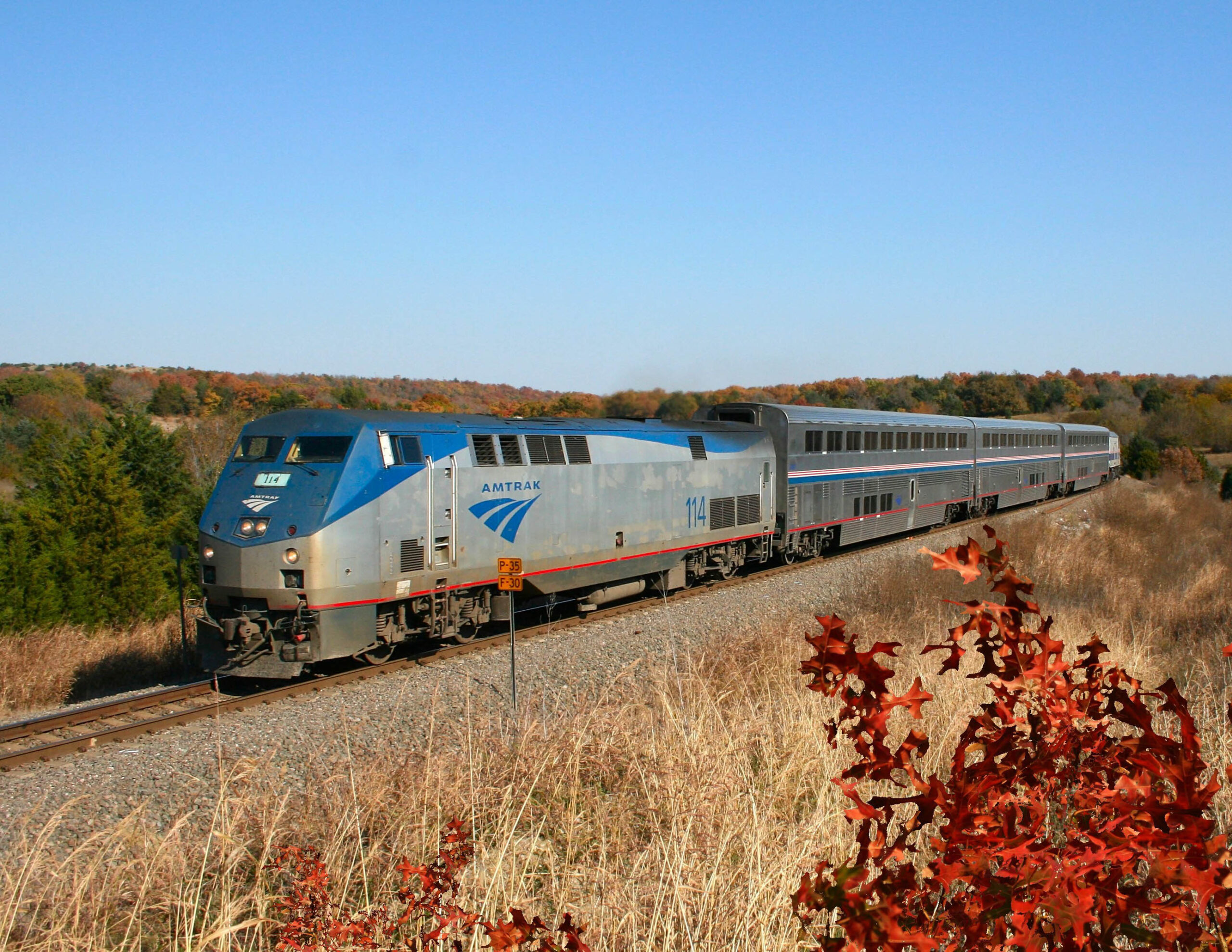
Same here. An Amtrak train would just stop at the next convenient road crossing, if there were really something preventing them from stopping at the scheduled station. Most Amtrak stations don't even have staff, or any way to prevent people from coming and going, so this would most likely involve construction on the station platform itself. That’s fairly rare but the last time I took the Zephyr headed east there was exactly that situation. The construction crews had the whole platform blocked off so we boarded at the road crossing a block away.
reply▲They can't realistically do this in Germany because the tracks are so much more busy than the US. There would more than likely be a train coming the other direction within the next few minutes, and they cannot guarantee all the people have time to vacate the track area.
reply▲I don't understand ome detail of this story: Amtrak platforms are about 110cm high. That's more than waist high for most people. So how do you let people get on and off at a grade intersection instead of at a platform?
reply▲Lol, most Amtrak platforms are at track level! I think the cars are 8” above track level, not waist high.
Every car has a metal step that will be placed in front of the door by the attendant.
Edit: Oh, except for a few lines on the East Coast where the trains are only single–level. Those are 48” above the top of track.
The trains carry a step that can be placed on the ground outside the door, so you can step down from the car.
reply▲reply▲I've ridden on Amtrak trains. The door for the passenger compartments is in the middle of the observation cars, the oval on the lower level is the window on the door. You can see 3 of them on the 3 cars. The crew would put out a step at stops which was helpful considering the age of most of the passengers.
Up top are seats and maybe a lounge, below are bedrooms, bathrooms, and storage. There's a spiral staircase to change levels.
The locomotive has steps right outside the wheels with handrails.
tharkun__38 minutes ago
[-] I'm not sure I follow what you're trying to say.
It's pretty obvious where the doors are (middle), which have windows. My point, replying to my parent, was that they said Amtrak platforms are at 110cm height. The lowest part of those doors are not at 110cm height, but much lower, almost as if the platform was much much lower than my parent claimed ;)
And yes, trains do exist, which either have doors at two different heights (these don't seem to) or that either automatically fold away so you can get out at ground level via the stairs that are revealed/created by the mechanism or that simply stay up for platform height entry/exit. Used both types. Now, whether or not Amtrak has those in specific parts of the US I can't say.
wasmitnetzen7 hours ago
[-] Note that DB definitely has processes to add stops ad-hoc. It's just that nobody bothered in this case.
reply▲It's a big, systemically failing organization running way beyond its capacity. Failures rippling through and compounding in a tightly coupled rail network.
If they weren't able to announce the train would stop at one station, why do you think they'll be able to do that at another?
I'm pretty sure train conductors aren't allowed to just stop somewhere unscheduled for good reasons, there's always a train behind and in front of them with no buffer.
train conductors are not controlling the train. that is done from a central (regional) control center that manages all trains of the region. only there someone decides where trains go or stop
reply▲Usually the train driver is in radio contact with central control and can request changes to the points, signals etc so they can make unscheduled stops. For example if there's a medical emergency on board and a passenger needs to be transferred to an ambulance.
Of course doing this can have ripple effects on other services, and if a common factor has severely delayed dozens of different trains, the central control room might not have enough staff to deal with dozens of unscheduled stop requests.
Also everyone complains about punctuality. A train stopping "nilly willy" somewhere it's not scheduled can very much cause exactly that in such a tightly scheduled system. So if you can, you avoid it.
Since we don't know "the other side of the story", we can't really tell. All people here see is the "I got kidnapped". If the story was written from the control room person's perspective, they might write a fascinating story about how they single-handedly avoided 17 trains being late by sending one train on a detour.
Would be awesome if there was someone on HN that knows if DB actually has the capacity to run a scheduling algorithm for their network within a few minutes, repeatedly, for many different trains at a moments notice. What kind of infra do they have for that, what do they use? With a large, interconnected, network that's tightly scheduled already that can't be easy.
OP was also unlucky in that he was on a regional train. They prioritize long distance trains usually as a regional train can more easily wait on a lower speed limit track somewhere than a fast long distance train on a potentially shared single track bottleneck.
Best example of this is when they hit someone. Train has to stop, control center has no say in it.
(For longer “technical” delays, keep an eye out for emergency vehicles without their sirens on.)
kergonath56 seconds ago
[-] > Train has to stop, control center has no say in it.
And then you have cascading delays across a whole region.
The Germans follow the rules too strictly and in South America we ignore the rules too lightly.
I wonder if there's a country somewhere with the right balance.
France, while not perfect, is still balancing it +/- correctly.
reply▲France has a reputation of being permanently on strike, but is perhaps the only European country that is simultaneously northern European and Mediterranean at the same time.
reply▲I think for all of our problems, the US does get this right - we know when to be formal and when to be informal, and its something that is well culturally ingrained - that is the spirit and intent of the rules should be considered as strongly as the actual words.
reply▲No idea if there still is, but there definitely used to be. These things change over time, as culture does. Half a decade ago, pretty much everywhere in Europe followed rules less strictly. The balance was almost surely better.
reply▲Used to work for a bus company: lady had asked driver to drop her off 10 meters from the next bus stop. Then fell into a hole, broke her leg. Then sued us.
reply▲We live in a society where complaining is considered "verbal abuse" or "harassment", but where we have to put up and shut up about everything going on.
The message out of 2020 and 2021, is that the big people know what they're doing and we don't.
potato37328423 hours ago
[-] We live in a society where being the victim of verbal abuse or harassment or various isms and all sorts of other petty things confers legitimacy and power upon one's opinion. There's a subtle difference.
Thankfully it seems to be waning slightly.
No, I don't mean that at all. I've had to complain about things before and they accuse you of shouting (when you're not). They almost want people to swear, and rile them up, because that gives them the excuse to do nothing.
reply▲akimbostrawman2 hours ago
[-] >They almost want people to swear
that is sadly exactly how most people operate now. Somebody gives legitimate critique to an issue? simply tone police them and you can claim all they say is [ism] or hate speech and therefore not even worth engaging with.
potato37328423 hours ago
[-] You're reading way too much into my use of the word "opinion". It's just whatever side of whatever the issue is be it customer service ad Burger King or some arcane discussion about compilers.
reply▲Yes, I'm aware of identity politics, but that is not what I'm talking about. I'm a member of a couple of minorities myself, and it confers little privilege on me with or without the abuse.
reply▲potato37328423 hours ago
[-] You're missing the point. Some people are quick to claim that the other person is being unreasonable in a way that's socially agreed upon to be bad as a justification for whatever their thing is, whether that's being a lazy worker at a min-wage job or anything else. And of course sometimes these people don't even wait for unreasonable behavior. They will characterize "hey can you please do your job" that way because it suits them.
This is a figment of living in a culture where being right but distasteful in a variety of poorly defined but broadly similar ways effectively makes you wrong. Toward the other end of the spectrum is stuff like "I don't care if he's a card carrying nazi he builds good rockets" and other stuff like that.
Not with trains, but I have a GO Transit (regional) bus that passes within a block of my house, whereas the actual official stop is about a fifteen minute walk away. I have taken that bus home many times, and the drivers are always willing to pull over at the stoplight and let me hop off.
reply▲potato37328426 hours ago
[-] >I feel like we lost humanity somewhere in modern world.
When every useful idiot is screeching about statistical optimization you lose any optimization for anything that isn't measured or isn't optimized for.
Like it's not hard to imagine the breathless comments on HN about how trains should never(TM) stop without a platform if they'd have stopped the train on both sides and some old lady tripped and fell and broke her nose on the rail.
It reminds me of letting a child that's too young to not be stupid pick it's own dinner and it picks of candy then to the surprise of nobody with a brain it's cranky later despite being calorically satisfied by the numbers.
>The modern world where everything is “safety issue” and “someone else’s problem” is where we lost our ways, and it’s never coming back.
It'll come back if there's something bad enough that happens to kick society back to a point where "lol we ain't got the spare resources for that shut up and go away" becomes an acceptable way to deal with the peddlers of these things. But anything that gets us that far won't be pretty.
> trains should never(TM) stop without a platform if they'd have stopped the train on both sides and some old lady tripped and fell and broke her nose on the rail.
Yes. That is a good reason to not stop without a platform. But I tell you one even better. Look at the layout of the Troisdorf station. There are tracks with platforms, and there are through tracks. The trough tracks are surrounded by live tracks on both sides. If the train stops there, unlocks the doors, and somehow coaxes the people to climb down those people are immediately on a live track. To get off of it they have to cross the track and climb up a raised platform. And who knows when is a train coming on that track. The risk here is not breaking the nose of one old lady (which by the way, can easily kill an old person) but forcing hundreds of passengers into a meat grinder. But go on with your snark.
Dumping people on the tracks is not the solution here. Going beyond the station and stopping there (which is always safe in the "other trains are not going to run into yours" sense, that is what signals are for) then letting the signallers set the points for you to reverse back into the station is the solution.
potato37328424 hours ago
[-] >Yes. That is a good reason to not stop without a platform. But I tell you one even better. Look at the layout of the Troisdorf station. There are tracks with platforms, and there are through tracks. The trough tracks are surrounded by live tracks on both sides. If the train stops there, unlocks the doors, and somehow coaxes the people to climb down those people are immediately on a live track. To get off of it they have to cross the track and climb up a raised platform. And who knows when is a train coming on that track. The risk here is not breaking the nose of one old lady (which by the way, can easily kill an old person) but forcing hundreds of passengers into a meat grinder. But go on with your snark.
This is unfortunately exactly an example of the type of take I was complaining about.
Just let the people who are actually there and can actually see the situation use some judgement.
Arbitrarily halting traffic on an arbitrary section of track isn't something the parties involved don't know how to do. It's something that happens somewhere in the rail network every day for some reason or another. It's a supported function. I trust them to be able to invoke it.
> Just let the people who are actually there and can actually see the situation use some judgement.
Okay. But we are beyond that. The people who were there handled the situation and we both seem to agree that they didn't handle it well. We just seem to disagree how they should have handled it differently.
Your proposal is that they should have dumped people on the tracks. My proposal is that they should have done more to get the train next to a platform.
> This is unfortunately exactly an example of the type of take I was complaining about
Tell me where do you disagree. Have you looked at the track layout of the station? Have you looked at images of the platforms?
potato37328423 hours ago
[-] You can't be honestly claiming that the people exercised poor judgement when their freedom of action is constrained by the fact that they are hemmed in by all manner of rules in a highly rule following culture and that that poor judgement is justification for further reduced autonomy?
They ("ze germans" broadly speaking) should've handed this 300yr ago by not heading down a path (in their defense it probably wasn't obvious) to a culture that create obvious failures by following rules to the point of absurdity.
The train is just an example, and unfortunately there's no control train. If not the train then the absurd and trivially avoidable failure will be something else.
I wonder if it's not safety but money. In the UK, train operators pay station operators a fixed fee to stop. As a result trains can't just stop somewhere randomly (except I hope in an emergency) even if that would benefit many people. All this is, needless to say, very stupid.
reply▲They actually do. I was on a train a month ago from Sheffield to London and a passenger was on the wrong train and they scheduled an extra stop to get them on the right train. Kind of restored my faith in humanity a bit tbh.
reply▲qingcharles2 hours ago
[-] They did this for me once on an Intercity or whatever they call them these days. I fell asleep and woke up to my Mum waving at me from the station platform in Lancaster or somewhere wondering why I had not gotten off the train as it pulled out of the station. The conductor was kind enough to stop the train at some random cattle grid barely-even-a-platform in the middle of nowhere and radioed the train coming the other direction to pick me up. Bless.
reply▲I don't think so as in this case Deutsche Bahnn owns both the station and the train. In the UK they've gone a bit crazy with the whole free market thing. Public transport should not be a market.
In Germany there's also the issue that the powerful car makers are always lobbying the government to budget cut public transport.
Transport for Wales has nationalised its trains. A lot of the infrastructure is paid for by the state as well.
By the way, I can remember the state run British Rail and that was bad too. Neither nationalisation nor private operators have done well with British trains over the past fifty years.
Germany does actually have station fees. And DB isn't the only operator. The RRX trains, one of which OP talked about, are operated by DB and National Express, ordered by the RRX group comprised of VRR, go.Rheinland, NWL, SPNV-Nord and NVV, running on tracks and stations by DB InfraGO.
reply▲The current UK government is re-nationalising the railways. Several operators are currently nationalised (and the train fares have dropped!), and the plan is for all of them to be, once the contracts run out.
reply▲The Welsh government has already nationalised local trains.
reply▲I'm still not sure why everywhere's devolved except England.
reply▲London is one of the places that least needed to be devolved (because the UK is run like a city state). It is in England the last time I checked. Bits of Northern England have been offered it and refused it.
There has been some popular demand for Cornish devolution, but Whitehall is only prepared to entertain it within some greater south west region.
There is also some devo to councils.
The arrangement (now gradually coming to an end) in the UK is very silly, ToCs (which run trains) were district from the ultimate station owner (which was various notionally for-profit companies but of course always ultimately the government) and the track owners. Most of that nonsense is being gradually absorbed into a single government owned passenger rail entity.
A "one under" (likely suicide) plus signal problems (which can be basically anything) meant I was delayed by over an hour home from Yorkshire on Saturday, but that also means it was effectively free.
There was a post on hn by someone who built a model to predict which trains are going to be late to get ticket refunds and travel for free (albeit slower).
reply▲Lost humanity is right, and it stems from lost community.
During the Great Financial Crisis astute observers pointed to the loss of local bankers for most transactions as a component of the multifaceted structural causes. When you have your mortgage through the bank down the street, you're much less likely to mail them the keys instead of paying your bill, especially if you have to see the banker in the grocery store etc.
What did we do about this? Of course we didn't learn anything - we actually further consolidated banking.
The same is true of train service, traffic etiquette, and political discourse. The tragedy of the commons is exacerbated by moving away from local community.
potato37328424 hours ago
[-] During the 30yr prior to the GFC the kinds of Americans who don't work in downtown offices, don't get compensated partly in RSUs and who aren't represented well in internet discussions and mainstream media complained fairly unanimously about the same things. Regulation forced their main street economies to either consolidate or pack up for China. The industrial employers got scooped up by the conglomerates and turned into poorly paying meat grinders with no "good" jobs or left entirely. The grocery store and hardware store became a Walmart. But nobody listened to them when they complained.
reply▲It’s been boiling for a long time. Steinbeck wrote this nearly a century ago:
"I built it with my hands. Straightened old nails to put the sheathing on. Rafters are wired to the stringers with baling wire. It's mine. I built it. You bump it down — I'll be in the window with a rifle. You even come to close and I'll pot you like a rabbit."
"It's not me. There's nothing I can do. I'll lose my job if I don't do it. And look — suppose you kill me? They'll just hang you, but long before your hung there will be another guy on the tractor, and he'll bump the house down. You're not killing the right guy."
"That's so," the tenant said. "Who gave you orders? I'll go after him. He's the one to kill."
"You're wrong. He got his orders from the bank. The bank told them: "Clear those people out or it's your job."
"Well, there's a president of the bank. There's a Board of Directors. I'll fill up the magazine of the rifle and go into the bank."
The driver said: "Fellow was telling me the bank gets orders from the East. The orders were: "Make the land show profit or we'll close you up."
"But where does it stop? Who can we shoot? I don't aim to starve to death before I kill the man that's starving me."
"I don't know. Maybe there's nobody to shoot. Maybe the thing isn't man at all. Maybe, like you said, the property's doing it. Anyway I told you my orders."
potato37328422 hours ago
[-] At the end of the day you have to actually shoot someone from time to time to keep everyone in line.
It's way cheaper to not wrong people or to not walk up so close to that line than it is to secure the full stack and pay everyone what you'd need to pay them to compensate them for the risk of being the unlucky guy who gets scalped on livestream or whatever form sloppy retribution takes.
crossroadsguy3 hours ago
[-] So true. Another third worlder and it's still the same. On the interesting side, if they didn't stop we would make sure a coach or two (empty of course) experiences some arson or fractures. From major to minor depending upon how pissed the locals were. No, I am not condoning it course. Trains should not be burnt. Buses are a different story though. (That included not stopping even after the "chain pulls" :P)
reply▲On a warm summer evening, on a train bound for nowhere, a passenger missed their stop.
Conductor radioed ahead and the train heading the other way stopped when we passed it and the passenger was transferred over.
They didn’t have to do that, but it was nice.
They’ve also hired a cab for a station miss that was their fault.
i_am_a_peasant5 hours ago
[-] Ugh. don’t remind me. my fiancée and I live in different cities in Germany. the train ride is 5 hours. but it has been 15h in the past just because DB is DB. and the only thing we got for it was like a 10 eur discount voucher. 10 hours of my life partner’s time is worth a lot more than 10 eur. i have cussed them and their mothers countless times, DB is a garbage transportation company owned and ran by garbage people.
reply▲Sounds like Amtrak in the US, except here you get no compensation at all. And I've always been told how great the European railroads are.
reply▲In some places, European trains are decent. I don't have much experience with US trains other than them having very high steps to get onto.
reply▲> I grew up in 3rd world country and if this were to happen, train would literally stop somewhere, anywhere.
In many places without rigid rule enforcement, that kind of flexibility can actually feel more humane in practice, even if the overall system is worse. What frustrates me in the US (and sometimes in Europe) isn't rules themselves, but how aggressively and impersonally they're enforced in very ordinary situations.
For example, a friend of mine in New York casually crossed a line at a small PlayStation event and was stopped by a bodyguard as if he were bypassing airport immigration. I had a similar experience at a small event, maybe 300 people, where I tried to cross a line to get coffee and was abruptly blocked by security (they were just preparing the snacks).
Compared to more informal cultures, this kind of hyper enforcement can feel oddly hostile, especially when it's disconnected from any real safety concern.
darubedarob6 hours ago
[-] He has a loaded lawyer and is not afraid to use him. The world is filled with economic traps like this. All the economic advantages gained by the commoner, would unravel by one risk of harm coming for the driver and the company.
reply▲PurpleRamen6 hours ago
[-] Humanity has been codified into rules, and the rule does not allow throwing out people somewhere random, because that would be differently inhuman (and someone would sue you if they have a bigger harm than lost time).
reply▲PaulRobinson7 hours ago
[-] You're touching on points that Ayn Rand touched on in
Atlas Shrugged, which as it happens uses the dynamics of the running of a railway as a metaphor for organisational incompetence and which opens on a scene of railway workers refusing to take initiative and following policy blindly.
Where she started to go a little weird is she thought anyone who had an idea had the right to just go do that, and society can go hang (she grew up suffering the worst Sovietism could serve up, her concept of community was damaged as a result). Unfortunately, her ideas are now held close to the hearts of some of the most powerful people on Earth, who are also going a little weird.
I'm actually OK with experts deciding that a particular policy is the right way to keep people safe. What I'm not OK with is using the policy as a prop to avoid independent thought or agility. I'd rather that instead of a procedure or a policy, people were taught a way of thinking about the World.
"We're not allowed to stop at the next station because we're not registered to do so", is a statement made in deference to a policy regardless of whether it makes sense or not. "We need to spend a few minutes making sure we're registered at the next station before we go any further" complies with the policy, but is a person taking ownership of resolving the problem, and comes from a place of empathy for the passengers on board. We need more of the latter, but unfortunately the Randian version we're now getting is "We'll stop or carry on wherever the driver feels like because he is sat at the controls so there's nothing anybody can do about that".
Your quote is missing a crucial bit. The full quote is «we're not registered to do so,
so we are on the wrong tracks».
You were supposed to take the last exit, to be on the local road instead of the highway. No, we cannot let you off on the highway. We are not allowed to stop here. There are no stops. We wait for another exit. Sorry.
Or maybe the tracks the train was routed onto didn't have platforms at the station.
In 3rd world countries it might be acceptable for people to jump out of 5-foot high carriages onto live tracks with trains running at 100mph for convenience, but not in Germany
This has been done in USA using slow moving freight inner-city. Just can't do it on passenger service. It is illegal, but there is no one around to enforce it, the vast majority of the time.
I can neither confirm nor deny, I may have done it to get to/from the grocery store from near my house when I didn't have money for a car.
Remember the rules are written in blood
reply▲indiantinker8 hours ago
[-] DB is weird. They seem to make their own rules and then run the game and “dont tell the rules to anyone”. I was on my way to catch a flight from Munich to my home (Madrid). I didn’t knew that apparently at one point the train splits into two parts and the front part goes to the airport and the other part just goes to the nearby cattle farms and comes back in 3 hours.
Google Maps - No idea
Citymapper - what?
English announcement - nien.
Thanks to an old lady, who told me that i needed to switch coaches to go the airport. Madre mia!!
We took that train, realised when we got to the other end of the line that we hadn't gotten where we expected, then turned back to the place where it separates. Waited for the next advertised train to airport (it's signalled on the electronic board as two separate entries; yes, it says "board whatever carriages for airport, and the rest for ...", or at least I assume it did, as it was in German of course; but again, it literally shows up as two different trains). Train arrives, stays there for a while (it's a big train, so the part in front of us didn't move so we didn't realise it had already separated), then after like 5-6 minutes it leaves. Only as it starts moving I notice that a small electronic board on the side of the carriage said "airport". The notice board then changes and obviously "both" trains disappear.
We were so lucky that we'd decided to go to the airport much earlier than we needed.
And don't get me started on the ticketing machines not accepting Visa, Mastercard, or Amex at the central station in Munchen. Or the web ticketing interface which was at least as annoying as the train to use.
I've never had trouble buying train tickets with a credit card in Germany. If I had to guess, your issue was that you were trying to use a card that didn't support chip-and-PIN or contactless payments.
reply▲Two years back the S-bahn ticket machines at the aiport only supported chip+pin, not contactless. Had to open my banking app to figure out my pin code, as I wanted to use my corporate Amex
reply▲> didn't support chip-and-PIN or contactless payments.
As opposed to... swiping the card?
Are there really cards out there that exclusively support that?
Very few Norwegian issued cards, if any, have a magnetic strip. It's too easily cloned.
reply▲LadyCailin22 minutes ago
[-] Both my DNB and Nordea cards, as well as my personal and corporate Norwegian AMEX cards all have magnetic strip, and they’ve all been issued somewhat recently.
reply▲Chip and signature, which often means just the chip without further authentication.
EMV has multiple options. Many countries (including the US) chose the signature option for credit cards for convenience and use PINs only with debit cards. Before contactless payment apps became common, that was a major source of friction when using American credit cards in Europe.
I'd argue we picked it for legacy reasons - Americans are not used to the chip/pin concept, and adopted EMV very late because of a variety of legacy reasons (massive installed base of mag stripe equipment, and systems to deal with the inherent slightly higher fraud).
reply▲If this story was more than a few years ago it's plausible that the card didn't have a chip. I still have a VISA debit card without a chip, and it was issued only two years ago.
Also chip-and-pin is mostly not enabled with American credit cards or card payment terminals
Prepaid gift cards (please note: those are not store issued) dont have chips and it is sometimes a problem to use them. But I doubt someone would buy a plane ticket with them.
reply▲A gift card isn't a credit card, though... ?
reply▲A couple years ago, I was at a station waiting for a (delayed) ICE train.
I couldn't buy a ticket at the machine or with the app, since the train had already departed (if it had been on schedule).
The ticket machine also wouldn't take VISA / MasterCard, only the more common Girocard (most people still call it EC)
Later, in the train, when I asked the conductor to buy a ticket with my Girocard, he said "That's not a commonly used payment method" and asked for VISA, or cash (not having any to provide change, obviously).
American Express I get. No one uses that in Europe. Visa and Mastercard debit cards are what everyone uses and they work in all German ticket machines. You weren't trying to use a credit card where you?
What language do you expect the Germans to use?
I don't think the person expected the Germans to use a different language, only was saying that they weren't entirely sure what it said.
reply▲Lots of people use Amex in Europe. It's very popular as a business card.
reply▲I doubt that it is popular with the actual users, only with the company that they work for. When I had a company issued AMEX card the damn thing was practically useless. In fact even in the US there were plenty of places that wouldn't accept it.
reply▲For a train going to an airport, English.
This is the norm around the world, especially with complicated situations like a train splitting in two.
germans don't use credit cards. finding an automated ticket machine thst handles credit cards would be extremely rare.
reply▲DB machines have been accepting all sorts of cards for a long time (Visa, AMEX, Discover). Local vending machines might vary though.
reply▲ivan_gammel5 hours ago
[-] Starting in 2026, support of digital payments is mandatory in Germany for all types of businesses. DB has been card-friendly for a long time.
reply▲mrbombastic5 hours ago
[-] This just happened to me a couple days ago trying to get from Luxembourg to Heidelberg, got on what I thought was the right train at a transfer but was apparently the wrong half, announcement only in German, rushing to find a spot for luggage in packed train and getting scolded by various Germans and we missed it. 3 hours of travel to end up back in Luxembourg and we got a very expensive rental car to get to our next couple destinations, not proudest travel moment. Next train we took was easiest possible scenario, Nuremberg to Munich, one train no transfers, assigned carriage, app helpfully shows you where to stand, arrived with time to spare. Except the platform changed as train was arriving, announcement again only in German, asked an attendant if train on other platform was our train, “No that train is on platform 9” rush up and down platform 9, carriages and train number don’t match ask another attendant if the original train on the other platform is ours, says you have no time, jump on that train, it is right but we are on opposite side of train and walk through the entire train with luggage again with various Germans giving scolding looks. Peaceful way to travel.
reply▲Splitting trains is a quite common thing in Germany (though more long distance) and communicated in the official app.
If third party apps don't show that information that's on their part. Usually it's also said after departure inside the train by the conductor, though maybe just on long distance trains.
addandsubtract6 hours ago
[-] They still get it wrong quite often. Worst case is when the train arrives in reverse cart order, and the carts are labeled wrong. Bonus points if your reserved seat is in a cart that's missing.
reply▲Yes, although quite often they forget not everyone speaks German.
I once had a bit of Schadenfrunde while travelling in Netherlands, having the conductor telling us to switch trains in Dutch, and all my German fellow travellers wondering what it was all about.
Well it's generally a good idea to ask a fellow traveller when you hear an announcement you don't understand. Especially if it doesn't use words you've commonly heard before. And maybe tell them instead of having Schadenfreude?
reply▲Which is what happened next.
The point was that even in international trains inside Germany, announcements related to trains problems are only done in German.
I speak it fluently, including some variations, however most travellers do not.
I also remember there used to be ticket machines in NRW only in German, about 20 years ago.
Or.. english-speaking people forget not everyone speaks english. If you go to another country you have to learn a bit about how things are done there, ask for help, etc.., most people consider this a normal part of traveling.
reply▲Great advice which I assume you follow to the letter.
reply▲idk man, I get it's nice if things are clear for you, but it's misplaced IMO to have this level of entitlement over people speaking their mother tongue in their own country
reply▲I hope you get to learn Portuguese well enough that my fellow country folks never force themselves to speak any other language, in case you happen to visit us, if not, oh well.
I am fluent in several European languages and dialects, human languages is second nature alongside learning programming languages.
As for entitlement, the expectations on international trains crossing borders aren't the same as local trains, which I left out from the comment, it was an ICE after crew change.
It seems to me long-distance transportation services should make the most important announcements in the second language most likely to be understood by international travelers. In Europe, that usually means English.
reply▲raverbashing7 hours ago
[-] I wonder what's the level of mutual ineligibility between DE<>NL (probably DE is easier to NL) but it's funny how Germans sometimes seem to play dumb and not understand a thing in NL
reply▲As a German speaker, spoken Dutch REALLY trips me up because of small pronunciation differences in almost every word. Written Dutch is way closer.
The Dutch seem to understand German better, but my Dutch friends credit that more to education and exposure.
I don't know about the Dutch but apparently the Flemish don't understand German without having learned it at school.
I speak both some German and some Dutch (as nth languages, I can understand them fine but speaking is hit and miss) and sometimes I don't notice which is which and answer in the wrong language, to me they're almost the same language with a different accent. I translate the German into some Frenglish mess for my Flemish friends to help them understand and it works great.
they have access to german tv and watch it.
reply▲i_don_t_know6 hours ago
[-] I'm German, I don't speak Dutch. But I was able to follow a Dutch tour guide in Den Haag just fine when she was explaining things in Dutch. She kindly repeated everything in English for my benefit (I was the only foreigner) even though I told her I understood her just fine in Dutch.
You have to "adjust your ears" a bit but I think if you know German and English then you can understand Dutch just fine if it's not slang.
It also depends on the particular dialect a German speaks. Dutch is effectively old German before all the various alterations and "reforms" to the German language that were instituted to create fragmentation between the germanic people of Europe, i.e., English, Dutch, Germans, Austrians, Swiss, Belgians throughout the ~16th-20th century by aristocrats driving wedges between peasants between kingdoms and dukedoms in order to define their own nations/ethnicities through language and culture so their royal families could rule over and would find it difficult to associate with each other. It is one of the things that also contributed to the fragmentation of Germany before unification, language barriers that even created unique cultures between sides of a valley that were in different dukedoms.
A similar thing has caused the tension between the germanic and Romance languages that followed the Roman border line N to S that separates Europe.
dutch is a bit harder to understand. like some german dialects that not every german understands either, like swiss german, luxemburgian or friesian (also spoken in the northern parts of the netherlands), or plattdeutsch.
i grew up in austria and in the north of germany so i got an early appreciation for understanding dialects. yet learning dutch took me a few months of staying in the netherlands. on the other hand when i visited luxemburg people were shocked that i could understand them when they spoke amongst each other
Frisian is not a dialect, and is not usually spoken outside of Frisia (the Dutch province). In German Ostfriesland they do speak a German dialect with Frisian roots.
reply▲Ironically, technically speaking, there are seemingly more similarities between British English, i.e., Anglican German and current High German due to various perversions and "reforms" of the German language over the last many decades, in order to drive the Germanic people away from each other.
If the EU were a serious and legitimate institution, there would be an effort to implement reforms that nudge English, Dutch, and present day German all towards better mutual intelligibility, NOT diversion from each other through perversion and "simplification", or what seems to be a pollution and destruction of the current German and Dutch language through what at least Germans have a term for, "Verdenglichung", i.e., the portmanteau of German (De..) and English, prefixed with "ver...", meaning the transformation or application of.
Can you trim your narcissism by assuming that people should speak your preferred language in their own country?
The damn narcissistic entitlement and rotten mentality of some people.
I speak fluently 6 languages, and a few dialects of them, how many do you speak?
reply▲How dare they speak their own language in their own country on a regional train
reply▲I think you still should be able to expect a bit of accommodation on trains that cross country borders or go to airports.
The EU makes travel between EU countries as easy as travel between US states. You can just get on a train from Germany to Spain without any prior planning.
It's also unusual given how much English you'll hear in Germany nowadays (at least in major, tourist-attracting cities) in just about any other context.
reply▲Too much English. I noticed this indoctrination way back when they released Ice Age over there for kids. The title wasn't even translated into German.
reply▲The regional trains usually have announcements in the language of the neighboring country when they get close to the border
reply▲They can. But they should also not be assholes with everybody else. And no not just local trains, I got information in English exactly zero times when there were huge delays on international trains. And it happened 2 times from 3 when I tried to cross Germany by train. And Germans (and Austrians btw) are terrible with this, even compared to others. The German site at my multinational company at the time was the only site on Earth which had to introduce an internal regulation about mandatory English, because they just switched to German all the time even when there were people on the call from different countries. I’m living now in Wien, and they are terrible with this even in friendly environments.
reply▲YMMV. I worked in three different German startups in Berlin and I almost never heard anybody speaking German in the company, even though more than half of the people were from Germany. Maybe it's different in bigger companies, or outside Berlin?
reply▲It was an international connection train, ICE, between Amsterdam and Cologne....
reply▲So Dutch and German? Actually, those ICE are staffed by Dutch NS personnel until Köln where they swap with their German DB colleagues. Usually that means Dutch and German messages from Amsterdam to Köln (sometimes English too), and German afterwards.
reply▲silversmith3 hours ago
[-] Are we really living in a world where you need to have the official app - any app! - to ride a train?
reply▲I suppose it isn’t required technically, you can still purchase tickets at the stations. But oh boy, the “official” app for the Shinkansen in Japan might be the worst piece of garbage I have ever used.
reply▲In general the S-Bahn in Munich is a massive s*t show I can report more info about this if needed. However, in the S1 going to the airport (the train you took) it is quite well described that the train splits and it's both on German and in English.
reply▲Had something similar from Nuremberg to Suhl and accidentally ending up in Bad Kissingen for a bit.
But I don't think DB is unique in this weirdness.
Back in the UK, I think something similar happens on routes going past Gatwick; I've only heard English announcements on that train despite the airport being one of the ones serving London.
Plus, one time I was on a work trip to Liverpool (via London), and somewhere around Nottingham or Crewe a fellow passenger asked me when we'd be getting to "Liverpool Street": https://www.google.com/maps/dir/Liverpool+Street+Station,+Lo...
There's also the way my first leg home from university was Aberystwyth to Birmingham New Street, but the train regularly terminated early (Shrewsbury? Or was it Wolverhampton?) to game the rules.
What language would you pick first, if you're going to add non English to London trains?
The problem with UK announcements is that they are piped to multiple places in the station, which is all hard surfaces and produces lots of reverberation and echo. This often makes them hard to understand even for natives. Also there are some stations with really terrible old speakers , such as horn speakers.
I'd ask the airports themselves for the nationalities of the tourists departing through them, and specify whichever secondary language was most relevant for trains likely to be used by tourists accessing those airports accordingly.
If I had to guess, French, German, or Spanish, in that order. But it may well be that e.g. Heathrow has a lot more Arabic, Stansted gets a lot more German, and Gatwick gets a lot more French, Luton gets the Spanish tourists, and City is mostly business trips or something.
You're correct about the acoustics, but foam panels are a thing that can be installed (or not) independently of this.
This is pretty common in other countries. I almost got screwed multiple times by SNCF (french trains) where they don't announce which half of the train goes where on the speakers. Even in the official app, it's buried deep: for some reason, it's under "Travel Details" and not "Train Details".
It was partially on me because there are assigned seats and carriages, but I was late and had to jump in the train. But still no vocal announcement of "cars x to y go to z, the others go to w".
Hah! We had the same situation taking a train from Marseille to Paris. Looked at the seats, entered the proper carriage, sit down, and at the next stop someone came and told us we took their seats. I was like 'this is 74B' (or whatever), 'the ticket is for that seat', until someone managed to tell us that we got in the wrong part of the train, and we need to move forward.
Now, the train itself was two trains connected together, and at the next stop we literally had to run like 100 meters or so to make it on time to enter the front part, because there was engine near the end/stop.
Not sure would the 2nd half of the train depart, but it was super stressful experience.
When was this? Took the train (S1) last week and every single screen at the stations and in the train explains this in detail and there are probably 20 announcements both in German and English telling everybody which coach goes to the airport and which to Freising.
It's not that complicated.
Those announcements in English have been in place for 20 years. Neither train to Munich airport (S1, S8) goes to cattle farms. Tourists can get confused if they're unaware in which part of the train they sit.
reply▲(Also, the S8 is usually quicker anyway...unless you somehow ended up at Laim, Moosach or Feldmoching.)
reply▲Splitting trains is not uncommon. Generally for Amtrak there will be two conductors one for each part of the train. On the platform both conductors will tell you which part of the train goes where. They often check tickets more frequently than usual just to make sure you are on the right part of the train.
Train splitting is quite acceptable when the customer service is alright.
utllitarian7 hours ago
[-] It’s likely some utilitarian reason, i.e. sacrifice the riders on the train for the good of all the other schedules.
This is the one benefit of living in an overly-litigious country that has news media which can pick up on a story like this. They’d rather have the masses suffer to avoid the legal fees and bad press, so instead of sacrificing a train, they’d make everyone’s lives worse overall.
I’m not arguing for utilitarianism, though. Ir allows dictators to thrive.
I'm pretty sure there should be english announcements. Maybe they were broken. You also get this information via the displays on the wagons and on the screens inside.
There is a bus/train from Freising to the airport every 10 min that takes 15min, so you are not trapped there for hours.
Google maps also has all the public transport connections available for navigation. That it does not support certain things like train splits or instant train changes is not DBs problem.
The preferred way to get to the airport is via S8 (not S1). Idk how one could push/guide people more to take this one.
S8 does not split and it definitely has announcements in english.
They also prioritize keeping S8 running above anything else.
I'd also recommend buying tickets via app, not via ticket machines.
I guess you took the S1 S-Bahn. Yes, it always splits in Neufahrn. Part of the train goes to the airport, the other section to Freising (a cute University city, by the way)
That is indicated on the platform screens before getting on the train. It tells you which part of the train goes where so you know which wagon to take.
I found it also not very intuitive first time I took it. But hey, when travelling there’s always local peculiarities to take care of ;)
Strong disagree. For most parts travelling is a non-event these days.
A train that splits, on the way to the airport where there will be a lot of non-german speaking people, and for some reason only shows it on the platform is insane.
Having a train that splits on that route is already bad enough, but you HAVE to emphasize it on the train.
I know that I need to pay attention to this, because I've grown up with DB pulling all sorts of fucked up shit, but we should not accept that this is reasonable.
From the top of my head I know three cities which have peculiarities when it comes to public transportation to the Airport. In two cases, it's obvious they do this to push the private train to foreigners, at 5x the ticket rate.
reply▲This sort of used to be the case with Heathrow Express in London. There was a lot of signage that suggested to the unwary that Heathrow Express was the "right" way to get into London. Now, especially with the Elizabeth Line, while you can save a few minutes with Heathrow Express, that's really not a cost-effective alternative for a lot of people. (And Piccadilly may be a better option depending on your luggage and where you are staying.)
reply▲Can you share which cities these two are?
reply▲Stockholm (SL Bus/Train via Märsta 47kr vs. Arlanda Express 340 SEK)
Vienna (S-Bahn S7 4.40 EUR vs. City Airport Train 24.90 EUR)
While with the Stockholm one, the public transport option is cheap but a little bit more complicated (there are convenient medium priced options too), the Vienna one is really just branding and a non-obvious exit to the train station.
Ah, Stockholm. Been there as a student, went to Uppsala the day I was flying from Arlanda, and the only trains to the airport were the insanely expensive Arlanda Expresses. Had to take the normal train to Märsta, then walk the five kilometers to the airport. Fun times.
reply▲London for sure. All three of the Stanstead, Gatwick and Heathrow Express services are an absolute rip off compared with the alternatives that don’t take much longer.
Many people use them out of ignorance, expense accounts or they have the disposable income not to care.
There are announcements inside the train. Nowadays also in English.
reply▲Hamburg has a similar arrangement, however they make a very clear and unmistakable audio announcement in both English and German.
im.surprised this not to be the case in Munich??
bad_username5 hours ago
[-] Your ticket was without assigned seat? Because if there was assigned seat, surely the seat would be in the correct carriage?
reply▲There's only local trains to Munich airport. Those don't have seat numbers.
reply▲> surely the seat would be in the correct carriage?
You’d think so but you’d be surprised how un-joined-up things can be.
Yeah, the S1 from Munich to the airport splits regularly, and you have to be in the rear half of the train. The first time (as a not-perfect-German-speaker) I'd have missed it but for the kindness of another traveller.
Now, at least, the announcements are also in English, which frankly is very positive - that DB are improving anything noticeable. (And to be clear, Bavaria/Germany are absolutely not given to accommodating non-German speakers, like, ever.)
Same we missed the right stop on our way back to France.
We just managed to get in a train going the other way but dB personal almost ticketed us a penalty...
reply▲To be fair (and I am not fan of DB and many other rail companies), DB is not the only rail system that splits trains, and it is rather clearly indicated, but you have to 1) expect something like trains that split at specific stops and 2) know what you are looking for on a ticket or billboard, partially because indicating that, especially far in advance is a bit of a UI/design challenge.
Also, I believe you were trying to write "nein". But why would you expect an English announcement in Germany on a German train? Google Maps? What does that have to do with that; it's an unofficial and only like an 80% solution.
I had similar experience only in Poland. Where this part of the train goes was posted on the glass window on the doors. Somehow I missed it and went to a city I didn't intend to.
reply▲mystifyingpoi7 hours ago
[-] The term "kidnapped" is kinda over the top, but I can understand the author. I've travelled with Polish trains a lot when studying, and there were a few situations like this. Especially frustrating, if the train stops because of "some issue" while you can literally see the platform 200m away. No, you can't get out and walk the track (which will be guaranteed to be empty, because well, the train is broken) and take a bus or something, no, you have to sit there for ~2h until a replacement engine gets there.
reply▲We had similar occurrences on Amtrak but there was a trick - the conductor could let people out of a stopped train to “smoke” on their own reconnaissance and risk.
And if you went to smoke with your bag and disappeared, well, they never saw it.
I was in this sort of circumstance on a SEPTA train (using the same rails and stations as Amtrak fwiw) and they let us walk to the next station with no pretext. It was just the common sense thing to do and the SEPTA personnel running that train felt empowered to exercise common sense.
The more bureaucratic an organization becomes, the more inhuman it becomes. An unwillingness to bend rules when the circumstance rationally calls for it is extremely dangerous. One might think that Germans in particular would be highly tuned to this problem, but no. They still put following orders first. Typical.
I would expect a litigious country like the US makes common sense very expensive if somebody happens to get hurt. Train tracks are quite dangerous.
reply▲I was imagining something more Kafkaesque. There are some transit systems that have transfer only stations. If DB dropped you off at such a station, and then cancelled the only trains leaving that station (due to weather, holidays), I'm sure you could end up spending Christmas there, and you'd be entitled to €3.75 compensation.
reply▲I don't think it's safe if the track is electrified
reply▲Metros may have electrified third rail, but the ones next to DB train tracks are all with a top covered third rail. Usualy power deliviery is via catenaries.
reply▲Electric trains don't get power via the tracks like that, they use power lines. Metros are a different matter, but that's not what the article is about.
reply▲Many UK long distance trains still take power from a third rail for some of all of their journey.
Overhead electrification is a long term goal for the non-Metro UK rail network but it is a long way off.
The other method is an electric train with a diesel generator car.
Interesting, TIL. Trains don't do that where I'm from for obvious safety reasons, but I understand infrastructure everywhere comes with different baggage.
reply▲What is strange that NOBODY pulled emergency stop
reply▲Way back in 90's, when I arrived on an Indian Railway station about 10 minutes before the train's scheduled time, I was pleasantly surprised to find the train at the platform.
Only when I checked the passenger reservation list, I found this was train from yesterday, late by 23:50 hours.
(for the curious... No, I could not get my reserved birth and had to travel on unreserved ticket, but at least I reached destination on my planned time.)
DB last year: I took train last year from Frankfurt airport to Bonn only to see Bonn sail past the window and train to go to Cologne.
I asked locals what is going on, turns out that all trains were late, and this train departed from the platform already marked for Bonn! “You should watch what train number you board on DB, not trust sign on platform!” locals helpfully advised me.
trinix91235 minutes ago
[-] > “You should watch what train number you board on DB, not trust sign on platform!”
Not to blame the victim but that’s always a good idea regardless of how punctual your local trains and busses are.
attendant34467 hours ago
[-] I was in a similar situation in Egypt once. At the specified time a train arrives, I board it. Only to see that my seat is occupied. We started to discuss the situation and the other passenger showed me his ticket - it was one of the previous delayed trains. We figured it just in time for me to jump out of the wrong train before it left the station :)
reply▲proof or it didnt happen. this is a meme joke. even osho made a joke exactly like this.
reply▲niemandhier5 hours ago
[-] It’s a system run at the absolute border of what is possible and that was designed with the “just enough” philosophy in mind.
You cannot add a stop if the rails are single track and the next train is just behind you.
If you do said train will be delayed, will not be able to switch tracks at its final destination ( since it has a hard slot for that) and errors cascade.
It’s the best possible train system, given how little was invested …
Exactly! When you spend billions on car infrastructure but hardly anything on rails, there will be issues.
What people don’t write clickbaity blog posts about is how in general things work very well. I’m currently sitting on a train from Nuremberg to Berlin and it takes less than three hours, it’s on time, quiet and just a good experience. This trip used to take five hours but then the high speed rail track got completed and cut the time by two hours. Wonderful!
Things do not work well in general. DB is internationally infamous for its garbage service because everyone who has ever taken DB has a horror story. I lived in Germany some years ago and not once did I manage to catch a train that was on time for both arrival and departure. And this doesn't even touch on the topic of being stranded in the middle of nowhere as a regular occurrence.
reply▲absoluter grützkacke die du da redest
reply▲As someone said during COVID supply chain disruptions: when a system is very optimal it becomes fragile.
So probably they need to add more parallel tracks, unused most of the time.
> The train starts moving. The driver announces there are “issues around Bonn.” He does not specify what kind. No one asks. We have learned not to ask.
This is one of those issues I keep mulling about; it seems train operators (and airliners for that matter) tend to avoid being technically specific about operation problems, and just say "problems" and - if they are kind - where the problem is. And I cannot decide whether this is the wrong or right approach: how much information is too much? The argument is that travellers don't care why the train cannot move or why it is delayed, they just want to know when the next train is.
The problem - however - is that train operators come off looking like idiots, when they really aren't. As an example, the S-trains around Copenhagen have recently switched to a CBTC signal system, which has increased punctuality to 97% (below 3 minutes, cancelled trains counted). At cold temperatures, railway points (or switches, if you will) might become inoperable, as their mechanism freeze (of course, there are systems to prevent this, but can occur anyway). This happened this November on the S-train lines, but the announcement was "signal failure"; which meant the train operator (DSB) (and the railway owner (Banedanmark)) kind of looked a bit stupid, since the whole point of CBTC was to eliminate signal failures entirely (in fact, if you're being pedantic, since CBTC has _no_ signals, there technically cannot be any signal failures), and had promised as much.
But - then again - travellers really just wanted to know what the next train was, but I still think train operators are doing themselves a disservice by being oblique about the actual problem. Particularly when a problem lasts for several days, "technical problems" just makes people think their engineers are incompetent, when in reality they have no idea about the severity of the problem (because it is not communicated).
I may of course be biased here, since I have a high interest in how trains operate, but friends of mine - whose interest is far lessen compared to mine - are also frustrated by these opaque messages; and I think the reason is a strong sense of lack of control - since (assuming one made it to the station on time) up until this point, the passenger have done everything right, and yet the system failed, and now they are not privy as to why.
Airlines are vague about this (at least in Europe) because different types of problems mean different obligations to compensate passengers.
After the incident they will determine what's the least expensive lie they can plausibly give (perhaps the weather will change fast enough that you can blame the weather, perhaps you can't lie about an equipment failure when everyone in the airport sees you swap out the airplane). If they tell the passengers the truth at the time they risk being held to that later.
Thankfully the EU at least has regulations requiring compensation. On my last business trip to Europe I got 650 euros for an overnight delay. The last time I got delayed in the US I got a hearty "fuck off" from the gate agent.
reply▲NitpickLawyer5 hours ago
[-] Heh, on the other hand the one and only time I arrived hours earlier was in the US :) I was flying AMS to SFO via Portland, we cleared immigration unusually fast, and when I got to my gate (connecting flight was in like 4 hours) the lady there asked if I wanted to move to an earlier one, boarding in ~20 mins. I said sure, and I even got the checked-in luggage at SFO (she did say that there was a chance it'd get sent later).
reply▲Airlines are often happy to do this as the earlier flight is likely not full, and allowing you on it costs them nothing while it opens a seat on the later flight which they can then sell to a standby passenger.
reply▲wouldbecouldbe4 hours ago
[-] On paper yes, but every time my flight was delayed in EU the airlines (KLM, Lufthansa, RyanAir) always had a cop out, weather, airport issues, etc. and I didn't get compensated. Even though other planes managed to fly in the same conditions.
reply▲If they refuse you can escalate or hire a company that will negotiate for some percentage of profit. In most cases I had this problem they gave me a refund, but sometimes I had to argue a bit.
reply▲At the station itself, on the other hand, you might as well play "delay bingo". Is it an earlier training running late that is now slowing down other trains? Is it yet another Stellwerksstörung? Or maybe it's urgent track repairs? It might also be an Oberleitungsschaden!
To be honest, I don't care about excuses. Yes, problems happen, but this is systemic. Does it help me if I know the train tracks are broken yet again? It does not. The reasons (excuses) they bring up ring hollow. I don't feel that drivers or station staff would appear stupid if they don't tell. They are victims, too.
> The argument is that travellers don't care why the train cannot move or why it is delayed
Deutsche Bahn does not think this is true and neither do I. If this was ever the thinking, they've performed or read studies and changed their mind
You can very clearly hear the drilled setup "<delay info> grund dafür ist <error category>" rigidly being regurgitated every. single. time. a delay is announced. The middle words are (per my understanding) a formal way to say "because of" and it's not something you will hear in daily life, so I presume it's the output of a committee and corporate requires them to say this, no matter if they know anything more than "the signal is red". Whether they know or not, the detail is always at a level that sounds like malicious compliance. I'd rather they say "we don't know" or say nothing at all. And if they do know, I'd hope they make up a new sentence like "someone was spotted on the crossing up ahead after the barriers closed. Someone is checking the cameras to make sure it won't come to a collision" but we instead get the robotic "we have come to a stop on the grounds of person on track". It mimics their training samples and what colleagues got into the habit of saying so I guess they think it's good like this, but is not actually helpful
Idk what creates this useless information culture, but they clearly know that passengers do want this information
I am always a bit annoyed when the root of the problem is not explained. This is the case most of the time (DB of course). I would really like to have a bit more information. Even if there is nothing you can do, it helps to understand how big or small the problem is. Then you can make a decision based on it. Like getting out in the next station or something.
reply▲By always talking only about non specified "problems" and getting people not to expect any further information it is easier to hide when it's a suicide.
reply▲I cannot speak for other countries; but in Denmark, they are always crystal clear when the train has hit someone (»personpåkørsel« in Danish); and even when they suspect they might have hit someone; so when I say "technical problems", I mean technical problems. Besides, I am not sure I see the point of hiding when they've hit someone?
reply▲There's a lot of evidence for suicide being socially contagious, particularly through communications to the general public which will inevitably find their way to people who in that moment are particularly vulnerable. Newspapers publishing suicides causes an untick in subsequent suicides. Newspapers publicizing murder-suicides even causes an increase in murder-suicides. Publicized information about suicides by train increase the rate of suicides by trains.
It is therefore a beat practice to generally avoid mention suicide, because mentioning suicide means prompting people to think about suicide and in some cases that means prompting people to consider suicide. This is known as the Werther effect, you can look that up if you'd like to know more.
At least the last few times I had those they were announced as "accident with injuries along the tracks" or "People on the track".
It's usually reported (briefly) in the local news.
Sometimes the train conductor will admit it or you can tell because the reason they give is different each time.
I find it stupid, it is what it is, just say it. This double speak serves no purpose.
Part of the reason is that train drivers often dont even know themselves.
They might simply get the signal to hold the train or that it needs to be diverted.
reply▲I think they look stupider by not saying anything. They look stupid by all of these constant delays, cancellations, and the occasional utterly surreal self-inflicted problem like in the article. That's what makes them look stupid.
Just explain what's wrong. Arm passengers with the best info you can give them. And figure out a way to let people disembark close to where they need to be.
DB has become a complete joke. I've had to travel to and through Germany several times these past couple of years, and almost always there's a problem.
I once paid 80 euro for a taxi from Essen to Dusseldorf because they cancelled the train that would connect to the last ICE to Amsterdam. When I got to Dusseldorf on time, the ICE arrived at a different platform than announced. I only noticed that because some people were suddenly leaving the platform. I warned a few people who still hadn't noticed it. I bet a lot of people still managed to miss that train after all the trouble making it to Dusseldorf.
globular-toast7 hours ago
[-] In the UK they do tend to say what the actual problem is, even if it's someone "under a train". But it has resulted in mockery for things like "leaves on the line" from people who apparently know how to run trains safely. You can't win really.
reply▲I've always considered the S-trains to be pretty good -- at least in my experience. At least on par with the NYC MTA that I'm used to.
reply▲forgingahead7 hours ago
[-] My sense is that this has happened over the last 20-30 years as overall competence has just dropped in many of these key positions. COVID was a good example of this - lots of humming and hawing about why decisions were being made, and garbled messaging about the reasons. Basically they get angry and defensive about blaming the "peanut gallery" or "armchair experts" while not being specific, because they themselves don't know why or how something is being done, and therefore being unable to defend their own positions from solid ground.
reply▲sajithdilshan7 hours ago
[-] Unfortunately nowadays traveling with DB has become a game of Russian roulette. If you get lucky the train arrives at the destination ahead of time and if you're unlucky most probably a delay of 4+ hours and missing your connecting train.
The main reason for this is lack of competition for DB in Germany. I used to date a guy who works at infra department in DB and based on what he told me, I couldn't believe how inefficient and massively complicated DB is. They have internal departments which acts as separate entities to mimic competition and each department has to place bids among each other to get contracts (more bureaucracy) but then they have an IT department and no matter how cheap or good outside IT providers are they must get the service from internal IT department (so much for competition).
At this point DB needs a complete overhaul and let go of so much dead weight to make it working again and unfortunately German politicians are just throwing more money at every problem hoping they would magically solve themselves rather than fixing the actual structural problems.
> If you get lucky the train arrives at the destination ahead of time
I can't recall that this happened to me. The "lucky" scenario is when the connecting train is even more late so you can still catch it.
In the UK the railways used to be kind of bad in the nationalised British Rail days. People moan about the current privatised rail but it mostly works.
reply▲vintagedave4 hours ago
[-] It is also extraordinarily expensive, and since the cuts in the 1960s you have a fraction of the railway lines. It is absolutely terrible.
Who knows if it was better in the nationalised days, but it sure needs some unification and central governance without a profit motive today.
> Who knows if it was better in the nationalised days
I do. I was there. It wasn't.
> Unfortunately nowadays traveling with DB has become a game of Russian roulette.
Ironically, Russian trains (even over distances of thousands of kilometres) are usually almost perfectly on time.
Germany's DB seems to fill the same niche as other companies there, like Telekom: semi-private companies living off old state-built infrastructure that they're now incapable of (or unwilling to?) maintain.
Being on time over thousands of kilometers is a lot easier than being on time over dozens of kilometers. Especially if you share the same tracks with cargo trains, regional trains, and high speed trains and stop at every other village because that was the condition the nimbys required for allowing you to build the track in the first place.
reply▲on_the_train2 hours ago
[-] > internal departments which acts as separate entities to mimic competition and each department has to place bids among each other to get contracts (more bureaucracy) but then they have an IT
Same here, with a big German semiconductor player you all know. The IT department has to battle the non-it departments and external contractors for internal software dev jobs. It's a made up game, costing 70% of our work time (just the beurocracy).
renewiltord3 hours ago
[-] That’s pretty strange about this competition thing. I’ve been repeatedly informed that the government is much better at running things like this.
reply▲I've attempted to take two DB trains this year, while travelling both through Germany and with Berlin as a destination. In the end there were seven trains, and 8 hours extra lost travelling with DB. My compensation was pitiful.
Living in the Netherlands (not native Dutch) I will now rather fly than take a train if it means that I can avoid using DB.
For contrast, tomorrow morning I am heading from the Netherlands to Paris with a train (non DB), and don't really expect anything but a pleasant and smooth journey.
For my job, I travel all over Germany very often. I take the car, train, bus, or sometimes even the plane. The train is the most comfortable means of transportation in Germany. Of course, there are delays, and sometimes mistakes happen that result in very long delays. But where doesn't that happen? I find traveling by car to be the worst. How many times this year have I been stuck in traffic jams for several hours without being able to go forward or backward? No one pays me compensation for being late. With the train, I even get some of my money back if we are late. I find this blog post ridiculous. The rail system in Germany is extremely complex and tightly scheduled. We have regional, long-distance, and freight traffic on the same tracks. Of course, the train can't just stop anywhere when there's a problem. Grow up. For those who are interested: I traveled from Berlin to Konstanz for the Christmas holidays, and both trips were on time. I paid €70 per trip and didn't have to worry about traffic, icy roads, or snow. I worked on my laptop for 6 hours on both trips. It couldn't have been more relaxed.
reply▲lucianbr39 minutes ago
[-] > the train can't just stop anywhere when there's a problem. Grow up
> didn't have to worry about traffic, icy roads, or snow
Aren't these statements contradictory? I think "grow up" means problems are unavoidable and the adult thing to do is expect them and accept them, and then you say you didn't have to worry, as if problems never happen.
To me it sounds like you just got lucky on your Christmas trips. Two trips on time hardly prove a rule that there's never trouble, and in any case you directly state there's trouble sometimes and that's something to accept.
Now I don't know the stats on problem frequency, which of course matters. But that's different from "don't have to worry". Opposite really. "Here's how much you should worry".
ivan_gammel2 hours ago
[-] I don’t think it’s ridiculous. A complex system that delivers customer further from destination than they were originally from, is flawed by design. And we all know what the problem is exactly: it is the design for capabilities that the company could not afford based on its budget/planning/KPIs. DB did not invest enough in infrastructure to support the big dream, and now they also have huge aging and retiring workforce problem. So let’s not pretend it’s normal and business as usual: complexity is not an excuse for mismanagement.
reply▲I'm glad at least someone has a sense of proportion here. German trains have problems for sure, but the train system in Germany is nonetheless fantastic.
reply▲DiogenesKynikos34 minutes ago
[-] The train is indeed the most comfortable means of transportation in Germany, but it's so unreliable nowadays that it's practically unusable if you need to get somewhere on a schedule.
Want to get to the airport 2 hours before your flight? Sorry, you have to plan in at least an extra hour, because there's a 40% chance your train will be severely delayed or canceled.
This unreliability drives people who need to get places on time to other modes of transportation. But if you don't mind being randomly delayed by an hour, the train is great. It's sad, and it didn't use to be this way.
Want to be at airport at time? Go with DB a day before and sleep at hotel near airport
reply▲user3428350 minutes ago
[-] Where doesn't that happen?
In any neighboring country, where punctuality is at like 74-99%, depending on the country.
The DB is at 48.5% (Oct 2025) to 60% (2024 avg).
I know the author mentioned this, but I just got nervous imagining this as a tourist who doesn't speak German at all. This shouldn't be like this. Why they don't help at all?
It's also funny considering how here in South America we look at Germany trains (and Switzerland trains) as always on time, and the best train system, etc. But I am sure if this happens here it would be on the cover of newspapers.
It's also funny considering how here in South America we look at Germany trains (and Switzerland trains)That's very outdated, DB has been terrible for a long time though. Switzerland is still the best though. Here are some stats for 2025:
https://chuuchuu.com/2025wrapped
Since you have to scroll down quite a bit to get the list of most reliable European trains (with percentage on time):
1. Switzerland 97.8%
2. The Netherlands 93.9%
3. Belgium 88.6%
4. Austria 82.2%
5. France 79.7%
6. Italy 62.0%
7. Germany 58.5%
(Not sure why these are the only countries in the list.)
reply▲After living in Italy for a few years - if you're doing worse than Italy with your train schedule it's time to reflect hard.
reply▲Germany and Italy should gang up together to make the trains run on time and... wait a minute.
reply▲Keep in mind that a train in Germany counts as one-time if it is less than 6 minutes late. In Switzerland, it's 3 minutes.
Also in Germany, a train that did not even arrive does not count as too late.
There is also a concept of the "Pofalla-Wende", which is when a train is so late that it just does a 180 and drives back, to mitigate that the delay doesn't carry over to the train's next route. Of course, that means that it skips the stations at the end of the route.
creichenbach7 hours ago
[-] As per my other comment, Swiss trains (especially SBB) are not as pleasant as they get credit for. I get a lot that "you know, in other countries it's much worse", and it reminds me of software hosting, where it was normal in the past to be offline occasionally. Then Google et al. came and showed that much more reliability is possible with good engineering. I think there would be a lot of room for improvement.
reply▲I disagree. Swiss trains are a delight. They even have trains going up mountains (although some of those cost extra). Public transit in Switzerland was extremely reliable when I was there, and also according to official statistics.
reply▲That does not make Germany look any better but I find the "percentage on time" not very useful compared to the "years of delay" metric. And arguable a average/median delay per train would be better? Also some delay volatility data would be interesting.
If you look at France for example, 80% of trains are not punctual but the "total delays" is actually on the low range, France being on the large side with lots of lines, I would say that it shows that the delays (20% of the time) are actual shorts.
I gather that this is an average of all trains. In Italy, the high velocity train are quite punctual, but the slow regional trains drag the average down.
reply▲The less complex your train network, the easier it is to ensure trains are on time. France, Italy and Germany possibly have larger networks than Switzerland.
reply▲Then split your network into segments you can handle. Switzerland receives lots of international trains. Not only that; it has a lot of rail companies, serves even tiny villages, and has the highest use per capita in Europe. Size of the network is a lame excuse. German trains used to be fine. Now they're a disaster.
reply▲ExoticPearTree7 hours ago
[-] Switzerland has all public transport synchronized across the country. In any of the countries you mentioned they don’t even gave synchronized public transport at city level.
reply▲The swiss have a more challenging geography and weather than Germany.
They also spend far more per capita on their train system.
All that and afaik they still manage to connect all important places.
No, Swiss SBB is just generally very competent and has insane amount of traffic in comparison to any European rail.
reply▲In Germany in 2025 it got worse with only 55% of trains being on time (defined very generously as being less than 6 minutes late).
reply▲I find this figure absolutely baffling. How can you run a train system with half of all trains being late?
reply▲Someone has never been outside the Western world, lol.
In many countries the train comes when it comes and goes when it can, regardless of any fictional like schedules.
(Hence the occasionally heard witty announcement in the UK…)
“Please mind the gap between the timetable and reality.”
I have. Mali didn't have trains at all. Our Indonesian train was on time.
It's not like countries outside Europe can't make trains run on time. Japan's are even more punctual than Switzerland's.
I recently moved to the Netherlands to study, and I experience that a lot. Despite almost all official information everywhere being written in both Dutch and English, in-train announcements are only done in Dutch. I have to constantly listen to the announcements and try to understand based off their vibe if they sound like something critical or not.
reply▲Dutch announcements in the Netherlands. Fancy that. Almost like it's the national language or something.
reply▲The Netherlands is in the EU. English is the most widely spoken language in the EU, even after the UK left, because it is by far the most common second language. Nearly half of the people in the EU can speak it.
In Northern Europe the percentage is even higher. In the Netherlands there are almost as many people who speak it as there are Dutch speakers.
Taking into account people from other EU countries who are there on business plus tourists there is a good chance that if only one language was to be used for train announcements more people on the train would understand if it was in English then if it was in Dutch.
This is imperial mentality. Dutch is the language of the Netherlands not English and they have the right to use it.
If we follow your line Dutch will go the same way as Welsh or Basque.
garbagewoman3 hours ago
[-] And the dutch aren’t very well known for their imperial mentality?
reply▲Ideally announcements should be bilingual, but if there’s only one language, it’s better to inconvenience any number of foreigners than even a single native who doesn’t speak English.
reply▲prmoustache7 hours ago
[-] Thanksfully, dutch is reasonnably easy to understand (not to speak) if you know english and the actual context.
Or maybe that is just me having grown to understand dutch and flemish as a cyclocross rider and spectator.
Since you moved to Netherlands is understandable they speak Dutch. You should consider learning it off you want to get by in the society.
reply▲Yep, only semi-consistent exception is that Amsterdam Central & Schiphol are usually also announced in english. Including delays related to these stations.
But, for example, Rotterdam or Utrecht are already a lot less likely to be announced in english.
I was once in a train that announced Schiphol in 5 languages. That's how you announce an international airport.
reply▲CaptainZapp7 hours ago
[-] > we look at Germany trains (and Switzerland trains) as always on time
When taking an international train from Germany to Switzerland, don't count on it that it will run through to the final destination.
SBB (Swiss National Railways) started to block German trains if their delay is more than 15 minutes (so, basically every DB train) and won't allow the train on their network.
This is only peripherically educational. Constantly delayed DB trains completely fouled up the scheduling on the extremely dense Swiss network. So they just won't allow it anymore.
On a sidenote: In 2024 SBB trains were 93.2% punctual. Connectivity punctuality (where you have to catch a connecting train) was 98.7%. A train is counted as punctual if the delay is less than 3 minutes (half the German figure).
German trains, as recently as the 90s, were phenomenal, and integrated superbly with the Swiss and others. It is in the 21st century that Germany has gone off the rails.
reply▲In other words: it's going downhill ever since the DB was privatized.
reply▲Zufriedenheit7 hours ago
[-] DB is not privatized. It is 100% owned by the state.
reply▲DB has been reorganized as an AG in the 90s, i.e. a corporation under private law. They are forced to (at least try to) make a profit for their shareholders, which is a common trait of private organizations. They consistently do so via short-sighted (mis-)management, another common trait with many private organizations. This privatized corporation is indeed fully owned by the state as its only shareholder, but unfortunately that doesn't manifest in the DB being run as the critical infrastructure that it is. I suspect that the indirections in power over the corporation that the privatized structure imposes is a key reason for why it became such a disaster.
reply▲> They are forced to (at least try to) make a profit for their shareholders,
This is not true at all.
The shareholders set the targets and since the shareholder is the government they can set any target they want: profitability, more trains, cheaper tickets etc..
If the shareholder wants to inject 10% every year in stead of taking a profit they are absolutely free to do so.
The DB AG has been specifically founded to be "market-oriented" and profit-making, so yes, it is true.
I am sure the state could try to do _something_ about it, but I am also sure that a very strong car lobby here in Germany is working against that. BTW, the road network, which I would consider to conceptually be the same kind of infrastructure as the rail network, is to my understanding mostly built and maintained by state organizations, so it is possible to do it that way.
I guess it is also harder to market "let's subsidize this private company with tax payer money so they can continue to offer mediocre service" to voters, compared to "let's use tax payer money to build and maintain one-of-a-kind critical infrastructure from which everyone (with a car, which due to the less-than-great alternatives is a lot of people) can profit".
Again, having it organized as a private company adds indirection, diffuses power and responsibility, and adds a certain more or less implicit expectation of what private companies are supposed to do. That's my main issue with it. Private companies aren't supposed to run critical infrastructure as a monopoly for profit. It's the states job to provide and maintain critical infrastructure in the interest of all.
>The DB AG has been specifically founded to be "market-oriented" and profit-making, so yes, it is true.
Again, if the shareholders decide this is the reason: yes.
But shareholders can just as easily set other targets or incentives.
>I guess it is also harder to market "let's subsidize this private company with tax payer money so they can continue to offer mediocre service" to voters,
The government owns DB AG, it is not a private company. It is a public company.
> The government owns DB AG, it is not a private company. It is a public company.
It is a private company, as in it is a legal entity under private law. This is in contrast to a "öffentlich-rechtliches Unternehmen" (I don't know if this even has a proper translation or equivalent in other jurisdictions). There is more than two options here, it can be both privatized and public according to your definition.
I wonder how many times a low-effort "truthy" sounding comment like that is written without someone like you to correct them and to clarify. There's also comments here suggesting UK's privatisation fixed BR that I do not have the energy to correct anymore, so they just sit there being wrong for all to see
reply▲Is their comment true because you want it to be, or is it actually factually inaccurate and biased as many other people are saying?
reply▲That's ridiculous. DB is not even trying to become profitable, not is there any evidence that it's sole shareholder, aka the government, sets it as a target.
reply▲Well apparently they have been somewhat profitable from 2016 to 2019, and they have been paying a dividend to the state more often than not. I don't think their goal is actively loosing money?
reply▲> They are forced to (at least try to) make a profit for their shareholders [...]
Not true. Shareholder primacy is not as huge as in Delaware.
And in the end it's the government that owns all shares and thus can decide how much profit the company should make.
Just because it is even more true elsewhere does not mean it is untrue here.
reply▲YorickPeterse7 hours ago
[-] The Netherlands has a very similar problem: the train system was privatized in the late 90s/early 2000s and has been going downhill since the 2010s or so. While it's still better than Deutsche Bahn, it's just so much worse compared to how it used to be.
reply▲The Dutch train system is not privatised, the government owns 100% of both the tracks and the main carrier: the NS.
reply▲Same in Germany and basically all of the EU.
reply▲Dutch trains aren't as perfect as the Swiss, but still far, far, better than German trains. I think it was about 20 years ago when NS was ridiculed because of nonsense delays caused by leaves on the track (who would possibly expect that in the autumn?). I think they're better now. And intercity trains leaving every 10 minutes (between Amsterdam and Utrecht) helps a lot.
reply▲German trains were great twenty years ago. I wouldn't be surprised if things went haywire after lockdown. Many things did. It gave people a licence not to work and introduced a sloppiness into everything.
reply▲I'm fairly certain it was before that, as someone living in The Netherlands we'd always get warned to make sure there was at least 30-60 minute transit time between each stop in Germany when travelling international, as the expectation was that the train would be (extremely) late.
This was already the case around 2015.
CaptainZapp7 hours ago
[-] Trains are still great. Especially the newer generation ICEs are beautiful trains and very comfortable.
Just don't count on them that they bring you to your destination in a timely manner.
German trains do typically announce in English. If they don't, that's the exception. Just ask around. Most people here speak English and will be able to repeat what was said, especially if they're under 40 or so.
reply▲> Most people here speak English
Germany is the country where I found the highest number of people not being able to speak English, even people working in accomodation!
French people probably know English but they refuse to speak it; Italians don't know English that well, but they try their best using rolling R's and gestures.
(I'm a bit ironic)
I've learned they very quickly switch to English if you speak to them in German :)
reply▲English people can speak Italian though, just add a vowel-a on-a every-a word-a
reply▲Announcements in English aren't done for every station. Usually only for central stations and airports.
reply▲ExoticPearTree7 hours ago
[-] Funny thing, but the Swiss are looking at banning DB trains because they are never on time and messes up Switzerland’s public transport schedule.
reply▲I thought they already rejected delayed trains. Trains that are on time are still allowed. But I'd love to see Switzerland take over some of those international connections.
reply▲bionade2459 minutes ago
[-] > But I'd love to see Switzerland take over some of those international connections.
The Giruno EMUs of the SBB serving the Eurocity from Hamburg to Basel are having technical malfunctions causing delays & aborted trainrides for the last few weeks.
The Eurocity(Express) Zurich-Munich is the most delayed long-distance train route in Germany. Most of the German route is only single-tracked and overcrowded.
I did learn German at school but it didn't help much when trying to get to Munich airport last year. I could understand what was going on with the cancelled trains at the station I boarded at, but the train I did catch end up tipping us all out after a few stops.
I could make out a bit of what the driver said, but not enough to be sure of the detail, which is what really mattered. I expected to miss my flight, but just made it in the end.
> Germany trains (and Switzerland trains) as always on time, and the best train system, etc
It's true of Switzerland and probably Austria. Germany is famous for having infrastructure issues that will take some time to resolve.
Eg see https://chuuchuu.com/2025wrapped for some stats
creichenbach7 hours ago
[-] I'm a heavy public transport user in Switzerland, and even though it's almost a meme how reliable the trains are, reality is different. Yes, they operate in a way that make the stats look good (x% on time), but they take tradeoff to get there. E.g. they won't await connections if another train is a few minutes late. So you might have to wait for 30 minutes for the next one, or even longer if you're unlucky. And there's the occasional big incident, where you get stuck for several hours. I missed flights that way, even though planning in 3 hours of buffer. There is zero compensation in such cases as long as they bring you to your destination on the same day. Plus, several trains are regularly way too crowded.
reply▲In my experience, they do sometimes still wait (at least that was the case for a few trips with delays last summer).
(And tbf I'm ok waiting 30min, with Taktfahrplan how much you wait is usually max 1h and often much shorter, my experience in other countries is often hours of delays in case of trouble)
comrade12347 hours ago
[-] They changed the policy maybe 5-years ago about a train waiting for a late train to come in because they found that it added additional delays to the entire system. I prefer the new way.
reply▲creichenbach7 hours ago
[-] > it added additional delays to the entire system
Yes, obviously. And that hurts statistics. That's like killing sick cattle to be able to say that 100% of yours are healthy.
No, it means they contain the damage and run the system in a healthy manner.
reply▲Swiss trains are always on time. I've heard they've start to refuse delayed German trains entry to the country because their delays disrupt the system too much. The Swiss train system is excellent. The German train system is a joke.
reply▲I'd reverse the question ask why Germany (or any other country where English is not an official language, and does not majorly rely on tourism for income) would provide any public information in English? Commercial services can choose to do so a matter of self interest, but why would state financed services?
reply▲Because the State wants to attract well educated international workers to fix it's failing economy?
reply▲Flatterer35447 hours ago
[-] Problem is that failing to communicate will lead to huge productivity holes, so to "fix it", either the natives need to learn a non native language or the incoming immigrants need to learn the native language..
So, attracting the international workforce to come Germany vs being able to fully utilise them are completely different ballparks..
This is Germany we're talking about, right? Something like half the population already speaks English to some degree and that is specifically concentrated in the part of the country that is already highly educated and would be working with those immigrants.
reply▲A "well educated" international worker willing to relocate in Germany would probably learn the language.
reply▲Educated immigrants often consider countries interchangeable. They are in a country, because they found an opportunity and took it. But they are not committed to stay, because better opportunities could arise elsewhere. When you have already immigrated once, doing it again is only going to get easier.
Immigrants with fewer opportunities are more likely to try to learn the language and integrate. When a country is offering them something they can't find anywhere else, it makes more sense to go through all that effort. Even knowing that they will probably never fully fit in.
4763926472827 hours ago
[-] It doesn't, though. It imports millions of uneducated illegals.
Why would anyone choose to work their ass off for this corrupt regime and pay 50% in taxes?
You're really wondering why a state-funded service would consider the needs of tourists?
reply▲Yes. AFAICT, catering to the needs of tourists ranks very low among German voter priorities.
reply▲But catering the needs of the tourism sector ranks where?
reply▲I do not see the relation, mate.
reply▲> Germany trains (and Switzerland trains)
Other commenters have already set the record straight, pointing out that these are clearly not in the same cluster.
See also https://www.thelocal.de/20250430/switzerland-suspends-deutsc...
Pay-walled, but the title says it all: "Switzerland suspends Deutsche Bahn trains due to chronic delays". DB is so unreliable that it impacts the networks of neighboring countries.
It's not so bad, with luck you'll eventually end up at a station outside of Germany.
reply▲Germany had a great train system but Germany also has a big automobile industry that spends a lot of money on lobbying.
In the end of the 90s with neoliberalism being very popular, it was decided to privatize the trains. The effect was only minimal investments in the infrastructure and a gradual rotting away of the train network. Now we a reaping what we have sown.
The enshitification of the German trains was done on purpose so they don't compete with cars.
> Why they don't help at all?
If it's anything like the UK, the staff have incredibly secure jobs and recently secured some good changes to their working conditions/pay. It's probably not in their contract to announce in other languages, so they do exactly what their contract says
Idk how it is in Germany but my wife is currently trying to became a train driver in France and there are far more requirements that what you would imagine.
Even if the job is actually opened to basically everyone (and that’s pretty nice), you have to be in perfect physical and psychological shape with pretty strict tests, you have to be intellectually apt enough to follow the training which is pretty intense. You have to accept work conditions such as not knowing your work hours until the day before. You have to accept sleeping who knows where at least 2 times a week. You have to accept having only one weekend off per month.
So what happens is that when you have that much filters and you still want to hire train drivers, you can’t afford to expect your drivers to know another language on top of all of the rest.
Nothing is perfect but living in the UK after living in France, I have now a lot more love for SNCF than I used too.
reply▲Actually I’m a taking the train everyday to go to work and I have barely any complaint with the SNCF.
Most of the time they do what they can to deal with issues.
I don’t feel like there are too much issues it’s just they are extremely bad at communicating issues when they happen.
Sometimes the train is not there when it should but on the screen it just disappears as if it passed. Most of the time it’s just 2-5 minutes late but you can’t know. Maybe it’s just late. Maybe the traffic is stopped. Who knows.
I just dont understand how they don’t have people whose job is just writing messages for the information screens.
What is worse is that in my region, they have a pretty decent community managers for live information but they only post information in twitter because why not. So they already have the people doing this work but those people are saying different things than what the screen shows. Just let them write things on the screens :D
Why is that? Better service?
reply▲I have found station and train staff in the UK to be very friendly and helpful.
They do have very good pay (drivers can earn as much as some airline pilots) and a very good pension scheme on top of that.
I wish I could say the same. UK trains are so unreliable and expensive I barely ever use them.
reply▲drivers have amazingly good pay compared to say bus drivers, but station staff and on board staff don’t.
reply▲harddrivereque8 hours ago
[-] Deutsche Bahn has gone from not perfect to straight up disastrous and antisocial in the past years. They use scamming approaches more misleading than airline's and in cases straight up lie. It's rightfully headed for insolvency despite billions of wasteful and wrongful state funding. I hope that company goes under as soon as possible. Any other solution to the railway system management is better than DB. DB is not going to make it
reply▲Deutsche Bahn ist anything but wasteful, it's underfunded to the tune of tens of billions per year. Cleaning out trees more up to ten meters away from railways was seen as to expensive, now 6m tall trees fall in them all the time during storms. Having two railways next to each other was seen as unnecessary, now we have no backups when one fails.
Swiss railway is seen as the ideal DB should strive for, but fact is that Switzerland invests more than double per capita into its rail infrastructure. German stinginess now compounded over decades, and that's not the fault of management.
SirHumphrey7 hours ago
[-] Underfunded and wasteful are not opposites. When there is not enough money to do things properly there is often a lot of duct tapping going on which waste available resources without fixing anything. There is scarcely anything more expensive in government than saving money.
reply▲If a company fails this hard, the solution isn't to feed it more government money to prop it up. It's to let it fail and rebuild from scratch.
Blacklist everyone who was involved above a certain rank. Put together an entirely new structure. The only real way to get rid of this kind of rot is to make the consequences of dysfunction hit.
mschuster916 hours ago
[-] The DB is and always was fully owned by the government, this is not the usual case of "dumbass executives mess things up".
Unfortunately, the DB first got hit by Thatcherite neoliberalism in the early 90s that led to "unprofitable" things like switches, railyards or lesser-used routes to be torn down and the real estate sold off (to prepare for a privatization that THANK GOD never happened), and then we got 16 years of Conservative traffic/infrastructure ministers whose job priority was to funnel money to Bavarian highways [1], not towards railways.
Unfortunately, while the left wing loves to prune its ranks in purity tests (partially because its voters demand accountability), the Conservatives have a solid "better dead than red" voter base.
[1] https://www.merkur.de/politik/csu-parteitag-bayern-markus-so...
IlikeKitties7 hours ago
[-] After privatization, the Deutsche Bahn became private enterprise and is now 100% owned by the German state. As such, insolvency isn't going to happen. Though it would be funny.
reply▲DB is continually the worst train experience I have in Europe. I have never been on a train in Germany that's on time or that stops at the right station. Several times I've had to find someone young (and who speaks English) and say, "I'm just going to follow you to the next train."
I've been told that the UK is worse, but I don't have much experience with it outside of Eurostar.
Passenger rights are very good in the UK. It's easy to claim Delay Repay, where you get 25% refund after a 15 minute delay, 50% refund after 30 mins and 100% refund after 60 mins. Other train operators are obliged to help you get where you need to go if the company you intended to travel with has cancelled your trains, or you've missed a connection due to a previous train you were on being delayed.
I've had the last train out of central London for the night cancelled at about 1am and you can just message the train company on social media and they'll pay £100+ to get you a taxi all the way to somewhere like Cambridge.
Also, not sure how it is in other countries, but in the UK, everything is entirely open data. You can go to a site like https://map.signalbox.io/ to see a live map of every train in the UK, and sites like Realtime Trains let you get all the details about every train (eg. https://www.realtimetrains.co.uk/search/simple/gb-nr:KGX)
Yes, you'll get a refund. But that isn't much use to you if you need to be in a certain place at a certain time.
reply▲Some operators begin at 30 minutes
And some operators love to ignore their obligations
Our protections are good on paper but in reality quite poor. London is of course better than the rest of the country though.
I don't consider having to message a faceless social media team on "X" to get a taxi refunded good customer service at all. And they are definitely pushing for you to pay first and then get a refund, which is not in the spirit of the contract. My mother doesn't have "X" and wouldn't know where to start
UK has airline-style pricing that goes up extortionately as seats run out, making it prohibitively expensive to use. It's also frequently late and/or trains randomly cancelled, although you can plan around it, you end up 1hr+ late on most long journeys.
On the plus side: local journeys are great. Delay Repay means you get up to 100% of your ticket back if you're delayed. If you cannot make the last train due to delays, they're obligated to get your home by bus or even by taxi. Train stock is (in my area at least) new and very comfortable. Views are good!
My experience of the trains themselves has been fine in the UK.
Ticket prices vary a lot and are unpredictable. I have not a last minute ticket from London to the midlands for just over £20, but they can be a lot more (several times as much?) for the same journey even booking ahead.
I definitely prefer the train to driving if I am going long distance by myself, but if its multiple people the car becomes a lot cheaper.
Local services in cities are pretty good. I never owned a car in London, nor in Manchester until I had a child.
Deutsche Bahn is completely state owned, UK rail is privatized. They're both pretty bad. China's new high speed rail is state owned, while the Japanese network is largely private. They're both far better than UK and Germany. I wonder what are the main determinants of the quality of large infra networks? State ownership only seems to have a very loose correlation, where even the sign of the relationship is unclear.
reply▲You're actually misrepresenting it with that imo.
DB is state owned, yes ... but it's run like a private company. It's basically the classic "privatize profits, socialize losses" - done as a yearly routine.
Not even remotely exaggerating, it's incredibly corrupt.
DB‘s quality decline started when this move to privatization happened. They didn’t put money into maintenance, closed lot of tracks and ignored all warnings by experts who predicted this exact scenario more than a decade ago. Most of the time now DB issues seem to be connected to a lack of available tracks. A super fast ICE has to wait for some slow train to clear the path. There’s an issue on one track and thus the entire traffic is backed up till that’s resolved.
I do think they’re working on improving these conditions. But I wish they did more to communicate that. Where is the big marketing campaign explaining how they got there, apologizing, and explaining how they will do better?
When the owner of DB is owned by the German federal government, they all rule the whole company, who gets the profit? The German federal government? (It's a sign of stupidity to claim DB is privat. It is not. It is not.)
reply▲That's why I said it's incredibly corrupt. It's an Aktiengesellschaft which is fully owned by the state, so profits would remain in the ownership of the company and their leadership to do with as they please, e.g. pay themselves whatever bonuses they want . (Or pay out to their shareholders? Lol, nope).
losses get pushed to be picked up by the state/taxes.
That's why it's privatize profits, socialize losses.
But there has just been a leadership change, maybe things will improve..
burnt-resistor7 hours ago
[-] Welcome to public-private "partnerships", featuring socialism for corporations with extractive profiteering of users.
reply▲The determinant is the amount of money invested in infrastructure.
No matter whether the train operators and the network operator are private or a state monopoly, all decisions about major upgrades and new lines are made and funded by the government. The network operator just deals with the maintenance.
Nationalisation(or sometimes privatisation!) is seemingly seen by many as panacea, but it won't help you if your network runs at 150% capacity every day.
Not completely. Transport for Wales is state owned, or at least Welsh government, and control most of the local trains in Wales and out to some bits of England. Some of the UK infrastructure is state owned or funded. The state provides the licences as well, so they are not off the hook in that sense.
reply▲> UK rail is privatized
50% of operators are now state owned
Not that it's a guarantee for things to get better...
trinix91228 minutes ago
[-] > DB is continually the worst train experience I have in Europe
Oh c’mon have you tried trains in Slovenia? The ICE from Budapest with a constant 230+ min delay, the regional one from Ljubljana to Celje where half the track is seemingly under perpetual construction (so transfer to a bus!), passenger trains delayed all the time waiting for freight trains, trains randomly going 20kph on some segments, and lately even vandals sabotaging the tracks. And don’t worry, they announce all of that exclusively in Slovene with no extra answers.
I’ve been on DB and it wasn’t that bad. It was expensive but at least the train didn’t max out at 80kph.
I think it depends on where you are going. My local commuter link into London is OK and reliable, if expensive.
Long range trains from, say, London to Manchester are often overcrowded and ridiculously priced.
I take those long distance trains and it amazes me the choice and how low the cost is. You can choose an empty high speed service in peak time with a 20 minute frequency for a high cost (comparable to flying), you can book ahead for a lower price - especially in non peak services, or you can choose a flexible lower speed (comparable with service in the BR days, 3.5 hours) for far cheaper than it ever was.
Season ticket prices are under 20p/mile into London
Nationalisation will likely break this and increase costs for all but the richest. For the last decade the public have been clamouring for “simplification” because they couldn’t understand the restriction codes. Now it’s being rolled out they are of course seeing price rises and complaining “not like that!”
> Season ticket prices are under 20p/mile into London
False, as per my other comment
I agree with your other points though
People who claim the U.K. is worse have no idea what DB is like and just think that “nationalisation” makes trains half the price and twice as reliable.
reply▲I've used trains in the UK and Germany. The German trains are cleaner and more spacious (two floors in some cases).
reply▲UK trains are terrible. I don't have direct experience to know if they are worse than DB trains, except for DB's dire performance being a running joke amongst my German colleagues at work.
I bet that UK trains "win" by being far more expensive than German trains, along with absurdly complex pricing. If you choose the wrong ticket you could also "win" a criminal conviction!
Don't worry though! We're currently building the most expensive bit of high speed rail in Europe, that won't even go into the centre of our capital city [edit: apparently it will now, see reply], or further north than the Midlands. Passengers who have the audacity to want to travel further north will have to transit over to the old tracks, creating even further capacity problems.
All of this is entirely avoidable, if the government just took a few common sense measures, but sadly it doesn't seem to be anyone's priority.
I’ve taken four international DB trains in the last 2 years, into Germany from Belgium and Denmark, and out to Switzerland and Austria.
In all 4 cases the train was delayed in Germany - the longest by 4 hours, one by a mere 30 minutes.
How does the DE figure take canceled trains into account?
reply▲> that won't even go into the centre of our capital city
Is Euston not the centre? Where all the other trains from the north-west come into, and literally on the same road as Kings Cross St Pancras? Plus Old Oak Common is going to be an interchange with the Elizabeth Line.
People also miss the fact that a big reason why HS2 is being built is to take load off of the West Coast Main Line, which is running at full capacity at the moment. There's no room to run additional services. Even though some unfortunate compromises have been made, this will still massively benefit parts of the North because they'll be able to get more frequent services once the line is no longer clogged up by trains from London.
Oh I have we uncancelled the Euston connection now. Good news finally. Hopefully we'll build beyond Birmingham too, because otherwise passengers travelling north of Birmingham will add extra stress on the overloaded WCML.
reply▲burnt-resistor7 hours ago
[-] UK slam door trains where the door appeared locked but then came unlatched when another train passed and sucked people out to the their deaths before the advent of the safety lock.
reply▲> We're currently building the most expensive bit of high speed rail in Europe
Largest most expensive jobs programme in Europe perhaps more accurately... lots of pigs' snouts in the trough.
If you've never been on a train that stops at the right station, maybe the problem isn't with DB.
reply▲When comparing to the UK you have to also factor in how absurdly expensive it is. Eg a monthly ticket to the nearest city ~25km away is 292 EUR (nowhere near London. A city with not very high wages either). And the train is just 2.5 carriages and full every day.
reply▲A typical season ticket into London is under 20p a mile. Outside of London it’s far more expensive (35p a mile is common), because the railway has not had the investment London has over decades. Platform lengthening (of possible) is not cheap, requires buying new land in crowded towns and cities. Modern train stock isn’t cheap either
25km each way is 680 miles a month.
Most people will commute ~19 days a month, given vacations and sickness.
From my example, that's ~794 miles (corrected) a month, £255, £0.32/mile. Not as expensive as some other routes but still can be as as high as 12% of your take-home wage given the low salaries in that city.
Moving onto London... /under/ 20p a mile? Which route is that??
Just some random examples I picked:
Alton to Waterloo: £529, 1786 miles, £0.29/mile.
Guildford to Waterloo: £453/mo - 1140 miles a month, £0.39/mile.
Gravesend to London Bridge: £436/mo, 836 miles a month, £0.52/mile.
Brentwood to Liverpool St: £336/mo, 706 miles a month, £0.47/mile.
St Albans to Thameslink: £440/mo, 756 miles a month, £0.58/mile.
(Mileages from https://www.scotrail.co.uk/carbon-calculator )
Most people do 5 days a week, 46 weeks a year - with 6 weeks holidays.
Alton to Waterloo is £5520 a year, 50 miles each way or 23,000 miles a year, 24p per mile.
Cool so one single example that doesn't support your claim and zero interest in discussing it on a wider basis.
reply▲It's so weird. That doesn't seem to be the lesson to be learned from Nazi Germany. The train going on time was not the part to fix.
reply▲I lived in Berlin for 10 years. In my experience, people complain too much about German public transport. But comming from a south american country with reasonably good public transport, I found German's one very good.
The only thing I can agree is the "speaking only in german as if it was the lingua franca of the world". Germany is part of the EU. The EU has 24 langueages. You should at least speak in English. And no, my mother language is not english but spanish.
The RE5 is operated by National Express. You have not been kidnapped by Deutsche Bahn.
The connection in question is probably https://bahn.expert/details/RE28521/j/20251224-a0049123-9494....
According to this page, it actually did stop at Troisdorf (though, that doesn't have to be correct). I don't see why they should have been able to stop at Neuwied but not any of the stations in between. Most of them are possibly too small, as the RE5 is quite long for a regional train, about 200m. The usual "RE" on this track, the RE8, is only about 110m max. Bonn-Beuel should have worked, though.
So that is what the classic "Cheney on MTA" Lisp implementation paper was named after. It felt like a reference, but I never had an idea about what it was referring to. Thanks!
reply▲Unfortunately travelling in Germany by train has become a mess, hence why so many reach out for car or inland flights.
Delays are to be expected, trains cancelled without reasoning, train stations skipped in similar ways as described on the article, and if using connections, better plan for at least 30m interval, while taking into account a plan B for every connection that might be missed.
The most maddening part about this experience is the helplessness. Its inconvenient, sure. Ive been late because of traffic, etc. Being carried along well beyond my will without a breakglass: Fine, I'll just walk! option makes my skin crawl.
Events like this seem to only be explained by accountability sink[0]. Naming it gives me some brief sense of sanity.
I appreciate that there is a safety concern; where's the humanity in large systems, especially as we trend towards more automation?
[0] https://aworkinglibrary.com/writing/accountability-sinks
qingcharles2 hours ago
[-] I often think about people in the USA, they might have some misdemeanor warrant for some traffic infraction they didn't know about on the other side of the country.
They get stopped for speeding near their home in Florida, the police arrest them, take them to the county jail where they are stuck without bond waiting for extradition to the county where the warrant was issued. You might wait a few weeks in a cell, then you can spend another five weeks stuck in the back of a van, pissing into a cup while they drive you 3000 miles to Seattle, stopping at 25 other jails on the way. Only for Seattle to give you a court date and kick you out of the door with nothing except the clothes on your back. Except it's 40°F and you were arrested in a t-shirt, shorts and flip-flops. The cops in Florida have your phone and wallet. You have no phone numbers. You have no money. You're 3000 miles from home. Good luck, champ!
(this is a real thing that happens regularly in the USA)
> I was trying to travel 35 kilometers. I was now 63 kilometers from my grandmother’s house. Further away than when I started.
Oh boy. There's something deeply human about the frustrations of state institutions and bureaucracy.
From the linked article:
> How are train cancellations and delays compensated when traveling with the Deutschland-Ticket?
> In the event of a delay of at least 60 minutes at the destination station due to a delay or train cancellation in local transport, you will receive €1.50 compensation per case.
> Amounts under €4 will not be paid out due to a legal de minimis threshold. However, you can accumulate multiple late payment claims.
https://www.bahn.de/faq/deutschlandticket-verspaetung-erstat...
Maybe worth mentioning that this „1.50€ compensation“ rule only matters if you use the „Deutschland-Ticket“ which is a fixed price ticket for a whole month, unlimited travel on the Regio lines (short distance trains, i.e. non IC)
If you bought a regular route ticket you get 25% and more than an hour delay, and 50% at more than two hours.
Not sure how it is with other multi-use tickets.
This, combined with the certain delays CAN make traveling by train quite affordable… /s
https://www.bahn.de/service/informationen-buchung/fahrgastre...
Planes have never diverted people to the wrong country. It’s always state institutions.
reply▲I read the story and I felt like the mentioned background characters in it, saying "Deutsche Bahn..." to myself at the end of every paragraph.
Once I was travelling back to home from Munich and the train stopped somewhere in Frankfurt in the middle of nowhere. Literally stopped on the tracks and it was completely dark outside except some far away lights from the houses around.
We waited for 3 hours, with 2-3 explanations which did not make any sense. After 3 hours the train started riding again and I arrived in Cologne, which is ~1h away from home still, and they said this is the last station. I needed to spend the night in Cologne in a hotel, because it was 3 o'clock in the morning and there was no other train to my hometown.
Fortunately I was able to get a refund plus the hotel cost for that night back.
accountofthaha8 hours ago
[-] I am never taking the train in Germany or through Germany again (or through Belgium, for that matter). The experience is consistently bad. NS, DB, and NMBS all perform poorly. Train travel itself has become unreliable and frustrating. Ever since I got my car, the difference in freedom is obvious.
I do support having basic public transport and solid bike infrastructure for young people, but once you’re 25 or older, there’s little justification for relying on such low-quality public transport.
I’ll be going to Prague next year, and I’m fully willing to drive for hours rather than sit on a train that keeps getting delayed, is unpleasant to be on, and costs far too much.
adammarples7 hours ago
[-] I thought in Germany you got unlimited train travel for €58?
reply▲accountofthaha7 hours ago
[-] Not for ICE, the only train worth getting for me. Also I don't live in Germany, in the Netherlands. Trains are expensive. Even though I live in the Randstad, near big cities, I don't have any good public transport here. It's just not worth it for me.
reply▲Yes, but not for the IC and ICE which are long distsnce trains. Those are still separate tickets as usual.
reply▲Local trains, not ICE or IC.
reply▲> Apparently we were not registered at Troisdorf station, so we are on the wrong tracks. We cannot stop.”
And of course there is some huge fine or even potentially jail time if you moo in protest and pull that nice red lever to avoid the Christmas present of this bureaucratic idiocy (after all, you have legs that are capable of crossing train tracks and eyes to do that safely)?
It's for emergency.. if that happened to me I'd argue in court that I thought the driver went insane (because a system can't work like that) so it qualified as emergency..
But back to my country (Poland), it's better here - some had problems with physically getting out on the right station, and when the conductor saw it she even encouraged us to pull this lever in those cases so we don't have to get out at the wrong station.
Hyper-ventilate some, scream "Its too hot in here, I think I'm dying!" and presto-bango your very first panic attack and mental breakdown.
reply▲As I live around the area where this happened and I am well aware of how DB is on this route, this story sounds extremely sketchy - why would the train change lines to the other side of the Rhine and not stop at any of the 17 (!!!) stops along the way to Neuwied? Especially with people in it?
The problem was a broken relay, no trains were able to run for a few hours through Bonn. The official statement said that the trains have stopped and were replaced by buses.
I know how sketchy it sounds, and it was even documented in DB Navigator. But DB makes this information inaccessible a couple of days later in the app, so there is no way to „proof“ it except asking DB itself.
reply▲reply▲Yes it is! And yes it was a typo! Thank you for finding the link to it. I was trying to find it before but couldn’t find it in official sources, DB deleted it from the official app. It did not stop at Troisdorf though.
It is operated by National Express, but I guess the routing comes from some other company (likely InfraGo)
Well I’ll be damned, I’ve really seen it all, OP sorry for doubting w
reply▲helloguillecl4 hours ago
[-] Something similar happened to me between Essen and Dortmund while trying to get to the airport. The train stoped around 50 minutes between stations without a chance of getting off the train. I lost my flight as a result.
I have also been left in remote villages when the last train of the day broke for some reason at 12:30 am. All travellers and myself had to look for Ubers, which the government also tries to suppress.
I agree with some comenters that German companies seem to prefer to stuck with Bureaucracy other than finding what could be confortable or even human solutions.
> All travellers and myself had to look for Ubers, which the government also tries to suppress.
No one is trying to suppress Uber. They are just obligated to adhere to the law like anyone else in this business.
I used DB quite a few times last month and all of the delays and problems were listed on the trip planner website (in German and in English) despite there being no notifications at the departure station and the train driver speaking in German only when communicating.
We had a trip planned in which we needed a specific train. The website said “there has been an incident on the tracks. There will be a delay of 20-50 minutes waiting for a platform. Not all connections will be made,” and that is exactly what happened. This worked for our time window so we took the train. But there were a lot of confused and upset passengers who had absolutely no idea what was going on.
I’m sure DB has many problems, but one of them appears to be communication that surely isn’t too difficult to fix.
nickdothutton5 hours ago
[-] We have this sickness in the UK too. I think it may be terminal. It is some combination of regulation, not trusting anyone's initiative, mindless rule-following, "safetyism", never empowering front-line staff to make decisions, managerial tier expansion, and a few other things besides like infrastructure neglect, "financialisation", and general ignorance of the world of things, of the real, and over-reliance on the world of words, of laws, of construct on paper and not in steel and stone.
reply▲To some extend I'd like rail operators being forced to follow the same rules as airlines in terms of compensation for delays. As the only thing that seems to work in cases like this is financial motivation.
reply▲Oh man, DB has one of the worst experiences in my well traveled history.
If you don't buy a seat, you don't get a seat. I was taking the 4am train 8 hours from Brussels to Berlin, and I bought seats for both legs of the trip. To sleep, of course.
The first leg of the trip was delayed, so they gave me a free ticket on the next train, 40 minutes later, but with no seat.
So, exhausted as all hell and wanting nothing more than a little nap, I was forced to stand in one of the hallways between the carriages, unable to rest much even vertically because people had to push past me to get to the bathroom.
Absolutely horrid experience.
At some point your Regio Express turned into an Intercity. Free upgrade!
reply▲Totally reminds me of Manhattan subways deciding to skip 6 stops after making some static noise on the speakers that nobody understands, and leaving you on a station that you have to pay reentry fee to go back the five stops you overrun (or run the lottery of staying for longer in case the next stop has an easy transfer.) Hopefully some day these absurdities of modern life will be fixed.
reply▲That reminds me in turn of a joke we used to have, that the afterlife is being on a subway car with constant, unclear, but important announcements. Maybe this stop is heaven, maybe hell, maybe nirvana, maybe oblivion. There's no way to tell. Getting off at the wrong stop would be catastrophic. So, you remain, forever, riding in this afterlife subway car.
reply▲As a Russian, this is such a bonkers idea to me. I only took a Deutsche Bahn train once so far. It got delayed 20 minutes. When I complained about it on social media, I was told something like "what do you mean, it arrived and took you where you wanted to go".
Russian trains only get delayed if there's something seriously wrong. Like an accident or an act of sabotage because of the war. A month or so ago, a Sapsan train from St Petersburg to Moscow broke down en route. People had to wait for hours to get out. It made big news. As far as I can tell, this is a weekly occurrence in Germany.
Following inflexible procedures to the letters and not to the spirit reminded me Swissair Flight 111, any aircraft fire today would result in quicker decision to land nowadays. I think Swiss are even more strict than Germans (at least when I lived there and frequently traveled to Germany), it's a blessing and a curse.
reply▲I never understood why the Germans cannot get their shit together on commercial train travel. Austria manages to coordinate a wonderful federal train system across nine federal states without issues via the ÖBB, the Swiss also seem to have it down.
reply▲Fundamentally, the Germans tried to cheap out on high speed trains by trying to engineer them to run on normal tracks so they didn't have to build new, expensive high-speed tracks like France and Japan did.
This is the fundamental mistake underpinning their train service since the long distance trains frequently have to wait for other trains to pass, cascading delays through the system.
That and an almost criminal level of underinvestment in the past 20 years or so.
When you have a simple journey and no interruptions DB in long distance is pretty good, not excellent but solid. But with more complicated things traveling with DB is not well thought out and they don't see what could be possible. Changing a platform should show you in-station navigation door to door. DB navigator should not show you impossible journeys, it presents you with train switches where the second train already left once you arrive or displays the stop is canceled entirely.
DB Navigator and bahn.de have a monopoly over german train routing and ticketing, but are not subject to anti-trust regulation enough or run by the government directly (dataquality issues, etc).
DB is very much against grassroots movements trying to improve customer experience and quality, like community built ticket stores or wallet and calendar integration.
I also think the ministry of transportation and politicians are at fault for not getting DB to step up their game. Trying to privatize DB, rigid regulations for how DB has to run and not enough attention to rail as a whole for example. I would consider the "ampel" (21-24) to be one of the better ones. After some reforms, the government is still not in a position to control the monopolist enough.
reply▲Need to fly to Germany and take DB tomorrow to/from airport and dreading it despite speaking German.
Right out the gate 1st class tickets being half the price of standard tickets on same train does not fill me with confidence that this is organized in coherent fashion
Couldn't he just use the passenger brakes to stop the train while it was passing in Troisdorf?
reply▲He could, but that would be a very expensive stop.
reply▲I'm not sure if I should be impressed or concerned that none of the passengers pulled the emergency stop.
reply▲I guess that's what happens if you live in a failed state. It's like watching an accident happen in super slow motion. I live rather remotely and 90% of bus drivers don't even speak German so when they skip a station despite you pushing the button to signal wanting to exit, you basically can't even communicate, leading to having to walk up to 2km with all your grocery bags.
reply▲tomesch19824 hours ago
[-] Clickbait.
The opening paragraph contains some factual errors (you can only get kicked off a train when you do something illegal) and the whole story lives by exaggeration and missing facts.
It is as moronic as saying people were kidnapped when a plane had to divert because of the weather. Also he would have been entitled to get a paid cab ride to his destination when that happens. But that is just one of the facts he did not mention.
This story should be ignored and tossed into the local legends garbage.
Kicked Off = we have to stop for some technical reasons that are further unspecified, and everyone has to leave the train because we are driving now in the opposite direction. a replacement bus is coming. Once every hour. With a capacity of 8 people. In some cow village 50km far away from the next city. With no cab service available. Thats was what i meant
What facts are missing in your opinion?
Of course there’s exaggeration. Nobody really believes this person was kidnapped by the German train company.
People do get kicked off trains, usually it’s the entire train that is being emptied. Happened to me in NRW. Happened to me in Brandenburg. When there’s a problem with the train, then sometimes it has to be evacuated.
He would have not been entitled to a cab ride by the way, he was travelling with Deutschlandticket. Your entire comment is not only pedantic, it’s also completely wrong lol.
Yes, you get kicked off. If the train is too full. I got kicked off myself and friends also told me they had to leave the train for the same reason.
reply▲tossandthrow3 hours ago
[-] Entitled to what?
He could try to do it on his own accord - they have leverage to decline and he'd have to take it through several other over burdened agencies.
He could also try getting into contact with DB, and good luck with that.
My own DB story was from Hamburg hbf where 3 huge DB employers was standing guard in front of reisenzentrum (the customer service counter) and yelling at every own being incredibly rude.
DB is a joke, and it is imploding on itself. Staff seems so stressed and embarrassed by being a part of it.
I lived 15 years in The Netherlands and 3 years ago moved to Germany.
Back in NL I used to complain about trains being late...
Boy oh boy was I not ready for Germany and Deutsche Bahn. I heard stories, but it was so absurd at times that I treated them as comical acts.
Then I traveled long distance on DB...
- trains being late by 15-40 minutes is NORMAL. It's included. At this point I feel like it's even planned.
- the "thrown out in the middle of nowhere" happens! Ruthlessly. Operationally. With zero empathy or guidance. One minute you traveled inside the train approaching your destination another minute you are on a station in some village, knowing nothing about "why?" And "what is next?"
I still take trains - but I do not plan any appointments on arrival. As arrival is theoretical and not guaranteed. I just take a gamble and sink hours into the journey. Read books. Watch movies.
P.s. I am surprised that DB is not held more accountable for the absolutely shit service they provide.
And being delayed for 15-40 minutes, getting thrown out in the middle of nowhere, or having to continue by bus is an inconvenience for most people, but a nightmare for people with disabilities. Imagine being in a wheelchair, having a digestive condition (Crohn, IBS, etc.), or some sort of anxiety. I imagine that there are groups of people in Germany that simply do not travel anymore.
It is an area where proper governance is failing. I don't know about Germany, but in The Netherlands, Dutch law requires at least 90% of the trains to be on time (less than 5 minutes delay). If national train company do not reach those numbers, they are fined and I think in an extreme case they can lose their concession.
> Dutch law requires at least 90% of the trains to be on time (less than 5 minutes delay
Yes, however, any train delayed more than 30 minutes gets canceled entirely and doesn't get counted in the statistics. The train this article is talking about would not be registered late under Dutch terms (though it probably wouldn't have traveled comically far without stopping).
Not saying Dutch trains are as bad as German trains, but applying the same laws won't fix DB's problems.
anal_reactor7 hours ago
[-] > they are fined
NS is state-owned so all fines are just money transfer between two branches of the government. Also, they know that "the trains fail with current amount of public funding, I wonder if less funding will improve the situation" is not good logic. Therefore there won't be any actual fines.
> and I think in an extreme case they can lose their concession
And then what? Most of the country will be left without trains? The company will be dissolved and replaced by the Chinese? Not gonna happen.
> the trains fail with current amount of public funding, I wonder if less funding will improve the situation" is not good logic
Tell that to the current government (and most of the previous governments in recent years).
You can't put money into it! Guess NS will just have to increase ticket prices _again_.
And then what? Most of the country will be left without trains? The company will be dissolved and replaced by the Chinese? Not gonna happen.I don't think it would happen all at once for the main network, but Arriva sure likes to get more and more lines.
reply▲> P.s. I am surprised that DB is not held more accountable for the absolutely shit service they provide.
That's the famous German efficiency, not to waste time on things that were not done or caused by being inefficient in the first place. There's no point in wasting time on improving some process, fax machines still work, don't they?
The accountability part is what makes me more angry. I get to lose so many (maybe hundreds?) of hours a year because of how bad DB works. Meanwhile the executives at DB get their nice boni each year and absurdly high wages for what they do... which is consistently worsening the train experience year after year. Probably none of them even use the train.
reply▲And I thought the Dutch Railways (NS, Nationale Spoorwegen) where weird..
We mostly have issues with trains not showing up, but then the next one arrives in 20 minutes so it usually isn't a big problem (unless you are cutting it close).
We had a lot of issues in the past with the first leaves falling on the track or a bit of snow. And they ordered trains without toilets. So also cattle trucks.
And have I mentioned that you pay a lot for this "service"?
second class, normal costs: €18,80 to get from Utrecht to Amsterdam and back, 50 kilometers.
When I was a child in France people were quick to say that trains ran on time in Germany... Well, in my experience there is no developed country with a worse train company than DB. Even Amtrack is still slightly better. In France people complain about the SNCF (especially strikes) but at least outside of strikes the TGV are mostly on time.
reply▲denysvitali7 hours ago
[-] > no developed country with a worse train company than DB
Italy is pretty similar, and I would say even worse, but after reading / hearing more about DB I think they're just competing for being the worst train company ever
I can't wait for Italo and Trenitalia to enter the German market, it can only get better. It's already at rock bottom for long distance. Short distance with foreign train companies is bearable (Westbahn, transdev, RXX...)
reply▲hackandthink7 hours ago
[-] There are also pleasant experiences when traveling by train, but rarely in Germany.
The Swiss railways are excellent and friendly. In Milan, I was unable to catch the reserved train to Zurich, but the conductors on the Swiss train that was just departing even accepted my ticket for the Italian railway.
Zufriedenheit7 hours ago
[-] DB is well known to be used as a "golden parachute" by german politicians. When they loose popularity in politics they escape by giving themselves a high payed position at state owned DB company. Problem is they have no knowledge in managing a railroad.
reply▲I rode DB many times, all over Germany and from Düsseldorf to Cologne weekly for months. Luckily, never had an issue. By far my worst experience has been Trenitalia. I lost a couple of connections during the same vacation because the train was late and in both opportunities no one could tell me what to do, let alone give me a refund. In one trip the teller while exhaling cigarette smoke on my face shrugged then suggested I took a bus from Campiglia to Piombino, which ended up been one of the scariest rides of my life (I have crossed the Andes in South America by speeding buses racing each other with 200 ft exposed cliff drops on the side, so I’m not strange to scary rides)
reply▲When was that? DB has gotten much worse in the past ~5 years
reply▲My most recent Deutsche Bahn train was announced as being 3 hours late. I watched a few passengers leave the station to grab coffee nearby. The train arrived 10 minutes later, and left 5 minutes after that. The whole system seems broken.
reply▲Things like these happen _all the time_ with DB.
reply▲There're certain kinds of rewards to encourage traveling by rail in Europe. For example, a training course I attended refunded part of your travel expenses if you took a long-distance train. And there're people who believe in not flying for the sake of the planet.
But at this point, I'm convinced you should avoid any train in and around Germany. This includes Denmark as well. Just take a plane, but don't have a layover in Germany. The same could probably be said about France. My first train from Paris to Nancy stopped for about 2hrs in the middle of nowhere. As the machinist said: "The train is tired."
Other countries like Italy or Spain seem to actually have well-functioning rail though.
Nope, leave Italy off the well-functioning rail. I am a commuter, i use the train here since 2009 and it's terrible. We're going through the same experiences described in the post, but often even much worse. On December 1st, my train took 6 hours to travel 100km instead of 1 hour so we too felt like the post author.
reply▲> This includes Denmark as well
I regularly travel on DSB (2.5hr journeys, 4 times a month minimum), and only very rarely encounter issues. Staff have always been easy to deal with and on the rare occasion I've had to be refunded (the carriage with my reserved seat didn't show up) I've received it within days.
Avoid trains run by GoCollective though.
I travel to Cologne about 5 times a year. 2h ride, usually 25 minutes late in each direction. Just go to the board bistro right away, order some food (if available), grab a beer or coffee and don't look at the time.
reply▲We in the Netherlands often complain about the NS (Dutch Railways)... but it had a 93.9% on time rate. That is quite good.
But ooof, the few times I had to cross the border to Germany by train were hell.
I appreciated the NS from that moment on more...
> A journey of 35 kilometers, or, in DB units, somewhere between forty-five minutes and the heat death of the universe.
A bit like "no frills" airlines in the west.
I once took the train from Berlin to Netherlands.
Just after Hannover but before Dusseldorf and such the train stopped: fire next to the tracks. Honestly, not DB fault this time.
Luckily DB trains have a restaurant/cafe in them. I went to get some food but the man behind the counter told me it was closed.
I asked him how since he was the seller, he stood there, there was power and internet. What's the problem?
Well, he said. And I shit you not: my shift is up. I have worked 8 hours. I am done.
And he was serious. Never mind that he was stuck on the train, just like us. Never mind that the replacement obviously wasn't there yet since they were stuck waiting on the next platform.
Nope. He works 8 hours. 8 hours done. He done. A thousand thirsty and hungry (and annoyed) on his train. He has food, drinks and time. But he just didn't give a shit.
He just stood there, for 2 hours, waiting to get off.
To Dutch people German civil servants are like NPCs following a very narrow script. It's baffling.
Sounds extremely reasonable to me. Not all people want to work extra hours for free.
reply▲Indeed, but I guess that the seller got compensated anyways for the extra two hours of delayed arrival.
reply▲It's wild how in 30 years DB went from national pride to national embarrassment.
reply▲> Scheduled arrival in Bonn
see that was your second mistake (first mistake was trying to use DB)
reply▲> Hello everyone. Apparently we were not registered at Troisdorf station, so we are on the wrong tracks. We cannot stop.
Of course the train could not stop. It was not registered!
As a North American it's fun to read a story about trains "being bad". The light rail in my city routinely just breaks in the winter. Everybody is afraid to use it and drives instead. A 20-60 minute delay would be unexceptional, and it wouldn't even take you close to where you're actually going.
reply▲There is one part of the world where nothing movies without rules. And then there's another where rules are joke and everyone optimises for personal efficiency.
What should be the sweet spot?
codesections7 hours ago
[-] > At some point you stop being a passenger and start being cargo.
It’s much worse than that – FedEx would never treat cargo like that. If they took cargo further away from its destination than it started and then left it there for the customer to sort out, that would break so many SLAs …
And this is precisely why I don't use public transit when traveling on vacation and rent cars instead. I also don't fly unless the drive is longer than 7 to 8 hours. Driving in Germany is also reasonably fun.
reply▲On the other end Germany has a great used-cars markets. So if you feel the train service is consuming too much of your time that you can allocate better, evaluate if buying a used car is an improvement.
reply▲DB is a lot better run than British trains... My God. Twenty minutes late is normal in the UK.
reply▲OP mentions "six minutes" as a DB metric. But the thing is that DB doesn't care about trains being late. It's absolutely normal to have an hour delay in Germany. You can be considered lucky if it's under an hour. What will usually happen is that you spend half a day in some village waiting for your connection and travel the rest of the way standing in the doorway with your bags.
reply▲I've been on UK trains that were an hour late, others that changed platform at least three times, headed to the wrong destination etc.
Many are cancelled without a decent reason being given. I rarely take British trains now they are so expensive and unreliable. Only long distance maybe because buses are unpleasant.
The author makes effectively the same comment that twenty minutes late is normal for Germany (below). I don’t have any statistics, but anecdotally I’ve had worse experiences with DB than in the UK. DB does not just run late, but has a bad habit of teleporting you to random German towns, from which you must quickly route find to your original destination (as is the exact story of the post).
> It is twenty minutes late. I consider this early.
The TL;DR is: regional trains are usually on time, long-distance trains usually are not. If you need to travel between cities, plan with an hour buffer time. Basically, "show some adaptability".
The one good thing about frequent long-distance delays is that you might be lucky and catch an earlier delayed train and actually arrive a bit earlier than planned ;)
(also JFC, does the author like to whine about nothing - I'm travelling frequently with DB for about 25 years now, and while shit happens from time time, most of it is merely a slight inconvenience).
Plan with a ~40% of travel time buffer if you ought be there, and travel the day before if you must be there.
I travel from Basel to Hannover and back every two weeks on DB. Trains south are almost always late, trains north usually late. Frequently the train is already late in Hannover having come from Hamburg. The worst was when I was kicked out in Frankfurt and had to stay in a hotel. The delays were so bad there were no more trains left that could connect me to the last train out of Basel.
Things have been getting better for the past couple of months I think though.
Competing on which system is more dysfunctional, is .. not a competition we should be in. Especially when there's 0 reason for it to be this way.
reply▲> Twenty minutes late is normal in the UK.
My biggest gripe with DB is not that it's late, but that it quite often cancels the trains. If you decided to go by regional trains with 1-2 hops instead of direct (bc you can go much cheaper with Deutschlandticket), there's a high chance that at least one of your trains get cancelled and things will not go according the plan.
That happens very infrequently on my commuter service in the UK. I'd say not more than once every couple of months, normally due to someone committing suicide in front of a train.
reply▲I stopped travelling by train because of it. I live near a station and can see services have become far more infrequent, so there is that too.
reply▲globular-toast7 hours ago
[-] Not my experience. I regularly travel by train and a 20 minute delay is unusual. Almost every train is on time in my experience.
Recently while driving an hour journey turned into a three hour journey, and not because my car broke down. I've never experienced any delay anywhere near that significant on British trains.
bytesandbits7 hours ago
[-] The issue there is the comp. 1.5 euro doesn't make sense. should be O(50). If the compensation (which for DB is a fine in a way) is not high, DB has no incentives to do better.
reply▲Deutsche Bahn is a joke among Germans by now. It is THAT bad. It's utterly unreliable. We pretend everything is fine, that we have some functioning infrastructure, but it just pretends.
They have some policy that they need to give you a reason for a delay and they'd happily announce something like "we're late because of another train in front of us" and the irony is, of course, the train in front of us is probably late, too, and you never get to know the real reason. No, strike that. The real reason is because the entire system is completely messed up. Train time tables are fantasy by now.
> In DB’s official statistics, a train counts as “on time” if it’s less than six minutes late.1 Cancelled trains are not counted at all.2 If a train doesn’t exist, it cannot be late.
This is true and it is ridiculous.
globular-toast7 hours ago
[-] I have my own DB story. About 15 years ago I was supposed to take an overnight sleeper train from Copenhagen to Cologne. We had beds booked. It's about 22:00 and we're on the platform ready for bed.
The train arrived on time, we checked our tickets to see which coach we were on and walked down the train looking for it. We get to the end of the train, odd, we must have missed our carriage so we turn around for another pass. Then we start to notice other confused expressions.
We eventually figured out the problem: they had accidentally left the sleeper coaches in Hamburg, a full 180 miles away as the crow flies, or almost half our entire journey.
After waiting on the platform for about an hour, busses arrived to take us to Hamburg. We're now quite tired and our bed on a train is now a seat on a bus.
We finally get to Hamburg at about 3:00 the next day, walk to our beds and we're ready to collapse. Surely they're not going to come and inspect our tickets at this time?
They came and inspected our tickets at around 3:30. Two and a half hours later we were in Cologne. Yay.
I do hope that sufficient humiliation will suffice for DB leadership to enact harsh measures. German precision and punctuality are still there in its people. It's not lost yet.
reply▲This has been the case since I moved to Germany, 6 years ago. National humiliation is apparently an insufficient detterent.
reply▲The millstones of the gods grind late, but they grind well. It depends where you're from -- there is always potential for dramatic change in a people as obedient as the German.
reply▲should've just pulled the emergency brake and ran...
reply▲PunchyHamster8 hours ago
[-] And here I was annoyed that the train going half the route (as in schedule, not coz of any accident) is named the same so I got on too early one by accident and had to walk a stop away.
reply▲It is a remarkable change in attitude. Back in the day DB was one of the best train services in Europe. It had British Rail of the same era on the ropes.
reply▲"I had been kidnapped at a loss."
German bureaucracy. They should just learn from the Swiss. Because
the Swiss actually understand how to be effective in bureaucracy.
historically german railway had a track record of treating people like cattle, but one would expect that not even institutional culture changes would take that long
reply▲uliuscaesarjr2 hours ago
[-] I'll take Deutsche Bahn over Amtrack anyday. They should expand here.
reply▲If this had happened in Eastern Europe, someone would have probably pulled the emergency brake and ran off.
reply▲I would not have blamed them.
reply▲Tbh this is just another average trip using DB. I was on a RB from Munich to Kochel and the driver decided to stop in the middle of a field for reasons best known to them, the other time I took an ICE from Stuttgart we were marooned at Augsburg.
reply▲It just destroys the "eco" image of deutsche railways.
Well, I'm all pro public transport, but please make it work first.
Are we green enough yet? Would’ve been nice to take the car instead of this, eh?
reply▲throw3108228 hours ago
[-] There is some dark joke to be made about being locked inside a German train, kept against your will and running towards who-knows-where.
reply▲Didn't realize I should file a kidnapping charge every time the train I'm on randomly decides to go express and skip my stop. The MTA is apparently the largest kidnapper and human trafficker in history!
reply▲renewiltord3 hours ago
[-] To think that, once we complete CA HSR, we too could have experiences like this. In fact, one of the best reasons to get trains in the US is so that we too can end up farther from our destination than when we started.
reply▲As a Dutchman, I’ve come to love German trains. The joy of a first class ICE seat to with table service as the empty middle of Germany swooshes by at 250km/h is hard to describe. Those trains are
very good. Super comfortable, super fast, and did anyone say “restaurant car”? Seriously, the little bottle holes in the tray in front of you seems perfectly designed to fit a .5L glass of Erdinger and I don’t believe it’s a coincidence. Freshly tapped Erdinger! On a
train! I generally travel for the destination, but in Germany, I travel for the travel.
So as a fanboy, I am saddened by how bad DB has become. Once you’re on the train, and it actually goes, and it goes all the way to the destination, it’s still fantastic. All of the above generally still holds. But the many hours I’ve spent in the dark in cold windy places like Duisburg Hbf gleis fünf are uncountable, and it really does discount from the experience. I don’t remember the German trains being this late, this often, a ~decade ago. I really hope DB will get its shit together because there’s a lot worth saving.
> I don’t remember the German trains being this late, this often, a ~decade ago.
Except: they were - over 20 years ago, I did my „Grundwehrdienst“ in the German army, travel with DB from Nuremberg to Munich and back every weekend for 8 months.
The number of times the ICE was on time I can count on one hand. 15 minutes delayed regularly, sometimes more.
After a while we planned to use the last train to arrive in Munich, and having to go a bit further with S-Bahn, we most of the time missed the last one (on purpose).
We then went to the DB counter and got free coupons to head our final destination by Taxi.
Also already happening back then: broken aircon, often in comical ways - I.e. totally non working in one wagon, with everyone sweating at some 45 degrees Celsius or more, next wagon: freezing at 16 degrees…
Meh. I have lived here for 7 years, and get a bit tired of these sorts of complaints about DB coming from the US. Germans have exceedingly little, if any, patience for anything going wrong. DB is always painted as this evil, completely broken system when in fact it's been a joy compared to e.g. San Francisco.
I've only encountered flexibility and slight discomfort in a few cases where something has happened. I'm not entirely sure what Germans expect DB to do. A car had an interconnecting door problem and had to remove that car from the train. Everyone had to filter in to other cars to compensate for the lack of seating. Should they instead cancel those tickets? Or make them stand? It was a full train, and no answer is the correct one for everyone involved. I ended up giving my seat to an elderly gentleman and sat between cars on the ground. Mild discomfort but literally nobody was to blame for this. I suppose I could have gotten the next train but I didn't want to wait - that's also not DB's problem to fix.
Another time, my train was delayed for several hours. Of course I was quite annoyed but found out the reason was that someone had offed themselves in front of one of the trains before it, bringing the line to a standstill while it was dealt with.
Most of the whining I've heard about DB boils down to inconvenience in situations nobody could have predicted nor helped, and this almost insatiable attitude by some Germans that any inconvenience is an offense to Germany seems always to be directed at an otherwise highly reliable and robust trnasporation system whilst having zero other frame of reference. Seriously, come to the US or, from what I've heard, the UK. Then tell me Germany's is awful with a straight face.
This article reads exactly like that. You weren't kidnapped. You were rerouted. Don't dilute words like that, it just undermines your point.
> This article reads exactly like that. You weren't kidnapped. You were rerouted.
Obviously. There's a joking undertone in those words. If they were serious, they would've called the police.
DB has gained its reputation for good reason. In this case, taking someone away into another federal state without giving them the option to get out of the train to find alternative transport. Their reasoning for not stopping seems to be purely bureaucratic.
Maybe the UK is worse; the UK is famous for its extremely high prices. The US probably is worse with the way their trains are operated. That still doesn't excuse the absolutely awful service DB provides in a country as wealthy and developed as Germany.
The worst part is that DB wasn't always this terrible. It's now playing catch-up with itself, taking care of overdue maintainance causing seruous disruptions that should've been minor annoyances years ago.
I have been advised by rail enthusiasts to make sure my train is scheduled to arrive two to three hours before my transfer, because DB will be late. A foolish friend once tried to make their transfer with only an hour and a half of scheduled margin; they missed their connection and lost their (paid-for) seat reservations.
Then there's the government side of things: we, the Dutch, want to run more and better train connections to the rest of Europe. Germany just doesn't want it to happen, though. Even when the Dutch offered to pay to have a broken bridge upgraded, the Germans turned down the offer, leaving plans for their old, outdated single track bridge in place.
DB probably works fine a lot of the time, but you shouldn't accept DB's incompetence as normal. You deserve better.
Even when the Dutch offered to pay to have a broken bridge upgraded, the Germans turned down the offer, leaving plans for their old, outdated single track bridge in place.Or how a bridge Friesenbrücke was hit by a ship in 2015 and the replacement is still under construction (supposed to be finished in 2026 now). As a result no train could drive between Groningen and Leer.
To make the whole thing more sad, the replacement bridge has to be open 40 minutes every hour because a shipbuilder has convinced the Wasserstraßen- und Schifffahrtsamt to do so, severely constraining train traffic. No one on the other side of the border understands why they haven't built a bridge that would allow ships to pass through without opening the bridge.
This kind of nonsense is very typical of German bureaucracy (I have lived there). Nobody has ambitions and nobody wants to stick their neck out.
reply▲rerouted? it was a completly different destination, much further than he was originally. there is nothing "noone can do" about stupid burecracies like "can't stop at this station because we are not registered". First they had time to register the stop when they changed the itinery, Second if they failed that somehow, and most probably because of "there was no manual how to do it", in a sittuation like these, stupid rules like that should go out of the window and the passengers be let off as soon as possible and not 60km away. Somehow they can be flexible with the people's time but not with their stupid checklists.
reply▲The key explanation for failing to stop at the station is that
the train was on the wrong track.
> "Apparently we were not registered at Troisdorf station, so we are on the wrong tracks"
Many stations have a 4 track system: a left track and right track which are adjacent to platforms, and 2 tracks in the middle, which are designed for non-stopping trains.
If the train was on the middle track, stopping would introduce risk and disruption by slowing/stopping the other trains travelling on the high-speed non-stopping line, and also endanger passengers who would have to dismount at height from the train onto an active track, cross the active track, and climb up to the platform.
Once the train was routed onto the incorrect track, correcting it was likely to be impractical (infrequent track transfer points) and stopping on the high-speed track would would be excessively disruptive and dangerous.
It was extremely easy for that train to stop in Bonn-Beuel, which is anyway far superior to Troisdorf for a train that was originally scheduled to stop at Bonn Central Station. Failing to stop there shows perfectly how little DB cares about its passengers.
reply▲Lame excuse. There has to be a better alternative than to take them an hour in the wrong direction. Stop and shunt to the right track. Stop at one of those other 15 stations they skipped. But the best would be to simply avoid these kind of unnecessary errors in the first place.
reply▲This is so typical for German bureaucracy. I used to work at a German university, which included teaching. I once had a small group of students who collectively plagiarized their coursework. Some of the group admitted doing so. I went to the examination office asking them to enforce the punishment for plagiarism (which would increasingly severe with the number of offenses).
They simply told me: this behavior ought to be punished. Which is a euphemism for but I'm not going to do it. They didn't want the hassle of potentially dealing with one out of many students filing a complaint or worst-case go to Karlsruhe (Germans know what that means). Which is exemplary of German bureaucracy, nobody wants to make decisions and carry responsibility.
I love Germany, but this is really something they need to fix going forward, because it stifles society and the economy in many ways.
> Most of the whining I've heard about DB boils down to inconvenience in situations nobody could have predicted nor helped
Somehow doesn't happen in most other countries I lived. These things are easy to deal with with a bit of redundancy, which as I've heard is lacking in Germany these days.
I've had much better experience with trains in Russia despite much harsher weather conditions, much larger distances and much older cars. This problem is absolutely fixable, just let the trains go around problematic sections with redundant routes.
On the other hand, Russian trains are absurdly slow when conpared to Europe. The flagship "high-speed" service barely does 200 km/h.
reply▲That's true, but at this point I would prefer slow but steady over being disembarked at random *dorf or standstill in a middle of nowhere with zero signal and no clue when we'll get back on track.
reply▲The OP, judging by their site, lives in Germany. A lot of comments here are coming from Europeans (including Brits BTW). So, pray tell, why did you feel the need to get all defensive and blame the Murricans?
reply▲Nothing here suggests that the author is American beyond his blog post being shared on an American website.
reply▲nrhrjrjrjtntbt8 hours ago
[-] I am suprised Germany has bad trains. I have only used U Bahn long time ago which was OK iirc.
reply▲U-Bahn is a closed circle so not much happens (except accidents). The issue is with shared rails and there is too much traffic. On the road there is also a lot of delay but it's more accepted because oneself is in charge. Using the train gives up control so you've got easier someone to blame.
reply▲I guess a brave soul would have pulled the alarm at Troisdorf.
reply▲No accessible emergency brakes?
reply▲lloydatkinson5 hours ago
[-] Sounds like an average day on UK trains, particularly Northern Rail.
reply▲To all non-Germans who might get scared by this blogpost:
While there's valid issues to complain about, this blogpost is really hyperbole. And frankly, to someone who has lived in the area, it reads purposefully disingenuous.
Just enter the places he mentions on Google Maps. Everything in NRW is so close together that to travel between cities you can often choose between international trains, regional trains or even just public transport.
The connection he needed, is serviced several times per hour by several different train lines.
Why did he stay on that specific train when he heard his stop would be skipped? The only reason I can think of is to write this blogpost. Since he's local to the area he should have known better.
Also it's worth noting that driving that same route by car, at that time, just a couple of hours before everyone starts their Christmas dinner, might've taken even longer.
I'm not trying to deny common issues with the DB but the author tried to travel through the densest urban area in the whole of Europe during the busiest 2-hour window of the whole year. AND he made a bad judgement call. To leave the transportation hub, staying on a long distance train which was already being re-routed.
Funnily enough, the fact that every "Kuhdorf" needs to be connected by train is one of the difficulties the DB faces for which there is no easy solution. And if a long-distance train needs to decide between dropping some stops which can also be reached by short-distance trains or delaying the whole train, I think that dropping those short-distance stops is absolutely the correct choice.
> Why did he stay on that specific train when he heard his stop would be skipped? The only reason I can think of is to write this blogpost. Since he's local to the area he should have known better.
Because the train didn't stop?
Deutsche Bahn seems very similar to most of the railway in England. Customer service is non-existent; delays are highly normalised.
The UK government hates how expensive it is to operate, so they are reducing subsidies and massively prioritising the most profitable routes and raising prices.
Staff got nice condition/pay bumps during COVID and all have the attitude that they are doing us a favour. I don't mean that lightly or that I've had one bad experience with a member of staff on a bad day. They are work-shy, offensive, rude, lacking training and plain bad tempered.
I'm very pro car now these days, which is exactly what the Government wants.
Customer service on British trains is excellent. It only takes a few minutes to claim Delay Repay if you're delayed more than 15 minutes, and you can even set it up to do it automatically for you. If your last train back home for the night is cancelled at 1am, you can message the company on social media and they'll pay £100+ to sort you out with a taxi for a distance like London to Cambridge.
I consistently find railway workers to be some of the most helpful and approachable people I have to interact with, which is remarkable given the sort of people they have to put up with. I think the sort of person you'll be speaking to certainly depends on the part of the country you're in though - in Scotland and Wales, I've seen people who've been let off for having a ticket that expired several days prior, and staff are happy to have a friendly chat if the train isn't too busy.
I've taken trains regularly in England for 25 years. I disagree.
What's your experience?
And it's taken a massive turn for the worse since 2020
England is definitely worse than Scotland and Wales I grant you that. And fwiw, in Scotland, they have far less powers to prosecute compared to England, which is why they seem like they are more lenient
As I responded in another thread, not all operators are 15 minutes. Not that 25/50% often isn't really that much compensation...
And that taxi is far from gaurenteed.
I get the sense you had one or two good experiences and extrapolated?
I'm pro car, I would much prefer to relax on a train, but the economics just don't work in the UK. I can't think of anywhere I want to go where taking the train is cheaper than driving
reply▲After paying for fuel, insurance, property taxes and maintenance (exclude the possibility of a car note in this scenario), is it still cheaper than taking the train?
reply▲Yes. Because the trains don't go from my house, and don't go everywhere I need to go, so I need a car anyway.
reply▲“I don’t know how to say that in English, but this train does not exist”
reply▲I don't know what to make of this. Of course everyone has a right to be pissed off for losing time because of someone else's mistake, but at the same time the language is... I mean if you feel kidnapped because your train connection didn't work out I am not sure how you'd feel if you were really kidnapped. Was my family kidnapped when they were sitting for two hours in the airplane before takeoff because of xyz? No, it was just an unfortunate turn of events that happen from time to time when you fly.
German railways could be better, but at the same time it's nowhere near the level of complaining the average person makes, as in this article. I think it says more about the author than the company. "It's twenty minutes late, I consider this early". Despite the problems that exist, I wouldn't say I ever had the feeling of being relieved the train is only 20 minutes late. Especially not with local trains.
tsimionescu8 hours ago
[-] > I mean if you feel kidnapped because your train connection didn't work out
It's not "your train connection didn't work out", it's "you were planning to go somewhere, and the train took you somewhere else entirely, much farther away than when you started, and gave you no way out of this, and not even an apology or explanation". This is absolutely comparable to a form of kidnapping.
Yes because after kidnapping you are always allowed to leave the vehicle you were kidnapped with and continue with your day.
Sorry, but no.
tsimionescu3 hours ago
[-] If you got into an Uber and they took you to some completely different place, many km away from your destination, and didn't let you get out of the vehicle until they got there, would you not say that they kidnapped you? Would you not be tempted to call the police and press charges, even if they did tell you that they would let you go out once they reached their destination?
reply▲You do understand how a train works?
* It has tracks so it cannot go anywhere it wants to go
* It can only let passengers go at certain places, these are called stations
So no, I would not compare it to a random Uber driver that takes me somewhere random on a whim. I wouldn't call the police if an Uber took me on a different road if the original road was closed. Etc.
Please start making sense, thank you. I'm done.
If you want to continue the analogy via consequences, it's not a defense to kidnapping to say you let them go at the end.
reply▲For it to be a kidnapping there needs to be a realistic threat you will not be let go. Have a nice day.
reply▲Just so you know I was offended at the use of the term kidnapping from the article but for different reasons.
reply▲Still, in Germany only 58.8% of the trains were on time in 2025 [1]. Maybe it's not as bad as the author states, but it's certainly valid complaining about it. I lived in Germany for five years and for longer stretches it was certainly very common to have a 30-60 minutes delay. A lot of my colleagues would even do trips like Stuttgart <-> Leipzig by plane because they hated traveling with DB so much.
[1] https://chuuchuu.com/2025wrapped
I live in Germany and take the train all the time. There were always kind of clusters of issues, but lately I haven't had many problems, especially not major, don't really remember what the last time was I got any compensation for over an hour delay. The last time was maybe two years ago.
I wonder sometimes how these things develop because if you're objectively pissed off that your train was delayed, I cannot imagine enjoying taking the plane, or even worse a car. Like I haven't had a plane take off on time in my life. I took only a few business trips with the car and was stuck in traffic every single time. So objectively despite experiencing issues with DB myself, it's a lot better than my experience with alternatives. Stuttgart - Leipzig has a direct connection, and in my experience the biggest reason for a delay is when you miss a connecting train. E.g. your train is 15 minutes late but you had only 10 minutes to change trains. So other than the train going out of service I honestly can't imagine what the issue would be. You sit for 4h, can work comfortably, it's quieter than anything else, you can have a coffee or a beer, a meal etc. etc. And then maybe you'll have a half hour delay, but you can get that with anything else also.
This story, countless other stories. The fellow comments here. But then Europe wants us to drop our cars and rely more in public transport? Laughable.
reply▲Deutsche Bahn has a reputation even inside of Europe. It's not like this in other countries.
Your country would have to be laughably corrupt if it couldn't build out a public transit system that beats DB.
yes the US is laughably corrupt
reply▲It's not like this in Sweden I can tell you.
reply▲on_the_train8 hours ago
[-] DB is a typical German moloch. Insane wages, a culture of anti performance. And being eaten alive by consultants. I know someone working there. It's a tragedy how they change once good people
reply▲That’s what you get when you stop seeing train service as a service and try to make into a business.
They stopped caring about their main customers and tried to compete with planes.
On top of that everything traffic related seems to be reserved for the least competent politicians.
Watch the neoliberals feed off of rigid bureaucratic incompetence to pander for privatization and create for-profit bureaucratic incompetence. All with massive subsidies that citizens will pay through taxes or cutting of public services elsewhere.
Gotta love the "free" market and "democracy".
Why is DB worse than other operators of similar legal structure and funding, in terms of free markets and democracy, from your perspective?
reply▲I'm not gonna pretend I know about the specifics of DB, but tales of crappy public services are plenty around the world and a lot of the critique is aimed at enabling privatization.
My anecdotal evidence is that these public entities usually suffer from lack of funding or incompetence fueled by corruption, that usually takes a few forms:
- the contracting of work to a third party with kickback (incentives to continously do sloppy work)
- inaction due to lack of corrupting opportunities (leaders try but cant set up a good fraud scheme)
- nepotism that leads to incompetence
And lack of funding can and has been weaponized to cause a shitty service to then set the pretext for privatization. Usually there are private interests behind this public policy decision.
The more menial reason for lack of funding is sometimes massive spending or subsidies for capitalists elsewhere which skews the budget.
And of course also the intense bureacracy needed due to lack of democratic control. Yes, im saying people dont actually have a say and they could have a say. IE delegate democracy.
These are just universal problems of modern capitalist economies and their bourgeois politics.
Quite possibly DB suffers from these more intensely than others.
raverbashing8 hours ago
[-] I wonder if people think they will be taken seriously with so much hyperbole and drama
> Only then I notice: the driver has been speaking German only.
Oh wow a German conductor in a German train speaking German oh how awkward...
No you were not "kidnapped" your train just stopped at a different station.
> “That’s a different federal state.”
Yes and if you go to many cities in Europe and the US you can walk from one country to another. Oh wow shocking I know /s
Of course this is Deutsche Bahn at its best (in getting hand and feet mixed up) and that compensation is ridiculous. It should at least get your ticket back to the place you intended to go.
Neuwied to Troisdorf is 1h by car or train (in a good day of course)
This is the place where AI needs to take over, no more excuses!
For example in country 400k€ was spend on executives (200 hundred people) Christmas dinner for publicly owned company.
While the scheduling and company management is similar issues as DB. I think we ned a new word for this kind of clusterfuck!! They are "rulesfull", rules that hinder the system and make the user scream in pain and agony.
I don't tolerate this kind of thing. If you find yourself in a similar situation and want out - call emergency services, say chest pain, out of breath, and where you are.
You may find the train has now "registered" itself at the next station.
It will reveal driver to be using intentionally tricky language. "Cannot stop"
It's not that the train can't stop, trains can obviously stop wherever and whenever they want. It's not that the doors cannot open - train doors can be opened by the driver or by passengers, trains have emergency egress requirements.
The problem is that nobody actually wanted to get off that train. They wanted to complain about it. Comparing it to a kidnapping is offensive and absurd. That's now how people act when kidnapped.
> "If you find yourself in a similar situation and want out - call emergency services, say chest pain, out of breath"
Being stuck on a train that's arbitrarily changing stops is irritating and disruptive to passengers. Faking a medical emergency is also disruptive to passengers, and also to the emergency services, who may prioritise the hoax call over genuine emergencies, which risks other peoples' health.
> "The problem is that nobody actually wanted to get off that train."
It's pretty clear they did. No-one would prefer complaining about an hour-plus unplanned detour over simply following their plans and getting off the train.
> "Comparing it to a kidnapping is offensive and absurd."
It's clear they're using the word "kidnapping" as a hyperbolic rhetorical narrative device, and aren't literally comparing it to a kidnapping.
It's not a fake emergency. Acute anxiety causes the same thing. That's for a hospital to decide, not a train company.
reply▲> If you find yourself in a similar situation and want out - call emergency services, say chest pain, out of breath, and where you are.
It is if you instruct people how to best lie to emergency services because your train was delayed.
I'm sorry for the second reply but the "hyperbolic rhetorical narrative device" - is a literal comparison to kidnapping. That is what the text says. I struggle to see how it would be the opposite, they're not comparing it to a kidnapping?
reply▲I think this just makes a bad situation worse. This can go two ways:
- the emergency services will wait at the station the train is going to anyway
- your health insurance realizes what you've done and make you pay the bills.
You're being downvoted because what you propose is an abuse of the emergency services system. And that's bad. I wonder who's conversely taking action on the badness of DB abusing every customer of most of their services.
reply▲I don't defend the situation as "good". I can agree on it being bad, but the whole situation is bad.
The premise here is kidnapping - I don't think using emergency services in a kidnapping is out of the question.
Faking a medical emergency emergency is both illegal and immoral.
In Germany in particular, you could be charged for all the expenses. A friend of mine did not fake, was in real panic, but still was at the end of the ”nothing” and had to paid the ambulance costs. Not cheap!
If you think you are being kidnapped or whatever, instead of lying and abusing EMS, you can call the police, and explain clearly what’s going on with the truth. If serious enough they will be able to act better in that case.
So you want to waste the time of an ambulance and emergency doctor just to be able to get off a train, which could mean that emergency services are lacking elsewhere?
reply▲burnt-resistor7 hours ago
[-] Not a good idea to abuse EMS ever. But certainly given a sample size of enough people, some will invariably have mental breakdowns or panic attacks from being held against their will necessitating EMS. Judging and chastising people having real panic attacks as fakers is fucking idiotic bullshit. Pushing people to the breaking point with brinkmanship games will cause all sorts of unnecessary drama and workarounds as a matter of survival, and not all of the reactions will be positive or properly proportionate.
reply▲I'm abusing one government department due to suffering abuse from another. If that causes a different kind of staffing shortage - that's something I don't have control over, but has the same root cause as the DB incompetence.
In my case because I do have not mild but moderate autism and panic disorder, it would genuinely feel like a heart attack if that happened to me. I wouldn't be lying about my symptoms.
The problem with that is - why do I get access to this "out" by being able to call EMS to get off the train? (Provided you agree with me that I would be a valid call). Why does everyone else have to suffer?
My worldview is they don't. DB wants to take you past 15 stations? Here's a mechanism to stop them.
I'm agreeing it's an abuse of the system, but it's valid because it scales. If there was a flood of EMS calls every time DB skipped 15 stations - DB blinks first.
Maybe a better example from me would have been an emergency stop button?
Why is my time less valuable than an ambulance or doctor? You have to make a lot of assumptions and normative judgements for that to be true, which I reject.
Morally DB (through the driver) is the one lying and saying things like "cannot stop". They don't want to stop - that's different. They've already broken the social contract, I'm free to do the same.
The consequence of wasting a doctor or ambulance drivers time is depriving someone else of medical care, potentially leading to worse medical outcomes, up to death.
I’m sure you’re going to pose a hypothetical that you would be in the way to save someone’s life, but we both know that’s not true and even in that situation, you could raise that with the train company rather than faking a new, different medical emergency
I won't give you a new hypothetical, just complete the comparison.
It's true an EMS call might reduce QALY (quality adjusted life years). It's also true that taking a train full of passengers somewhere they don't want to go also reduces QALY.
Iterate this enough and DB changes their policy. Now we have a new equilibrium. The full game theory of this isn't as simple as wasted doctor time = bad.
throw3108227 hours ago
[-] It's probably less valuable because they're surely working, and their job is to save lives and it's time sensitive; while there are chances that you're not working and that your job is less time-critical than theirs.
However I second your idea that "if the train doesn't stop it's because they decided they didn't want it to stop"- and therefore they should be considered responsible for kidnapping their customers unless it can be proven that it was absolutely impossible to stop the train without catastrophic consequences.
Why not shoot the driver and take control of the train?
reply▲The ad absurdum of this situation would be DB escalating it into a full on hijacking scenario where they run the train in a loop, forever claiming the train cannot ever stop.
In that situation - you do what is necessary to stop the train, because nobody else will, which might involve killing the driver.
The reason you don't jump straight to shooting the driver is that doesn't achieve your goals. There is a long list of things to do before needing to kill anyone, so do those first.
Ok, I think I understand your viewpoint better. You will do the minimum necessary to make the outcome you want happen, regardless of what it might be. The goal you want and the actions needed to make it come about need not be proportional.
reply▲EMS on duty vs you on a train, doesn't take a lot of assumptions to guess whos wasted time risks more lives.
And it's not don't want to stop, it's not allowed to stop. Do you think it's the driver's decision when and where to stop. Unless in case of emergency there s strict rules they have to follow.
One simple rule for everybody is: Never ever waste the time of EMS.
What if I get 10 people off the train for one EMS call.
What about 100? If you bring an absolute like that to a philosophical argument you're backing yourself into a corner.
What if one person dies because of this call, what if other peoplre follow your example and more people die?
How about that? The driver asks for you to sacrifice your life then he will stop the train an let 100 people off the train. According to your logic a good choice.
There is a huge difference between wasted time and being dead escpecially for the relarives of the dead. Maybe you should tell your logic to someone who last someone because EMS was late.
I find the downvotes to your comment absurd. The downvoters seem to me what Kaczynski called "oversocialized". They accept being taken against your will because the system says that's how it's supposed to work. And then rationalize their conformity with apparent consequences (medical emergency services not providing care elsewhere, you being penalized for a fake call, and so on).
It shows a concerning lack of agency and a concerning amount of conformity.
I agree that the decision made by the train here sucks, but I think it's pretty clear that the use of "kidnapped" is hyperbole. You are not "kidnapped" if the bus driver refuses to let you get down in the middle of the freeway. The situation is a little similar if the driver is taking you to somewhere you don't want to go, because that is also what a kidnapper does, but that's where the similarities end.
reply▲I'm not asking the bus driver to stop in the middle of a highway. I'm asking the bus driver not to go past 15 actual bus stops before letting me off. With the drivers rationale being - "This bus is not registered at any of those stops".
reply▲If you’re on an express bus it will do that though?
reply▲The use of "kidnapped" is hyperbole and a bit click-baity but that does not change the story much though.
reply▲I'd agree with you on this, but abusing emergency medical services like this is a step too far.
reply▲burnt-resistor7 hours ago
[-] I'm disappointed that this deviancy is normalized and rationalized, and that more people aren't freaking out while being held against their will. The status quo continues because it's tolerated.
reply▲hshdhdhj44448 hours ago
[-] The DB service described is terrible, but the author’s language is really hard to get around.
The constant comparison to cows, for example, suggesting it’s ok and normal to mistreat non humans, instead of making the far more obvious connection that if a human who is understanding exactly what is happening goes through so much suffering with a slight change of schedule, the fear and suffering cows and other animals who are constantly being transported in far worse conditions with no idea what is happening may be going through.
The comparison to kidnapping is also really bad. I’ve taken a plane that had been diverted to the wrong, unfriendly, country and then been unable to leave a tiny terminal, with no to limited access to food, water and restroom facilities for hours, and the idea that we were being kidnapped never crossed my mind, although actual kidnapping by the state we were in was a remote but real possibility.