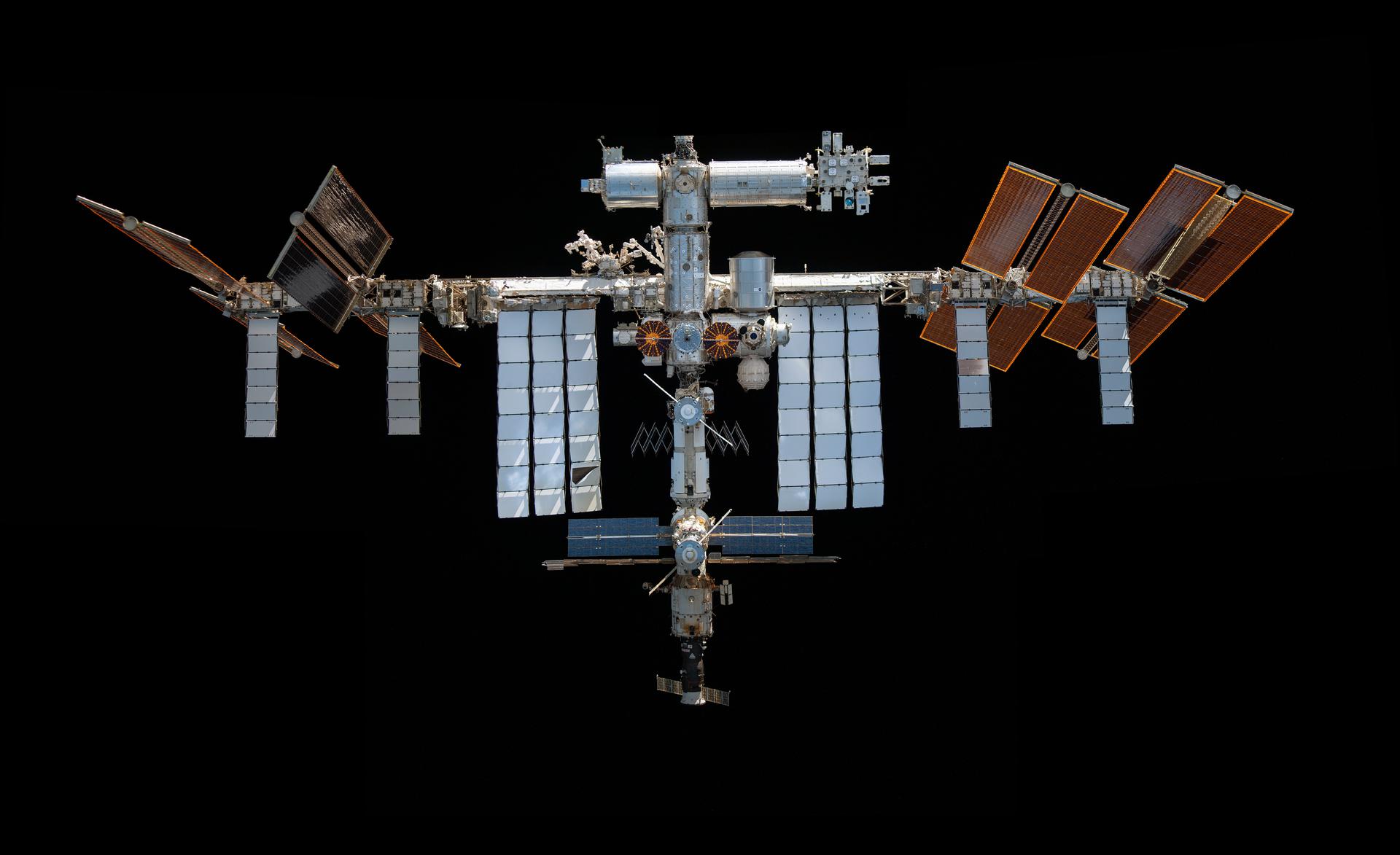
Space is a vacuum. i.e. The lack-of-a-thing that makes a thermos great at keeping your drink hot. A satellite is, if nothing else, a fantastic thermos. A data center in space would necessarily rely completely on cooling by radiation, unlike a terrestrial data center that can make use of convection and conduction. You can't just pipe heat out into the atmosphere or build a heat exchanger. You can't exchange heat with vacuum. You can only radiate heat into it.
Heat is going to limit the compute that can be done in a satellite data centre and radiative cooling solutions are going to massively increase weight. It makes far more sense to build data centers in the arctic.
Musk is up to something here. This could be another hyperloop (i.e. A distracting promise meant to sabotage competition). It could be a legal dodge. It could be a power grab. What it will not be is a useful source of computing power. Anyone who takes this venture seriously is probably going to be burned.
It probably increases Elon's share of the combined entity.
It delivers on a promise to investors that he will make money for them, even as the underlying businesses are lousy.
A Starlink satellite uses about 5K Watts of solar power. It needs to dissipate around that amount (+ the sun power on it) just to operate. There are around 10K starlink satellites already in orbit, which means that the Starlink constellation is already effectively equivalent to a 50 Mega-watt (in a rough, back of the envelope feasibility way).
Isn't 50MW already by itself equivalent to the energy consumption of a typical hyperscaler cloud?
Why is starlink possible and other computations are not? Starlink is also already financially viable. Wouldn't it also become significantly cheaper as we improve our orbital launch vehicles?
A single AI rack consumes 60kW, and there is apparently a single DC that alone consumes 650MW.
When Microsoft puts in a DC, the machines are done in units of a "stamp", ie a couple racks together. These aren't scaled by dollar or sqft, but by the MW.
And on top of that... That's a bunch of satellites not even trying to crunch data at top speed. No where near the right order of magnitude.
The energy demand of these DCs is monstrous, I seriously can't imagine something similar being deployed in orbit...
That doesn't mean you need a gigawatt of power before achieving anything useful. For training, maybe, but not for inference which scales horizontally.
With satellites you need an orbital slot and launch time, and I honestly don't know how hard it is to get those, but space is pretty big and the only reasons for denying them would be safety. Once those are obtained done you can make satellite inferencing cubes in a factory and just keep launching them on a cadence.
I also strongly suspect, given some background reading, that radiator tech is very far from optimized. Most stuff we put into space so far just doesn't have big cooling needs, so there wasn't a market for advanced space radiator tech. If now there is, there's probably a lot of low hanging fruit (droplet radiators maybe).
You'd be wrong. There's a huge incentive to optimized radiator tech because of things like the international space station and MIR. It's a huge part of the deployment due to life having pretty narrow thermal bands. The added cost to deploy that tech also incentivizes hyper optimization.
Making bigger structures doesn't make that problem easier.
Fun fact, heat pipes were invented by NASA in the 60s to help address this very problem.
Space has some huge downsides:
* Everything is being irradiated all the time. Things need to be radiation hardened or shielded.
* Putting even 1kg into space takes vast amounts of energy. A Falcon 9 burns 260 MJ of fuel per kg into LEO. I imagine the embodied energy in the disposable rocket and liquid oxygen make the total number 2-3x that at least.
* Cooling is a nightmare. The side of the satellite in the sun is very hot, while the side facing space is incredibly cold. No fans or heat sinks - all the heat has to be conducted from the electronics and radiated into space.
* Orbit keeping requires continuous effort. You need some sort of hypergolic rocket, which has the nasty effect of coating all your stuff in horrible corrosive chemicals
* You can't fix anything. Even a tiny failure means writing off the entire system.
* Everything has to be able to operate in a vacuum. No electrolytic capacitors for you!
So I guess the question is - why bother? The only benefit I can think of is very short "days" and "nights" - so you don't need as much solar or as big a battery to power the thing. But that benefit is surely outweighed by the fact you have to blast it all into space? Why not just overbuild the solar and batteries on earth?
"SmartIR’s graphene-based radiator launches on SpaceX Falcon 9" [1]. This could be the magic behind this bet on heat radiation through exotic material. Lot of blog posts say impossible, expensive, stock pump, etc. Could this be the underlying technology breakthrough? Along with avoiding complex self-assembly in space through decentralization (1 million AI constellation, laser-grid comms).
[1] https://www.graphene-info.com/smartir-s-graphene-based-radia...
1. The capital costs are higher, you have to expend tons of energy to put it into orbit
2. The maintenance costs are higher because the lifetime of satellites is pretty low
3. Refurbishment is next to impossible
4. Networking is harder, either you are ok with a relatively small datacenter or you have to deal with radio or laser links between satellites
For starlink this isn't as important. Starlink provides something that can't really be provided any other way, but even so just the US uses 176 terawatt-hours of power for data centers so starlink is 1/400th of that assuming your estimate is accurate (and I'm not sure it is, does it account for the night cycle?)
Or you float them on the ocean circumnavigating the earth?
Or we put the datacenters on giant Zeppelins orbiting above the clouds?
If we are doing fantasy tech solutions to space problems, why not for a million other more sensible options?
What that does have to do with anything? If you want to solar-power them, you still are subject to terrestrial effects. You can't just shut off a data center at night.
> Or we put the datacenters on giant Zeppelins orbiting above the clouds?
They'd have to fly at 50,000+ ft to be clear of clouds, I doubt you can lift heavy payloads this high using bouyancy given the low air density. High risk to people on the ground in case of failure because no re-entry.
> If we are doing fantasy tech solutions to space problems, why not for a million other more sensible options?
How is this a fantasy? With Starlink operational, this hardly seems a mere 'fantasy'.
Current satellites get around 150W/kg from solar panels. Cost of launching 1kg to space is ~$2000. So we're at $13.3(3)/Watt. We need to double it because same amount need to be dissipated so let's round it to $27
One NVidia GB200 rack is ~120kW. To just power it, you need to send $3 240 000 worth of payload into space. Then you need to send additional $3 106 000 (rack of them is 1553kg) worth of servers. Plus some extra for piping
Starship launch costs have a $100/kg goal, so we'd be at $40 / kW, or $4800 for a 120kW cluster.
120kW is 1GWh annually, costs you around $130k in Europe per year to operate. ROI 14 days. Even if launch costs aren't that low in the beginning and there's a lot more stuff to send up, your ROI might be a year or so, which is still good.
[1] - https://www.polytechnique-insights.com/en/columns/space/ultr... [2] - https://space.stackexchange.com/questions/12824/lightest-pos...
A quick search gave me a lifespan of around 5 years for a starlink satellite.
If you put in orbit a steady stream of new satellites every year maintenance is not an issue, you just stop using worn out or broken ones.
... if you completely ignore the difficulty of getting them up there. I'd be interested to see a comparison between the amount of energy required to get a solar panel into space, and the amount of energy it produces during its lifetime there. I wouldn't be surprised if it were a net negative; getting mass into orbit requires a tremendous amount of energy, and putting it there with a rocket is not an efficient process.
5kg, 500W panel (don’t exactly know what the ratio is for a panel plus protection and frame for space, might be a few times better than this)
Say it produces about 350kWh per month before losses.
Mass to LEO is something like 10x the weight in fuel alone, so that’s going to be maybe 500kWh. Plus cryogenics etc.
So not actually that bad
At the end of the day I don't really care either way. It ain't my money, and their money isn't going to get back into the economy by sitting in a brokerage portfolio. To get them to spend money this is as good a way as any other, I guess. At least it helps fund a little spaceflight and satellite R&D on the way.
putting 1KW of solar on land - $2K, putting it into orbit on Starship (current ground-based heavy solar panels, 40kg for 4m2 of 1KW in space) - anywhere between $400 and $4K. Add to that that the costs on Earth will only be growing, while costs in space will be falling.
Ultimately Starship's costs will come down to the bare cost of fuel + oxidizer, 20kg per 1kg in LEO, i.e. less than $10. And if they manage streamlined operations and high reuse. Yet even with $100/kg, it is still better in space than on the ground.
And for cooling that people so complain about without running it in calculator - https://news.ycombinator.com/item?id=46878961
>2. The maintenance costs are higher because the lifetime of satellites is pretty low
it will live those 3-5 years of the GPU lifecycle.
That would make your solar panel (40kg) around $60K to put into space.
Even being generous and assuming you could get it to $100 per kg that's still $4000
There's a lot of land in the middle of nowhere that is going to be cheaper than sending shit to space.
with the GPU costing the same, it would only double the capex.
>Even being generous and assuming you could get it to $100 per kg that's still $4000
noise compare to the main cost - GPUs.
>There's a lot of land in the middle of nowhere that is going to be cheaper than sending shit to space.
Cheapness of location of your major investment - GPUs - may as well happen to be secondary to other considerations - power/cooling capacity stable availability, jurisdiction, etc.
Yes, only doubling the capex. With the benefits of, hmm, no maintenance access and awful networking?
This is the big thing, but Elon's child porn generator in orbit will be subject to US jurisdiction, just as much as if they were in Alaska. I guess he can avoid state law.
If jurisdiction is key, you can float a DC in international waters on a barge flying the flag of Panama or similar flag of convenience which you can pretty much buy at this scale. Pick a tin-pot country, fling a few million to the dictator, and you're set - with far less jurisdiction problems than a US, Russia, France launched satellite.
(I'm ignoring installation costs etc. because actually creating the satellites is ignored here, too)
And maintenance and replacing parts and managing flights and ... You're trying to yadda-yadda so much opex here!
A datacenter costs ~$1000/ft^2. How much equipment per square foot is there? say 100kg (1 ton per rack plus hallway). Which is $1000 to put into orbit on Starship at $100/kg. At sub-$50/kg, you can put into orbit all the equipment plus solar panels and it would still be cheaper than on the ground.
That is exactly what you do - just like with Starlink - toss out the panels with attached GPUs, laser transmitter and small ion drive.
The known scammer guy? Like these ideas wouldn't pass the questions at the end of a primary school presentation.
What starship? The fantasy rocket Musk has been promising for 10 years or the real one that has thus far delivered only one banana worth of payload into orbit?
> or the real one that has thus far delivered only one banana worth of payload into orbit?
once it starts delivering real payloads, the time for discussions will be no more, it will be time to rush to book your payload slot.
You meet this with "well, once it works, it'll be amazing and you'll be queuing up"? How very very musky!
What a cult.
However, with Starship SpaceX has both done more and less than putting a banana in orbit. Less, because it's never once been a true orbit; more, because these are learn-by-doing tests, all the reporting seems to be in agreement that it could already deliver useful mass to orbit if they wanted it to.
But without actually solving full reusability for the upper stage, this doesn't really have legs. Starship is cheap enough to build they can waste loads of them for this kind of testing, but not cheap enough for plans such as these to make sense if they're disposable.
Presumably they're planning on doing in-orbit propellant transfer to reboost the satellites so that they don't have to let their GPUs crash into the ocean...
Ionizing radiation disrupts the crystalline structure of the semiconductor and makes performance worse over time.
High energy protons randomly flip bits, can cause latchup, single event gate rupture, destroy hardware immediately, etc.
Just shoot it into space where it's all inaccessible and will burn out within 5 years, forcing a continuous replacement scheme and steady contracts with Nvidia and the like to deliver the next generation at the exact same scale, forever
Hell, you're going to lose some fraction of chips to entropy every year. What if you could process those into reaction mass?
The physics of consuming bits of old chip in an inefficient plasma thruster probably work, as do the crawling robots and crushers needed for orbital disassembly, but we're a few years away yet. And whilst on orbit chip replacement is much more mass efficient than replacing the whole spacecraft, radiators and all, it's also a nontrivial undertaking
These are all things which add weight, complexity and cost.
Propellant transfer to an orbital Starship hasn't even been done yet and that's completely vital to it's intended missions.
Minus one big one: permitting. Every datacentre I know going up right now is spending 90% of their bullshit budget on battlig state and local governments.
More convenient. But I'm balancing the cost equation. There are regimes where this balances. I don't think we're there yet. But it's irrational to reject it completely.
> Or put it on a boat, which is still 100 times more sensible than outer space
More corrosion. And still, interconnects.
Surely given starlinks 5ish year deorbit plan, you could design a platform to hold up for that long... And instead of burning the whole thing up you could just refurbish it when you swap out the actual rack contents, considering that those probably have an even shorter edge lifespan.
This adds weight and complexity and likely also forces a much higher orbit.
Maybe the AI workloads running on it achieve escape velocity? ;)
100 years later: "why does everything taste like cadmium?"
I would be. And granted, I know a lot more about launching satellites than building anything. But it would take me longer to get a satellite in the air than the weeks it will take me to fix a broken shelf in my kitchen. And hyperscalers are connecting in months, not weeks.
Hate to burst your bubble. But I have a background in aerospace engineering. I’ve financed stuff in this field, from launch vehicles to satellites. And I own stakes in a decent chunk of the plays in this field. Both for and against this hypothesis.
So yeah, I’ll hold my ground on having reasonable basis for being sceptical of blanket dismissals of this idea as much as I dismiss certainty in its success.
There are a lot of cheap shots around AI and aerospace. Some are coming from Musk. A lot are coming from one-liner pros. HN is pretty good at filtering those to get the good stuff, which is anyone doing real math.
Your assertion was "Every datacentre I know going up right now is spending 90% of their bullshit budget on battlig state and local governments" and you haven't demonstrated any expertise is building data centers.
You've given a very extraordinary claim about DC costs, with no evidence presented, nor expertise cited to sway our priors.
All satellites launched into orbit these days are required to have de-orbiting capabilities to "clean up" after EOL.
I dunno, two years ago I would have said municipal zoning probably ain't as hard to ignore as international treaties, but who the hell knows these days.
Yes. These are permitted in weeks for small groups, days for large ones. (In America.)
Permitting is a legitimate variable that weighs in favor of in-space data centers.
I wonder if you were thinking about muh emissions for a chemical rocket launched piece of machinery containing many toxic metals to be burnt up in the air in 3-5 years... It doesn't sound more environmentally friendly.
Source? I can't immediately find anything like that.
1. Assuming 500,000 USD in permitting costs. See 2.
2. Permits and approvals: Building permits, environmental assessments, and utility connection fees add extra expenses. In some jurisdictions, the approval process alone costs hundreds of thousands of dollars. https://www.truelook.com/blog/data-center-construction-costs
3. Assuming a 60MW facility at $10M/MW. See 4.
4. As a general rule, it costs between $600 to $1,100 per gross square foot or $7 million to $12 million per megawatt of commissioned IT load to build a data center. Therefore, if a 700,000-square foot, 60-megawatt data center were to be built in Northern Virginia, the world’s largest data center market, it would cost between $420 million and $770 million to construct the facility, including its powered shell and equipping the building with the appropriate electrical systems and HVAC components. https://dgtlinfra.com/how-much-does-it-cost-to-build-a-data-...
I’ve financed two data centers. Most of my time was spent over permitting. If I tracked it minute by minute, it may be 70 to 95%. But broadly speaking, if I had to be told about it before it was solved, it was (a) a real nuisance and (b) not technical.
Just admit it was hyperbole.
> an engineering and physics problem that he will somehow solve
no he won't
Or what you meant was "those poor billionaires can't do as they please with common resources of us all, and without any accountability"?
As a quick anecdote, there is a DC in construction in Portugal with a projected capacity of 1.2GW, powered by renewables.
You're spot on but you are not saying what you think you're saying)
Now that I think of it, a big hydro dam would be perfect: power and cooling in one place.
Downtown Los Angeles: The One Wilshire building, which is the worlds most connected building. There are over twenty floors of data centers. I used Corporate Colo which was a block or two away. That building had at least 10 floors of Data Centers.
Every DC I’ve been in (probably around 20 in total) has been multi storey.
xAI’s first data center buildout was in the 300MW range and their second is in the Gigawatt range. There are planned buildouts from other companies even bigger than that.
So data center buildouts in the AI era need 1-2 orders of magnitude more power and cooling than your 50MW estimate.
Even a single NVL72 rack, just one rack, needs 120kW.
Datacenters already exist. Putting datacenters in space does not offer any new capabilities.
The short answer is that ~100m2 of steel plate at 1400C (just below its melting point) will shed 50MW of power in black body radiation.
I would assume such a setup involves multiple stages of heat pumps to from GPU to 1400C radiatoe. Obviously that's going to impact efficiency.
Also I'm not seriously suggesting that 1400C radiators is a reasonable approach to cooling a space data centre. It's just intended to demonstrate how infeasible the idea is.
0. https://www.arccompute.io/solutions/hardware/gpu-servers/sup...
if the current satellite model dissipates 5kW, you can't just add a GPU (+1kW). maybe removing most of the downlink stuff lets you put in 2 GPUs? so if you had 10k of these, you'd have a pretty high-latency cluster of 20k GPUs.
I'm not saying I'd turn down free access to it, but it's also very cracked. you know, sort of Howard Hughesy.
This isn't quite true. It's very possible that the majority of that power is going into the antennas/lasers which technically means that the energy is being dissipated, but it never became heat in the first place. Also, 5KW solar power likely only means ~3kw of actual electrical consumption (you will over-provision a bit both for when you're behind the earth and also just for safety margin).
Aside from the point others have made that 50 MW is small in the context of hyperscalers, if you want to do things like SOTA LLM training, you can't feasibly do it with large numbers of small devices.
Density is key because of latency - you need the nodes to be in close physical proximity to communicate with each other at very high speeds.
For training an LLM, you're ideally going to want individual satellites with power delivery on the order of at least about 20 MW, and that's just for training previous-generation SOTA models. That's nearly 5,000 times more power than a single current Starlink satellite, and nearly 300 times that of the ISS.
You'd need radiator areas in the range of tens of thousands of square meters to handle that. Is it theoretically technically possible? Sure. But it's a long-term project, the kind of thing that Musk will say takes "5 years" that will actually take many decades. And making it economically viable is another story - the OP article points out other issues with that, such as handling hardware upgrades. Starlink's current model relies on many cheap satellites - the equation changes when each one is going to be very, very expensive, large, and difficult to deploy.
You might only care about coding models, but text is dominating the market share right now and Grok is the #2 model for that in arena rankings.
Openrouter is a decent proxy for real world use and Grok is currently 8% of the market: https://openrouter.ai/rankings (and is less than 7% of TypeScript programming)
They have no path to paying for their existence unless they drastically increase usage. There aren't going to be very many big winners in this segment and xAI's expenses are really really big.
Is the plan to have everyone so hopelessly dependent on their product that they grit their teeth and keep on paying?
Think about the stock return over a period - its composed of capital gains and dividends.
Now what happens capital gains disappears and perhaps turns into capital losses? Dividends have to go higher.
What does this mean? Less retained earnings / cashflows that can be re-invested.
Apple is the only one that will come out of this OK. The others will be destroyed for if they dont return cash, the cash balance will be discounted leading to a further reduction in the value of equity. The same thing that happened to Zuckerberg and Meta with the Metaverse fiasco.
Firms in the private sphere will go bust/acquired.
This is not how corporate finance works. Capital gains and losses apply to assets. And only the most disciplined companies boost dividends in the face of decline—most double down and try to spend their way back to greatness.
Gemini is practically guaranteed. With the ad model already primed, their financial resources, their traffic to endlessly promote Gemini (ala Chrome), their R&D capabilities around AI, their own chips, crazy access to training data, and so on - they'd have to pull the ultimate goof to mess up here.
Microsoft is toast, short of a miracle. I'd bet against Office and Windows here. As Office goes down, it's going to take Windows down with it. The great Office moat is about to end. The company struggles, the stock struggles, Azure gets spun off (unlock value, institutional pressure), Office + Windows get spun off - the company splits into pieces. The LLMs are an inflection point for Office and Microsoft is super at risk, backwards regarding AI and they're slow. The OpenAI pursuit as it was done, was a gigantic mistake for Microsoft - one of the dumbest strategies in the history of tech, it left them with their pants down. Altman may have killed a king by getting him to be complacent.
Grok is very unlikely to make it (as is). The merger with SpaceX guarantees its death as a competitor to GPT/Gemini/Claude, it's over. Maybe they'll turn Grok into something useful to SpaceX. More likely they'll slip behind and it'll die rapidly like Llama. The merger is because they see the writing on the wall, this is a bailout to the investors (not named Elon) of xAI, as the forced Twitter rollup was a bailout for the investors of Twitter.
Claude is in a weird spot. What they have is not worth $300-$500 billion. Can they figure out how to build a lot more value out of what they have today (and get their finances sustainable), before the clock runs out? Or do they get purchased by Meta, Microsoft, etc.
OpenAI has to rapidly roll out the advertising model and get the burn rate down to meaningless levels, so they're no longer dependent on capital markets for financing (that party is going to end suddenly).
Meta is permanently on the outside looking in. They will never field an in-house competitor to GPT or Gemini that can persistently keep up. Meta doesn't know what it is or why it should be trying to compete with GPT/Gemini/Claude. Their failure (at this) is already guaranteed. They should just acquire GPT 4o and let their aging userbase on FB endlessly talk itself into the grave for the next 30 years while clicking ads.
If Amazon knew what they were doing (they don't right now), they would: immediately split retail + ads and AWS. The ad business ensures that the retail business will continue to thrive and would be highly lucrative. Then have AWS purchase Anthropic when valuations drop, bolt it on to AWS everything. Far less of an anti-trust issue than if what is presently known as Amazon attempted it here and now. Anthropic needs to build a lot on to itself to sustain itself and justify its valuation, AWS already has the answer to that.
If valuations plunge, and OpenAI is not yet sustainable, Microsoft should split itself into pieces and have the Windows-Office division purchase OpenAI as their AI option. It'd be their only path to avoiding anti-trust blocking that acquisition. As is Microsoft would not be allowed to buy OpenAI. Alternatively Microsoft can take a shot at acquiring Anthropic at some point - this seems likely given the internal usage going on at Redmond, the primary question is anti-trust (but in this case, Anthropic is viewed as the #3, so Microsoft would argue it bolsters competition with GPT & Gemini).
Also you say meta will never field a competitor to GPT - but they did llama; not as a commercial product, but probably an attempt at it (and failed). Otherwise agreed.
Im not convinced on this TBH in the long-run. Google is seemingly a pure play technology firm that has to make products for the sake of it, else the technology is not accessible/usable. Does that mean they are at their core a product firm? Nah. Thats always been Apple's core thing, along side superior marketing.
One only has to compare Google's marketing of the Pixel phone to Apple - it does not come close. Nobody connects with Google's ads, the way they do with Apple. Google has a mountain to climb and has to compensate the user tremendously for switching.
Apple will watch the developments keenly and figure out where they can take advantage of the investments others have made. Hence the partnerships et al with Google.
A satellite is quite unlike a thermos in the sense that it is carefully tuned to keep its temperature within a relatively narrow band around room temperature.[1] during all operational phases.
This is because, despite intended space usage, devices and parts are usually tested and qualified for temperature limits around room temperature.
[1] "Room temperature" is actually a technical term meaning 20°C (exceptions in some fields and industries confirm the rule).
While personally I think it's another AI cash grab and he just wants to find some more customers for spacex, other thing is "you can't copyright infringe in space" so it might be perfect place to load that terabytes of stolen copyrighted material to train data sets, if some country suddenly decides corporation stealing copyright content is not okay any more
ISS radiators are huge 13.6x3.1 m. Each radiates 35 kW. So you need 3 of them to have your 100 kW target. They are also filled with gas that needs pumping so not exactly a passive system and as such can break down for a whole lot of reasons.
You also need to collect that power so you need about the same amount of power coming from solar panels. ISS solar array wings are 35x12 m and can generate about 31 kW of power. So we’ll need at least 3 of them. BTW each weighs a ton, a literal metric ton.
It hardly seems feasible. Huge infrastructure costs for small AI server rooms in space.
What (literally) on earth makes you say this? The arctic has excellent cooling and extremely poor sun exposure. Where would the energy come from?
A satellite in sun-synchronous orbit would have approximately 3-5X more energy generation than a terrestrial solar panel in the arctic. Additionally anything terrestrial needs maintenance for e.g. clearing dust and snow off of the panels (a major concern in deserts which would otherwise seem to be ideal locations).
There are so many more considerations that go into terrestrial generation. This is not to deny the criticism of orbital panels, but rather to encourage a real and apolitical engineering discussion.
Building 3-5x more solar plants in the Arctic, would still be cheaper than travelling to space. And that's ignoring that there are other, more efficient plants possible. Even just building a long powerline around the globe to fetch it from warmer regions would be cheaper.
Well first you have to make solar panels works in the polar nights, in winter they have a few minutes of sun in the day at most.
It's perfectly possible to put small data centres in city centres and pipe the heat around town, they take up very very little space and if you're consuming the heat, you don't need the noisy cooling towers (Ok maybe a little in summer).
Similarly if you stick your datacentre right next to a big nuclear power plant, nobody is even going to notice let alone care.
Heat pumps are magic. They're something like 300% efficient. Each watt generates 3 watts of useful heat.
I keep seeing that term, but if it does not mean "AI arms race" or "AI surveillance race", what does it mean?
Those are the only explanations that I have found, and neither is any race that I would like to see anyone win.
Imo I would be extremely angry if I owned any spacex equity. At least nvidia might be selling to china in the short term... what's the upside for spacex?
I don't know of an instance of this happening successfully.
They're losing money now because they're making massive bets on future capacity needs. If those bets are wrong, they're going to be in very big trouble when demand levels off lower than expected. But that's not the same as demand being zero.
Stop this trope please. We (1) don't really know what their margins are and (2) because of the hard tie-in to GPU costs/maintenance we don't know (yet) what the useful life (and therefore associated OPEX) is of GPUs.
> If they stopped training and building out future capacity they would already be raking in cash.
That's like saying "if car companies stopped researching how to make their cars more efficient, safer, more reliable they'd be more profitable"
But when they say, "Win the AI race," they mean, "Build the machine god first." Make of this what you will.
Data centers in space are the same kind of justification imo.
Of course that didn't work out with this specific acquisition, but overall it's at least a somewhat reasonable idea.
Starship development is consuming billions. F9 & Starlink are probably profitable ?
I’d say this is more shifting of the future burden of xAI to one of his companies he knows will be a hit stonk when it goes public, where enthusiasm is unlikely to be dampened by another massive cash drain on the books.
Off on a tangent here but I'd love for anyone to seriously explain how they believe the "AI race" is economically winnable in any meaningful way.
Like what is the believed inflection point that changes us from the current situation (where all of the state-of-the-art models are roughly equal if you squint, and the open models are only like one release cycle behind) to one where someone achieves a clear advantage that won't be reproduced by everyone else in the "race" virtually immediately.
Everyone is spending crazy amounts of money in the hopes that the competition will tap out because they can't afford it anymore.
Then they can cool down on their spending and increase prices to a sustainable level because they have an effective monopoly.
At the same time, it'd give the country controlling it so much economic, political and military power that it becomes impossible to challenge.
I find that all to be a bit of a stretch, but I think that's roughly what people talking about "the AI race" have in mind.
Because the first company to have a full functioning AGI will most likely be the most valuable in the world. So it is worth all the effort to be the first.
Office? Dead. Box? Dead. DropBox? Dead. And so on. They'll move on anything that touches users (from productivity software to storage). You're not going to pay $20-$30 for GPT and then pay for DropBox too, OpenAI will just do an Amazon Prime maneuver and stack more onto what you get to try to kill everyone else.
Google of course has a huge lead on this move already with their various prominent apps.
Also the same issue with radiative cooling pops up for space solar cells - they tend to run way hotter than on Earth and that lowers their efficiency relative to what you could get terrestrially.
It could also just be ignorance and talking out of his ass to look smart. Like when he took over Twitter and began publicly spewing wrong technical details as of he knew what he was talking about and being corrected by the people actually working on the product.
"More efficient cooling architecture taking advantage of higher ΔT in space"
My bold claim: The cost of cooling will not be $0. The cost of launching that cooling into space will also not be $0. The cost of maintaining that mechanically complex cooling in space will not be $0.
They then throw in enough unrealistic calculations later in the "paper" to show that they thought about the actual cost at least a little bit. Apparently just enough to conclude that it's so massive there's no way they're going to list it in the table. Table 1 is pure fantasy.
- https://news.ycombinator.com/item?id=45667458
- https://news.ycombinator.com/item?id=43977188
I will not re-read them, but from what I recall from those threads is numbers don't make sense. Something like:
- radiators the multiple square kilometers in size, in space;
- lifting necessary payloads to space is multiples of magnitudes more than we have technology/capacity as the whole world now;
- maintanence nightmare. yeah you can have redundancy, but no feasable way to maintain;
- compare how much effort/energy/maintenance is required to have ISS or Tiangong space stations - these space datacenters sound ridiculous;
NB: I would be happy to be proven wrong. There are many things that are possible if we would invest effort (and money) into it, akin to JFK's "We choose to go to the Moon" talk. Sounded incredible, but it was done from nearly zero to Moon landing in ~7 years. Though as much as I udnerstand - napkin math for such scale of space data centers seem to need efforts that are orders or magnitude more than Apollo mission, i.e. launching Saturn V for years multiple times per day. Even with booster reuse technology this seems literally incredible (not to mention fuel/material costs).
Sufficient hype funds more work for his rocket company.
The more work they have the faster they can develop the systems to get to Mars. His pet project.
I really think it's that simple.
We can tell because it’s not being treated as a serious goal. 100% of the focus is on the big vroom vroom part that’s really exciting to kids who get particularly excited by things that go vroom, and approximately 0% of the focus is on developing all the less glamorous but equally essential components of a successful Mars mission, like making sure the crew stays healthy.
Oh, that crap again.
It's a way to get cheap capital to get cool tech. (Personal opinion.)
Like dark fibre in the 1990s, there will absolutely–someday–be a need for liquid-droplet radiators [1]. Nobody is funding it today. But if you stick a GPU on one end, maybe they will let you build a space station.
Those flasks don’t have any space age insulating material - mainly just a vacuum…
Technology from 1892…
Note that KSP is a game that fictionalizes a lot of things, and sizes of solar panels and radiators are one of those things.
Where will they go, nobody knows!
Then you get people paying much more money to use less-tightly-moderated space-based AI rather than heavily moderated AI.
Specifically: Starship makes no economic sense. There simply isn’t any pre-existing demand for the kind of heavy lift capacity and cadence that Starship is designed to deliver. Nor is there anyone who isn’t currently launching heavy payloads to LEO but the only thing holding them back is that they need weekly launches because their use case demands a whole lot of heavy stuff in space on a tight schedule and that’s an all-or-nothing thing for them.
So nobody else has a reason to buy 50 Starship launches per year. And the planned Starlink satellites are already mostly in orbit. So what do you do? Just sell Starship to xAI, the same way he fixed Cybertruck’s demand problem by selling heaps of them to SpaceX.
If (as seems to be the case) nobody can identify a specific source of latent demand that is large enough to soak up the two order of magnitude increase in the supply of heavy lift launch capacity that Elon wants to deliver, then that strongly suggests that SpaceX does not actually have a business plan for Starship. Or at least, not a business plan that’s been thought through as clearly as a $5 billion (and counting) investment would warrant.
“Defense” is not nearly specific enough to count as an answer. What kind of defense application, specifically, do you have in mind, and why does it need specifically this kind of heavy lift capacity to be viable?
But now looking back and accounting for the claims he made there's a pattern.
I saw this article:
https://www.wired.com/story/theres-a-very-simple-pattern-to-...
that said... he did jumpstart the EV industry. He has put up satellites every week for years. He is still a net benefit to all of us.
This is widely believed (especially in the US, where, other than the Leaf, most early electric cars never launched), but honestly pretty dubious. The first real electric cars, with significant production:
2010 - Mitsubishi i-MiEV, Nissan Leaf
2011 - Smart electric, Volvo C30 electric, Ford Focus electric, BYD e6.
2012 - Renault Zoe (Renault launched a couple of other vehicles on the same platform ~2010, but they never saw significant production), Tesla Model S (Tesla had a prior car, the Roadster, but it never saw significant production).
2013 - VW eUP, eGolf (VW occasionally put out an electric Golf historically, going back to 1992, but again those were never produced in large quantities).
The big change ~2010 was around the economics of lithium ion batteries; they finally got cheap enough that everyone started pulling their concept designs and small-scale demonstration models into full production.
Talk to any former SpaceX or Tesla employee. They will clue you in that both were successful in spite of Elon, not because of him.
The Cybertruck was really the first product he saw to completion from his own design. And well...
why is lying at the edge of committing fraud so respected?
Unfortunately no. The arctic region is too cold and humid. You need way more energy to manage the cooling of a datacenter there than somewhere hotter.
What about gamma rays? there is a reason why "space hardened" microcontrollers are MIPS chips from the 90s on massive dies with a huge wedge of metal on it. You can't just take a normal 4micron die and yeet it into space and have done with it.
Then there is the downlink. If you want low latency, then you need to be in Low earth orbit. That means that you'll spend >40% of your time in darkness. So not only do you need to have a MAssive heat exchanger and liquid cooling loop, which is space rated, you need to have ?20mwhr of battery as well (also cooled/heated because swinging +/- 140 C every 90 minutes is not going to make them happy)
Then there is data consistency, is this inference only? or are we expecting to have a mesh network that can do whole "datacentre" cache coherence? because I have bad news for you if you're going to try that.
Its just complete and total bollocks.
utter utter bollocks.
https://www.nasa.gov/smallsat-institute/sst-soa/thermal-cont...
But I really hope posts like this don't discourage whoever is investing in this. The problems are solvable, and someone is trying to solve them, that's all that matters. My only concern is the latency, but starlink seems to manage somehow.
Also, a matter of technicality (or so I've heard it said) is that the earth itself doesn't dissipate heat, it transforms or transfers entropy.
Why would they need to get data back to earth for near real time workloads? What we should be thinking about is how these things will operate in space and communicate with each other and whoever else is in space. The Earth is just ancient history
SpaceX: "we're going to put datacenters in space"
HN comments: "obviously we'll need to move human civilization into space first for this to make sense. checks out."
This is just a question. I have no expertise at all with this.
All in all, the cooling system would likely consume more energy than the compute parts.
requires a lot of weight (cooling fluid). requires a lot of materials science (dont want to burn out radiator). requires a lot of moving parts (sun shutters if your orbit ever faces the sun - radiator is going to be both ways).
so that sounds all well and good (wow! 4th power efficiency!) but it's still insanely expensive and if your radiator solution fucks up in any way (in famously easy to service environment space) then your entire investment is toast
now i havent run the math on cost or what elon thinks the cost is, but my extremely favorable back of hand math suggests he's full of it
Radiative power is really efficient for hot things but not so great when you're trying to keep things down to normal levels. Efficient for shedding heat from a sun but not so much for keeping a cpu from overheating...
T^4 is not exponential in T, it’s polynomial. For exponential, T must be in the exponent, e.g. 2^T or so.
Still, pretty effective.
Having said that, agree that Elon is full of it.
On the similar lines, why can't one run a refrigerator in space?
His plan here clearly hinges around using robots to create a fully-automated GPU manufacturing and launch facility on the moon. Not launching any meaningful number from earth.
Raises some big questions about whether there are actually sufficient materials for GPU manufacture on the moon... But, whatever the case, the current pitch of earth-launches that the people involved with this "space datacenter" thing are making is a lie. I think it just sounds better than outright saying "we're going to build a self-replicating robot factory on the moon", and we are in the age of lying.
That's wise.
However, TFA's purpose in assuming cooling (and other difficulties) have been worked out (even though they most definitely have not) was to talk about other things that make orbital datacenters in space economically dubious. As mentioned:
But even if we stipulate that radiation, cooling, latency, and launch costs are all solved, other fundamental issues still make orbital data centers, at least as SpaceX understands them, a complete fantasy. Three in particular come to mind:They might be closer to collapsing than most people think. It's not unheard of that a billionaires net worth drops to zero over night.
I think it's mostly financial reasons why they merged the companies, this space datacenter idea was born to justify the merge of SpaceX and xAI. To give investors hope, not to really do it.
For example: quite apart from the fact of how much rocket fuel is it going to take to haul all this shit up there at the kind of scale that would make these space data centres even remotely worthwhile.
I'm not against space travel or space exploration, or putting useful satellites in orbit, or the advancement of science or anything like that - quite the opposite in fact, I love all this stuff. But it has to be for something that matters.
Not for some deranged billionaire's boondoggle that makes no sense. I am so inexpressibly tired of all these guys and their stupid, arrogant, high-handed schemes.
Because rocket fuels are extremely toxic and the environmental impact of pointlessly burning a vast quantity of rocket fuel for something as nonsensical as data centres in space will be appalling.
Next up in the equation is surface emissivity which we’ve got a lot of experience in the automotive sector.
And finally surface area, once again, getting quite good here with nanotechnology.
Yes he’s distracting, no it’s not as impossible as many people think.
So your hot thing is radiating directly onto the next hot thing over, the one that also needs to cool down?
Yeah, pumps, tubes, and fluids are some of the worst things to add to a satellite. It's probably cheaper to use more radiators.
Maybe it's possible to make something economical with Peltier elements. But it's still not even a budget problem yet, it's not plainly not viable.
> getting quite good here with nanotechnology
Small features and fractal surfaces are useless here.
Peltiers generate a lot of heat to get the job done so even though electricity is pretty much free, probably not a sure bet.
It's not physically impossible. Of course not. It's been done thousands of times already. But it doesn't make any economic sense. It's like putting a McDonald's at the top of Everest. Is it possible? Of course. Is it worth the enormous difficulty and expense to put one there? Not even a little.
Same with datacenters in space, not today, but in 1000 years definitely, 100 surely, 10?
As for the economics, it makes about as much sense as running jet engines at full tilt to power them.
Hillary (he features on the NZ Five Dollar note) was one of those guys who does things for no good reason. He also went to both poles. This only tells us that it is indeed possible, but not that it's desirable or will become routine.
- let's say 8x 800W GPUs and neglect the CPU, that's 6400W
- let's further assume the PSU is 100% efficient
- let's also assume that you allow the server hardware to run at 77 degrees C, or 350K, which is already pretty hot for modern datacenter chips.
Your radiator would need to dissipate those 6400W, requiring it to be almost 8 square meters in size. That's a lot of launch mass. Adding 50 degrees will reduce your required area to only about 4.4 square meters with the consequence that chip temps will rise by 50 degrees also, putting them at 127 degrees C.
No CPU I'm aware of can run at those temps for very long and most modern chips will start to self throttle above about 100
You put the cold side of the phase change on the internal cooling loop, step up the external cooling loop as high temp as you can and then circulate that through the radiators. You might even do this step up more than once.
Imagine the data center like a box, you want it to be cold inside, and there’s a compressor, you use to transfer heat from inside to outside, the outside gets hot, inside cold. You then put a radiator on the back of the box and radiate the heat to the darkness of space.
This is all very dependent on the biggest and cheapest rockets in the world but it’s a tradeoff of convenience and serviceability for unlimited free energy.
My car doesn't spend too much time driving in vacuum, does yours?
Seems like quite a massive difference to ignore.
I don’t remember the difference from my science classes, isn’t This the same thing essentially?
Sure, space is cold. Good luck cooling your gear with a vacuum.
Don't even get me started on radiation, or even lack of gravity when it comes to trying to run high powered compute in space. If you think you are just going to plop a 1-4U server up there designed for use on earth, you are going to have some very interesting problems pop up. Anything not hardened for space is going to have a very high error/failure rate, and that includes anything socketed...
No. Nearly everyone that talks about data centers in space talks about cooling. The point of this article was to talk about other problems that would remain even if the most commonly talked about problems were solved.
It says:
> But even if we stipulate that radiation, cooling, latency, and launch costs are all solved, other fundamental issues still make orbital data centers, at least as SpaceX understands them, a complete fantasy.
and then talks about some of those other issues.
[0] https://images-assets.nasa.gov/image/jsc2021e064215_alt/jsc2...
https://en.wikipedia.org/wiki/External_Active_Thermal_Contro...
[1] https://en.wikipedia.org/wiki/External_Active_Thermal_Contro...
Once upon a time there was a bonkers "rods from god" mass bomb idea, but that didn't work either.
https://www.cbc.ca/news/canada/saskatoon/spacex-cbc-debris-s...
In deep space (no incident power) you need roughly 2000 sq meters of surface area per megawatt if you want to keep it at 40C. That would mean your 100 MW deep space datacenter (a small datacenter by AI standards) needs 200000 sq meters of surface area to dissipate your heat. That is a flat panel that has a side length of 300 meters (you radiate on both sides).
Unfortunately, you also need to get that power from the sun, and that will take a square with a 500 meter side length. That solar panel is only about 30% efficient, so it needs a heatsink for the 70% of incident power that becomes heat. That heatsink is another radiator. It turns out, we need to radiate a total of ~350 MW of heat to compute with 100 MW, giving a total heatsink side length of a bit under 600 meters.
All in, separate from the computers and assuming no losses from there, you need a 500x500 meter solar panel and a 600x600 meter radiator just for power and heat management on a relatively small compute cluster.
This sounds small compared to things built on Earth, but it's huge compared to anything that has been sent to space before. The ISS is about 100 meters across and about 30 meters wide for comparison.
Second, are you saying that we basically need to have a radiator as big (approximately) as the solar panels?
That is a lot, but it does sound manageable, in the sense that it approximately doubles what we require anyway for power.
So, not saying that it’s easy or feasible, but saying that cooling then seems “just” as difficult as power, not insurmountably more difficult. (Note that the article lists cooling, radiation, latency, and launch costs as known hard problems, but not power.)
What is this figure based on?
That is the goal of Starship though. The ISS has a mass of 400 ton, the goal is to need only two cheap launches of Starship v4 for that.
Please, no!
That specific aspect is NOT true in space because there's nothing stopping thermal radiation.
Now you're correct that you can't remove heat by conduction or convection in space, but it's not that hard to radiate away energy in space. In fact rocket engine nozzle extensions of rocket upper stages depend on thermal radiation to avoid melting. They glow cherry red and emit a lot of energy.
By Stefan–Boltzmann law, thermal radiation goes up with temperature to the 4th power. If you use a coolant that lets your radiator glow you can conduct heat away very efficiently. This is generally problematic to do on Earth because of the danger of such a thing and also because such heat would cause significant chemical reactions of the radiator with our corrosive oxygen atmosphere.
Even without making them super hot, there's already significant energy density on SpaceX's satellites. They're at around 75 kW of energy generation that needs to be radiated away.
And on your final statement, hyperloop was not used as a "distraction" as he never even funded it. He had been talking about it for years and years until fanboys on twitter finally talked him into releasing that hastily put together white paper. The various hyperloop companies out there never had any investment from him.
Not necessarily. There are many modern thermos "cups" that are just a regular cup, except with two layers of glass and a vacuum. Even the top is open all the time. (e.g. https://www.ikea.com/us/en/p/passerad-double-wall-glass-8054... )
It's still good enough to keep your coffee hot for an entire day.
> Musk admitted to his biographer Ashlee Vance that Hyperloop was all about trying to get legislators to cancel plans for high-speed rail in California—even though he had no plans to build it.
https://time.com/6203815/elon-musk-flaws-billionaire-visions...
There should be some temperature where incoming radiation (sunlight) balances outgoing radiation (thermal IR). As long as you're ok with whatever that temperature is at our distance from the sun, I'd think the only real issue would be making sure your satellite has enough thermal conductivity.
1. Getting things to space is incredibly expensive
2. Ingress/egress are almost always a major bottleneck - how is bandwidth cheaper in space?
3. Chips must be “Rad-hard” - that is do more error correcting from ionizing radiation - there were entire teams at NASA dedicated to special hardware for this.
4. Gravity and atmospheric pressure actually do wonders for easy cooling. Heat is not dissipated in space like we are all used to and you must burn additional energy trying to move the heat generated away from source.
5. Energy production will be cheaper from earth due to mass manufacturing of necessary components in energy systems - space energy systems need novel technology where economies of scale are lost.
Would love for someone to make the case for why it actually makes total sense, because it’s really hard to see for me!
1. Solving cost of launching mass has been the entire premise of SpaceX since day one and they have the track record.
2. Ingress/egress aren't at all bottlenecks for inferencing. The bytes you get before you max out a context window are trivial, especially after compression. If you're thinking about latency, chat latencies are already quite high and there's going to be plenty of non-latency sensitive workloads in future (think coding agents left running for hours on their own inside sandboxes).
3. This could be an issue, but inferencing can be tolerant to errors as it's already non-deterministic and models can 'recover' from bad tokens if there aren't too many of them. If you do immersion cooling then the coolant will protect the chips from radiation as well.
4. There is probably plenty of scope to optimize space radiators. It was never a priority until now and is "just" an engineering problem.
5. What mass manufacture? Energy production for AI datacenters is currently bottlenecked on Siemens and others refusing to ramp up production of combined cycle gas turbines. They're converting old jet engines into power plants to work around this bottleneck. Ground solar is simply not being considered by anyone in the industry because even at AI spending levels they can't store enough power in batteries to ride out the night or low power cloudy days. That's not an issue in space where the huge amount of Chinese PV overproduction can be used 24/7.
It's a physics problem, as others pointed out, but even if we take it as another "just an engineering problem", have a look at the Hyperloop. Which is similarly just a long vacuum tube, and inside is like an air hockey table, not that big a deal, right?...
Well, it's a physics problem. The engineering solution is possibly not cost efficient. I'd put a lot of money that it isn't.
Elon musk has a history of making improbable-sounding promises (buy a tesla now, by 2018 it will be a self-driving robotaxi earning money while you sleep, humanoid robots, hyperloops).
The majority of these promises have sounded cool enough to enough people that the stock associated with him (TSLA) has made people literal millionaires just by holding onto the stock, and more and more people have bought in and thus have a financial interest in Musk's ventures being seen in a good light (since TSLA stock does not go up or down based on tesla's performance, it goes up or down based on the vibes of elon musk. It is not a car company stock, it is an elon vibes check).
The thing he's saying now pattern matches to be pretty similar, and so given Musk's goal is to gain money, and he gains money by TSLA and SpaceX stock going up, this makes perfect sense as a thing to say and even make minor motions towards in order to make him richer.
People will support it too since it pattern matches with the thing prior TSLA holders got rich off of, and so people will want to keep the musk vibes high so that their own $tsla holdings go to the moon.
Make sense now?
I find this to be the most obvious game plan here. Makes total sense from financial engineering point of view.
You _might_ get to develop nice tech/IP to enable other space based businesses at the same time. "we sold them on X but delivered Y". So it's a bit of a hail mary, but makes total sense to me if you want to have a large budget for inventing the future.
Once you can demonstrate even a fraction of this capability of operations ... I think you can sell a "space dominance" offering to Pentagon for example and just keep pedaling.
"We are going to build the perfect weapon" does not necessarily entice as large engineer population as "we are going to Star Trek".
Another thing - if Moon is going to be a thing, then _properties on Moon_ are going to be a thing.
In theories of value in post-ai societies scarce assets like land are going to become more valuable. So it's a long term plan that makes sense if you believe Moon will be a realestate market.
It is not just a number, as it is for people who just save a few dollars, for whom it really is just a number until they withdraw money to use it. The billionaire's money is not "money", it is actual working assets. Companies doing stuff mostly. Which they fully control (the small investor does not even have any control worth mentioning when they own shares of a public company).
They don't just play with money, they play with real things! And they want to play with ever bigger real things. They don't just want to improve some minor product. They want to control the fate of civilization.
I hate this money view with a passion, this is what many on the left get wrong. This is not Scrooge McDuck and his money pile. Money is an abstraction, and it is misused terribly, hiding what is actually going on for too many observers who then go on to discuss "numbers".
Also people made fun of tesla that it will never be able to compete with the big carmakers. Now I would rather have some stocks in tesla than holding on to volkswagen.
Free space optics are much faster than data to/from the ground. If the training workloads only require high bandwidth between sats, this isn’t a real issue.
They don't do RAD hardening on chips these days, they just accept error and use redundant CPUs.
I think I've also seen someone mention that the cost and power benefit of substituting rad-hard chips with garden variety wean off fast once the level of redundancy goes up, and also it can't handle deep space radiations that just kill Earthbound chips rather than partially glitching them.
Note that on modern hardware cosmic rays permanently disable circuits, not mere bitflips.
No, he's not. Dragon is using CotS, non rad-hardened CPUs. And it's rated to carry humans to space.
> AWST: So, NASA does not require SpaceX to use radiation-hardened computer systems on the Dragon?
John Muratore: No, as a matter of fact NASA doesn't require it on their own systems, either. I spent 30 years at NASA and in the Air Force doing this kind of work. My last job was chief engineer of the shuttle program at NASA, and before that as shuttle flight director. I managed flight programs and built the mission control center that we use there today.
On the space station, some areas are using rad-hardened parts and other parts use COTS parts. Most of the control of the space station occurs through laptop computers which are not radiation hardened.
> Q: So, these flight computers on Dragon – there are three on board, and that's for redundancy?
A: There are actually six computers. They operate in pairs, so there are three computer units, each of which have two computers checking on each other. The reason we have three is when operating in proximity of ISS, we have to always have two computer strings voting on something on critical actions. We have three so we can tolerate a failure and still have two voting on each other. And that has nothing to do with radiation, that has to do with ensuring that we're safe when we're flying our vehicle in the proximity of the space station.
I went into the lab earlier today, and we have 18 different processing units with computers in them. We have three main computers, but 18 units that have a computer of some kind, and all of them are triple computers – everything is three processors. So we have like 54 processors on the spacecraft. It's a highly distributed design and very fault-tolerant and very robust.
[1] - https://aviationweek.com/dragons-radiation-tolerant-design
Those are not independent facts. They put the hardware inside, behind the radiation shielding they use to keep the astronauts safe. It's why regular old IBM laptops work on the Space Station too. That kind of shielding is going to blow your mass budget if you use it on these satellites.
SpaceX, which prefers COTS components when it can use them, still went with AMD Versal chips for Starlink. Because that kind of high performance, small process node hardware doesn't last long in space otherwise (phone SoC-based cubesats in LEO never lasted more than a year, and often only a month or so).
Which is exactly how you'd do a hypothetical dc in space. Come on, you're arguing for the sake of arguing. CotS works. This is not an issue.
> That kind of shielding is going to blow your mass budget
SpX is already leading in upmass by a large margin. Starship improves mass to orbit. Again, this is a "solved" issue.
There are other problems in building space DCs. Rad hardening is not one of them. AI training is so fault tolerant already that this was never an issue.
1. every gram you need to send to space is costly, a issue you don't have at ground level
2. cooling is a catastrophe, sure space is cold, but also a vacuum, so the cooling rate is roughly the infrared radiation rate. This means if you are not careful with the surface of a satellite it can end up being very slowly cooked by sunlight alone not including running any higher heat producing component (as it absorbs more heat from sunlight then it emits, there is a reason satellites are mostly white, silver or reflective gold in color). Sure better surface materials fix that, but not to a point where you would want to run any heavy compute on it.
3. zero repair-ability, most long running satellites have a lot of redundancy. Also at least if you are bulk buying Nvidea GPGPUs on single digit Million Euro basis it's not rare that 30% have some level of defect. Not necessary "fully broken" but "performs less good then it should/compared to other units" kind of broken.
4. radiation/solar wind protections are a huge problem. Heck even if you run things on earth it's a problem as long as your operations scale is large enough. In space things are magnitudes worse.
5. every rocket lunch causes atmospheric damage, so does every satellite evaporating on re-entry. That wasn't that relevant in the past, but might become a problem just for keeping stuff like Starlink running. We don't need to make it worse by putting datacenters into space.
6. Kessler Syndrom is real and could seriously hurt humanity as a whole, no reason to make it much more likely by putting things into space which don't need to go there.
Last but not least, wtf would you even want to do it?
There is zero benefit, non nada.
Even this isn't true. It's ~120 degC in daylight in LEO. It only gets cold in the shade, but a solar powered data center is pretty useless in the shade.
And yet journalists at major institutions have been repeating Musk's claims with very little skepticism ("xAI and SpaceX are merging to bring data centers to space").
Otherwise the title would’ve been something similar to “Experts question Musk’s space claims as ‘fantasy’”
It’s important to not mix the two as you get very biased news stations. You can start to see who is showing their bias when reading multiple outlets on the same topic
> 1. every gram you need to send to space is costly, a issue you don't have at ground level
This is a one time cost. Maybe the running costs are cheap enough to offset this.
> 2. cooling is a catastrophe, sure space is cold, but also a vacuum, so the cooling rate is roughly the infrared radiation rate. This means if you are not careful with the surface of a satellite it can end up being very slowly cooked by sunlight alone not including running any higher heat producing component (as it absorbs more heat from sunlight then it emits, there is a reason satellites are mostly white, silver or reflective gold in color). Sure better surface materials fix that, but not to a point where you would want to run any heavy compute on it.
I would assume the people designing this are "very careful" with everything they put in the data center. If achieving the cooling is only very hard and requires careful material engineering, then it can be worked out and they will get it done. If it is impossible, then this will not happen, but I'm a physicist myself and I can't tell without a very involved analysis whether it is impossible or not to get enough cooling power for this in space, considering all, possibly ingenious ways to engineer the surfaces of the data center to dissipate a maximum amount of heat.
> 3. zero repair-ability, most long running satellites have a lot of redundancy. Also at least if you are bulk buying Nvidea GPGPUs on single digit Million Euro basis it's not rare that 30% have some level of defect. Not necessary "fully broken" but "performs less good then it should/compared to other units" kind of broken.
I suppose they could make something like the International Space Station, which would get regular traffic back-and-forth exchanging and servicing hardware as needed.
> 4. radiation/solar wind protections are a huge problem. Heck even if you run things on earth it's a problem as long as your operations scale is large enough. In space things are magnitudes worse.
Again, it's not a question whether this is "problematic"; everything about putting data centers in space is. The question is whether, with huge amount of work and resources, they can engineer a solution to overcome this. If they can, it's again a one time cost for the data center that might be offset by the running costs of the facility.
> 5. every rocket lunch causes atmospheric damage, so does every satellite evaporating on re-entry. That wasn't that relevant in the past, but might become a problem just for keeping stuff like Starlink running. We don't need to make it worse by putting datacenters into space.
> 6. Kessler Syndrom is real and could seriously hurt humanity as a whole, no reason to make it much more likely by putting things into space which don't need to go there.
These are collective problems for the whole of humanity and will not concern an individual actor such as Elon Musk who wants to send more satellites into space.
> which would get regular traffic back-and-forth
I hope it's not a mystery why this commemt has been downvoted
Sure, until you need to replace or upgrade it. How long does a server on earth last for, how often does it need maintenance / replacing? And how long is the expected or desired lifetime for a server in space? Then calculate weight and cost etc.
> Maybe the running costs are cheap enough to offset this.
"Maybe" is hope, you can't build a business on hope / wishful thinking. And the running costs for data centers on earth can be reduced too if you build them the same way as a sattelite - solar panels + battery + radiative cooling gives you enough data to compare. But servers / data centers aren't built that way because of cost vs benefit.
> If achieving the cooling is only very hard and requires careful material engineering, then it can be worked out and they will get it done.
See, it's possible for sure - we HAVE computers in space, powered, cooled, running 24/7. The questions are whether it makes economic sense, both launch costs and running / maintenance costs. That's straight math, and the math isn't mathing.
> I suppose they could make something like the International Space Station, which would get regular traffic back-and-forth exchanging and servicing hardware as needed.
Sure, but the ISS itself cost ~100 billion to build and operate - probably more, this is based on a ten second search query. While I'm sure launches are cheaper than ever and will be even cheaper in the future, it's still tens of billions to build a data center in space, plus you'd need astronauts, supplies, hardware, etc - all a LOT more expensive than the equivalent processing power on earth.
> These are collective problems for the whole of humanity and will not concern an individual actor such as Elon Musk who wants to send more satellites into space.
True, so we as humanity should offer resistance to plans to launch thousands of objects into space unless they have a clear and definite benefit. I'm not worried about Starlink, it's a benefit to all the areas that don't have (open) access to the internet and they're in low-earth orbit so they'll fall back within 5 years. But I just don't see the benefit in putting datacenters in space, not when it's so much cheaper and more viable to put them on earth.
If you want to radiate away the heat, you are either limited by the Stefan-Boltzmann equation which requires extraordinarily large radiators at any reasonable operating temperature, or have to develop a "super-Planckian" radiator technology, something which while it may be theoretically possible doesn't seem to actually exist yet as a practical technology.
The only other plausible technology I can think of would be to use evaporative or sublimation-based cooling, but that would consume vast quantities of mass in the process, every bit of which would have to be delivered to space first.
Has anyone seen any published work that suggests it is actually anywhere near economically feasible to dissipate megawatts of power in space, using either these or any other technology?
I too don't think it's currently a sensible solution. But the author completely unable to make a proper case. For instance, just to refute that one claim, there are many reasons to do it in space even at an cost.
Space-based data centers provide an off-world backup that is immune to Earth-specific disasters like earthquakes, floods, fires, or grid collapses. Servers in orbit are physically isolated from terrestrial threats, making them safe from riots, local warfare, or physical break-ins.
Moving infrastructure to space solves local community disputes by removing the strain on residential power grids and freeing up land for housing or nature. Space data centers do not deplete Earth’s freshwater supply for cooling, unlike terrestrial centers which consume billions of gallons annually.
Solar panels in orbit can access high-intensity sunlight 24 hours a day without interference from clouds, night, or the atmosphere.
Data stored in space can exist outside of national borders, protecting it from seizure, censorship, or the legal jurisdiction of unstable governments. Data transmission can be faster in space because light travels roughly 30% faster in a vacuum than it does through fiber optic cables.
Processing data directly in orbit is necessary for satellites and future space stations to avoid the delay and cost of beaming raw data back to Earth
You also underestimate the cooling problem. The fact that space is cold doesn’t mean it’s easy to cool things off in space. On earth the main cooling strategy is to transfer heat through direct contact and move the hot stuff away. Be it air or water, as you mentioned. In space your only option is to radiate heat away. And that’s while half of you is under intense sunlight.
I think you also undersell the thread of warfare in space. Sure, a guy with Molotov can’t get you space data center but we’ve had satellite shot down. So maybe not every war is a threat but, say China or Russia (or other space-faring nation) could take care of a satellite if absolutely needed.
National seizures are also still a threat. If only being outside national borders was such a great defense we’d see some data centers in the sea by now.
So being in space is immune to some of the known problems but also comes with a whole lot of novel issues, not solved at scale yet. And so far I haven’t seen any sufficiently detailed proposed solutions to even consider the trade of known problems with readily available solutions for new issues with lots of unknowns.
Worried about natural disasters? Build some place less prone to natural disasters.
Worried about the strain on local communities? Build some place more remote.
Worried about energy availability? Build near a nuclear power plant or hydroelectric power station.
Worried about hostile governments? Don't build data centers within the territories of hostile governments. (If you consider every country a hostile government, that is a you-problem.)
For the cost of building a data center in space, you could instead build a second (or third, or fourth, ...) data center somewhere else.
I think the main reason to host them in space is to escape Earth jurisdictions, but even that is dubious as there will be people involved that reside on the Earth.
Then they work backwards, trying to figure out some economic engine to make it happen. "Data centers" are (A) in-vogue for investment right now and (B) vaguely plausible, at least compared to having a space-casino.
[0] https://en.wikipedia.org/wiki/List_of_Starlink_and_Starshiel...
[1] https://en.wikipedia.org/wiki/List_of_Falcon_9_and_Falcon_He...
It appears to have come out of a crack pipe.
Apparently [1]. But "when ketamine is heated, its chemical structure degrades, reducing its potency."
[1] https://innervoyagerecovery.com/can-you-smoke-ketamine/
(Going to go ahead and VPN to my home connection from this airport Wi-fi.)
https://recommentions.com/elon-musk/books/culture-by-iain-ba...
https://www.vox.com/culture/413502/iain-banks-culture-series...
https://fortune.com/2025/12/15/billionaire-elon-musk-say-tha...
> Musk pointed to The Culture series by Iain M. Banks as his best “imagining” of this world. The science fiction novels depict a utopian future where citizens can have virtually anything they want thanks to AI—making money obsolete and leaving citizens free to spend their time doing whatever they love.
That’s how the CFO of OpenAI can essentially say “we need a Federal bailout”, and then turn around and say “lol just joking”.
Oh.
Is it below the level where mining and blockchain updates become uneconomic yet?
If they get 3/10 things right, and 60 Minutes highlights those in the next interview, they’re set!
Anti satellite weapons are a thing. Besides, the more vulnerable part becomes you as a person rather than the equipment. There's no space colony yet, and even if there is, the supplies can be easily held hostage by an earthly government too.
But the demand / economic viability just isn't there. VR is cool but it's not mainstream. "Metaverse" exists and some companies are making good money off of it (Roblox, Fortnite, MMOs, etc), but nobody wanted Facebook's multi-billion-dollar-invested version of it because they just don't get it. I really hope all this nonsense collapses sooner rather than later and we go back to realistic and viable spending.
Large investments don't translate to results.
So whenever I see here or anywhere else that your ideas mean nothing I just laugh at it. Of course, these come from people who are bland, doesn't have any imagination and they are not creative at all at all, but they have brute force, which is money.
1. The only reason there are 15,000 satellites in space is because SpaceX launched about 9,500 of them (Starlink is 65% of all satellites) on their semi-reusable Falcon 9. If fully-reusable Starship pans out, they will be launching satellites at 10x the rate of Falcon 9 at the very least.
2. You don't need to upgrade the satellites, you just launch new ones. The reason data center companies upgrade their servers is because they can't just build a new data center to hold the new chips. But satellites in space are a sunk cost, so just keep using the existing satellites while also launching new ones.
3. Falling solar panel costs decreases the power costs for both earth-based and space-based, but they're more efficient in space so the benefit would be proportionally greater there.
As I said, I'm skeptical too, but let's be skeptical for good reasons.
- SpaceX just requested a license to launch up to a million satellites.
- the satellites already have some incredible anti collision software, which I believe Elon has now open sourced.
- the cost to launch 1 kg to space has dropped by a factor of 10 in the past few years and is currently less than $1000. It's perfectly reasonable to estimate that over the next 10 years the cost could drop by another factor of 10, if not more, particularly if the heavy rockets are reusable.
1. https://techcrunch.com/2026/01/31/spacex-seeks-federal-appro...
2. https://starlink.com/updates/stargaze
3. https://www.netizen.page/2025/05/cost-per-kilogram-to-low-ea...
Edit: added item 3
- In the EU, the ASCEND study conducted in 2024 by Thales Alenia Space found that data center in space could be possible by 2035. Data center in space could contribute to the EU's Net-Zero goal by 2050 [1]
- heat dissipation could be greatly enhanced with micro droplet technology, and thereby reducing the required radiator surface area by the factor of 5-10
- data center in space could provide advantages for processing space data, instead of sending them all to earth. - the Lonestar project proved that data storage and edge processing in space (moon, cislunar) is possible.
- A hybrid architecture could dramatically change the heat budget: + optical connections reduce heat + photonic chips (Lightmatter and Q.ANT) + processing-in-memory might reduce energy requirement by 10-50 times
I think the hybrid architecture could provide decisive advantages, especially when designed for AI inference workloads,
Intentionally causing Kessler Syndrome?
> A hybrid architecture could dramatically change the heat budget: + optical connections reduce heat + photonic chips (Lightmatter and Q.ANT) + processing-in-memory might reduce energy requirement by 10-50 times
It would also make ground-based computation more efficient by the same amount. That does nothing to make space datacenters make sense.
And btw Kessler syndrome applies to any orbital band. You've got the logic backwards. Kessler syndrome is usually only considered a threat for LEO because that's where most of the satellites are. But if you're throwing million(s) of satellites into orbit, it becomes an issue at whatever orbital height you pick.
This is only relevant to the compute productivity (how much useful work it can produce), but it's irrelevant to the heat dissipation problem. The energy income is fundamentally limited by the solar facing area (x 1361 W/m^2). So the energy output cannot exceed it, regardless useful signals or just waste heat. Even if we just put a stone there, the equilibrium temperature wouldn't be any better or worse.
Asside from the other excellent comments on power consumption, cooling and radiation. One point I didn't see being made in the comments much is maintenance costs.
Now I don't find myself in the facility of a data center often in daily life, however I do know that medium to big data centers require 24/7 hardware replacement. I believe this is what those 5 guys with the bikes and scooters are doing in every data center. That would be very difficult, near impossible in space (with the current space fairing infrastructure).
If you assume that these people aren't completely stupid, then there is some reason why they want this workload running at great physical distance from all the people down on Earth. It's probably not to protect people on Earth. After all they'll happily deorbit satellites and other junk from orbit and let it rain down on us. And they will happily destroy the environment with all those rocket launches too. Therefore it must be to protect the workload from us.
What is a workload that is something that people would probably want to destroy, and which would also provide enough value to offset the expense to launch and run in space? The only thing that might make sense is a military AI platform. Think something that observes Earth, launches missiles, and controls terrestrial drone armies remotely, with relatively low latency.
It gets built and launched thanks to endless military budget, and once it is up there, running such an AI from space means that effectively the only people who can take it out are nation state level foes who can launch rockets into low earth orbit. And this thing is a satellite, probably part of a network that is watching the Earth all the time. Start building something that looks like a rocket launch site, and the AI will see, then you get hit by a missile or taken out by a drone first before you get a chance to attack the platform.
It sounds like sci-fi, but in the future, if we let it happen, there could absolutely be nearly invulnerable autonomous AI platforms in space overseeing everything, and making decisions, and issuing commands. Of course there could still be a massive solar flare event, or a Kessler syndrome event that releases us all from AI enforced servitude. Anyway, it's a not so fun thought experiment, and let's hope this stays sci-fi, so we can just enjoy a fun Hollywood film about this rather than experiencing it firsthand.
It's a stock worth $50-60 with generous valuation. The premium is the Elon bullshit and grift. That isn't gonna last forever.
Have you ever spoken to someone who works at SpaceX? I have multiple friends in the industry, who have taken a trip through the company.
The overwhelming consensus is that - in meetings, you nod along and tell Elon "great idea". Immediately after you get back to real engineering and design things such that they make sense.
The folks working there are under no delusion that he has any business being involved in rocket science, it's fascinating that the general public doesn't see it that way.
What do you and them know that the countless extremely successful engineers who actually worked with Elon do not?
https://erik-engheim.medium.com/is-elon-musk-just-a-sales-gu...
Did you read my comment?
"I have multiple friends in the industry, who have taken a trip through the company."
I am literally referring to extremely successful engineers who have worked directly with Elon.
I'm going to need more than a puff piece on some random Elon stan's medium page to outweigh what I've heard from my friends.
Any other firm, you mean like the bloated and bureaucratic NASA/JPL/defense contractor madhouse? That's not much competition.
> Why has Tesla been successful? Why is xAI pretty similar in terms of approach? My idea has less variables than yours. It also doesn't fly with his tendency to fire people.
Your "idea" (statement) is that his companies are successful due to his micromanagement. In reality, they're successful in spite of it. Like all impactful engineering institutions, there are incredibly talented people working at the "bottom" levels of these companies that hold the whole thing together.
There's a good bit of irony here in your thought that he'd fire people that didn't agree with him or disobeyed him. From what I've heard, he lacks the technical rigor to even understand how what was implemented differs from his totally awesome and cool, off the cuff, reality adjacent ideas.
The myth of the supergenius CEO has real potential to influence investors, beyond that, the hard engineering is up to the engineers. Period. SpaceX wouldn't have gotten past o-ring selection with Elon at the engineering helm.
Perhaps learn to look around the world. Europe has nothing, China is working on copying. New Zealand has RocketLab but looks like they've sold out to the states and is only for small payloads yet.
And which of those is also an American institution, with American educated employees and American cultural values, operating in an American legal and business framework?
Pretending NZ is a relevant comparison point is laughable. I bet SpaceX is also doing better than the 5th grade STEM class down the street!
Russia would've been a much better comparison given the history of the world we live in, but still not apples to apples.
How about now? https://www.bbc.com/news/articles/ce3ex92557jo
This looks like a valid argument to me, yes. Elon mentioned 1,000,000 satellites - I'm thinking about 3rd version of Starlink as a typical example, 2 tons, 60 satellites per Starship launch, 16,000 Starship launches for the constellation, comparing with 160 launches per year of today's Falcon 9...
The argument about problems of dissipating heat still stands - I don't see a valid counterargument here. Also "SAPCE" problem looks different from the point of view of this project - https://www.50dollarsat.info/ . Basically, out launch costs go way down, and quality of electronics and related tech today on Earth is high enough to work on LEO.
So you're talking about an entirely different scale of power and needed cooling.
Assuming he built this in LEO (which doesn't make sense because of atmospheric drag), and the highest estimates for what starship could one day deliver to LEO (200 metric tons), and only 1 metric ton of radiators per 100KW, that's 50 launches just to carry up the radiators.
It's average outbut is like half of that though. So something the size of the space station, a massive thing which is largely solar panels and radiators, can do like 120kW sustained. Like 1-2 racks of GPUs, assuming you used the entire power budget on GPUs.
And we're going to build and launch millions of these.
The reason we dont have a lot of compute in space, is because of the heat issue. We could have greater routing density on communication satellites, if we could dissipate more heat. If Starlink had solved this issue they would have like triple the capacity and could just drop everything back to the US (like their fans think they do) rather than trying to minimise the number of satellites traffic passes through before exiting back to a ground station usually in the same country as the source. In fact, conspiratorially, I think thats the problem he wants to solve. Because wet dreams of an unhindered, unregulated, space internet are completely unanswered in the engineering of Starlink.
I have actually argued this from the other side, and I reckon space data centres are sort of feasible in a thought experimental sense. I think its a solvable problem eventually. But heat is the major limiting factor and back of the napkin math stinks tbh.
IIRC the size/weight of the satellite is going to get geometrically larger as you increase the compute size due to the size of the required cooling system. Then we get into a big argument about how you bring the heat from the component to the cooling system. I think oil, but its heavy again, and several space engineering types want to slap me in the face for suggesting it. Some rube goldberg copper heatpipe network through atmosphere system seems to be preferred.
I feel like, best case, its a Tesla situation, he clears the legislative roadblocks and solves some critical engineering problem by throwing money at it, and then other, better people step in to actually do it. Also triple the time he says it will take to solve the problem.
And then, ultimately, as parts fail theres diminishing returns on the satellite. And you dont even get to take the old hardware to the secondary market, it gets dropped in the ocean or burnt up on reentry.
Once you have solutions, it turns into a cost problem. And if that cost is too high (for whatever arbitrary threshold you use for that) it becomes an optimization problem.
This whole thread reads like a lot of "but ... but ... but ...". It all boils down to people assuming things about what is too much or too hard. And it's all meaningless unless you actually bother to articulate those assumptions. What exactly is too hard here? What would it take to address those issues? What would the cost be? Put some numbers on it. There are also all sorts of assumptions about what is valuable and what isn't. You can't say something is too hard or too costly without making assertions about what is worth paying for and what isn't.
The answers are going to be boring. We need X amounts of giga tons launched to orbit at Y amount of dollars. OK great. What happens if launch cost drops by 1 or 2 orders of magnitude? What happens if the amount of mass needed drops because of some engineering innovation? Massively dropping launch cost is roughly what SpaceX is proposing to do with Star Ship. Is it still "too hard"? You can't have that debate until you put numbers on your assertions.
There's a bit of back of the envelope math involved here but we're roughly talking about a million satellites. In the order of ~2.5 million tonnes of mass (at 2.5 ton per satellite). Tens of thousands of Star Ship launches basically. It's definitely a big project. We're talking about 1-2 order magnitude increase of the scale of operations for SpaceX going from lower hundreds to thousands of launches per year spread over maybe 10-15 years to work up to a million satellites.
I'm more worried about what all that mass is going to do when it burns up in the atmosphere / drops in the oceans. At that scale it's no longer just a drop in the ocean.
Who is going to pay the money to rent capacity in space when they could rent the same capacity on Earth for a fraction of the cost?
The average temperature of deep space is approximately -270.45°C or 2.73 Kelvin), which is just above absolute zero. This baseline temperature is set by the Cosmic Microwave Background (CMB) radiatio...
Which is absolute nonsense, because vacuum has no temperature.
https://en.wikipedia.org/wiki/Black-body_radiation
It has nothing to do with the movements of atoms, but just with the spectrum of photons moving through it. It means that eventually, any object left in space will reach that temperature. But it will not necessarily do it quickly, which is what you need if you're trying to cool something that is emitting heat.
There is also no matter to wick the heat away.
If you had a thermometer that had no heat generation then yes.
If you have a resistor or other heat generating circuit then you need to have the needed surface area to radiate the heat away. If you don't, it will heat up. It's a rate problem.
It's cold there because there isn't anything there.
So there is nothing to conduct or convect the heat away.
It's like a giant vacuum insulated thermos.
Is putting data centers in thermos' a good idea?
plus you would have to insulate the servers from the sun...then have radiators like the ISS... i think its just way easier to run a server on the ground
gemini says that the NVIDIA DGX H100 is 130kg and takes 11kW.
It says space-based radiators in the 100kW range are approx 15kg per kW. And space-based solar panels are approx 1kg per kW.
So let's says we're talking about 1 system that bundles 9 DGX H100's. That's 1.2T for the computing system, 1.5T for the radiator, 100kg for the solar panels, and let's say 2T for the propulsion, propellant, guidance, and all the other spacecraft stuff. That's a total of about 5T, and the radiator is just about 20% of the mass budget.
The power radiated is proportional to the 4th power of the temperature, so they would be incentivized to develop a heat exchanger with a high temperature working fluid.
Is this all an effort to utilize more efficient solar panels? Are solar panels really the limiting factor for data centres?
Apart of that, I do agree that space data centers are probably just a marketing stunt at this point, although some things could obviously be done to increase their chances, like more lightweight designs on GPUs, something that was never a big topic before.
I've heard stories that over a decade ago teams inside hyperscalars had calculated that running completely cryogenically cooled data centers would be vastly cheaper than what we do now due to savings on resistive losses and the cost of eliminating waste heat. You don't have to get rid of heat that you don't generate in the first place.
The issue is that at the moment there are very few IC components and processes that have been engineered to run at cryogenic temperatures. Replicating the entirety of the existing data center stack for cryogenic temps is nowhere near reality.
That said, once you have cryogenic superconducting integrated circuits you could colocate your data centers and your propellant/oxidizer depots. Not exactly "data centers off in deep space" since propoxd tend to be the highest traffic areas.
take an h100 for example. it will need something like 1kW to operate. that's less than 4 square meters of solar panel
at 70C, a reasonable temp for H100, a 4 square meter radiator can emit north of 2kW of energy into deep space
seems to me like a 2x2x2 cube could house an H100 in space
perhaps I'm missing something?
Have you considered the effects of insolation? Sunlight heats things too.
How efficient is your power supply and how much waste heat is generated delivering 1kW you your h100?
How do you move data between the ground and your satellite? How much power does that take?
If it's in LEO, how many thermal cycles can your h100 survive? If it's not in LEO, go back to the previous question and add an order of magnitude.
I could go on, but honestly those details - while individually solvable - don't matter because there is no world where you would not be better off taking the exact same h100 and installing it somewhere on the ground instead
How much does it cost to launch just the mass of something that big?
Do you see how unrealistic this is?
Given that budget, I can bundle in a SMR nuclear reactor and still have change left.
You could have said the same thing about Europe or America. We could have just stayed in Africa, and the people like you did. But taking the leap worked pretty well, even if it was tough at the beginning.
Actually, why not colonize Venus instead? Sure, it will be hard, at first, with all the sulphuric acid and intense heat and whatnot, but we colonized America, so why not Venus?
We have a record high population, healthier and richer than ever.
The moon has:
- Some water
- Some materials that can be used to manufacture crude things (like heat sinks?)
- a ton of area to brute force the heat sink problem
- a surface to burry the data centers under to solve the radiation problem
- close enough to earth that remote controlled semi-automated robots work
I think this would only work if some powerful entity wanted to commit to a hyper-scale effort.
I suspect this is really the fundamental idea behind this whole plan.
So it's dark 50% of the time on the moon... just like here on Earth.
I agree. I would be quite a moonshot.
i think the moon likely does contain vast mineral deposits though. when europeans first started exploring australia they found mineral anomalies that havent existed in europe since the bronze age.
the Pilbara mining region is very cool. it contains something like 25% of the iron ore on earth, and it is mostly mined using 100% remote controlled robots and a custom built 1000 mile rail network that runs 200-300 wagon trains, mostly fully automated. it is the closest thing to factorio in real life. 760,100 tonnes a year of iron ore mined out and shipped to China.
Almost any reason why the moon is better than in orbit is a point for putting it on earth.
I have long theorized there will be some game changing manufacturing processes that can only be done in a zero gravity environment. EX:
- 3d printing human organ replacements to solve the organ donor problem
- stronger materials
- 3d computer chips
I do not work in material science, so these crude ideas are just that, but the important part I'm getting at is that we can make things in space without any launches once that industry is bootstrapped.
Either way, this isn't about 3D printing organs, this is about launching AI compute into space. To do important stuff, like making AI generated CSAM without worry of government intervention.
However one flaw in this critique is that is only looks at the cost of ground-based solar panels and not their overall scalability. That is, manufacturing cost is far from the only factor. There is also the need for real estate in areas with good sun exposure that also have sufficient fresh water supply for cleaning.
When we really consider the challenges of deploying orders of magnitude more terrestrial solar, it really requires a more detailed and specific critique of the orbital vision. Positive includes near continuous solar exposure (in certain orbits) and no water requirements.
Much has been said of cooling but remember, there is a lot of literal space between the satellites for radiative cooling fins. It is envisioned they would network via optical links, and each mini satellite would be roughly on the order of a desktop GPU (not a whole data center rack). The vision is predicated on leveraging a ton of space for lots of mini satellites on the order of a Dell desktop tower. The terrestrial areas that are really cold are also not that great for solar exposure.
Personally I don't know how it will play out but the core concern I have about making these kinds of absolutist predictions is they make weak assumptions about the sustainable scalability of terrestrial power. And that is definitely the case here in that it only looks at the manufacturing cost of solar.
Solar panels are 20x more efficient than growing corn for ethanol. Swap out some of those 30 million acres of ethanol corn fields (in the US) and you'll have more energy than you need.
More details here: https://www.youtube.com/watch?v=KtQ9nt2ZeGM
And nobody ever calls them out on it.
Today's data centres are optimised for reliability, redundancy, density, repairability, connectivity and latency. Most of advertised savings come not from placing the data centre in space, but the fact that advocates have argued away the need for absolutely everything that modern data centres are designed to supply, except for the compute.
If they can really build a space data centre satellite for as cheap as they claim, why launch it? Just drive it out into the middle of the desert and dump it there. It can access the internet via starlink, and already has solar panels for power and radiators for cooling. IMO, If it can cool itself in direct sunlight in space, it can cool itself in the desert.
The main thing that space gains you over setting up the same satellite in the desert is ~23 hours of power, vs the ~12 hours of power on the ground. And you suddenly gain the ability to repair the satellite. The cost of the launch would have to be extremely cheap before the extra 11ish hours of runtime per day outweighed the cost of a launch; Just build twice as many "ground satellites".
And that's with a space optimised design. We can gain even more cost savings by designing proper distributed datacenter elements. You don't need lightweight materials, just use steel. You can get rid of the large radiators and become more reliant on air cooling. You can built each element bigger, because you don't have to fit the rocket dimensions. You could even add a wind turbine, so your daily runtime isn't dependant on daylight hours. Might even be worth getting rid of solar and optimising for wind power instead.
An actual ground optimised design should be able to deliver the same functionality as the space data centre, for much cheaper costs. And it's this ground optimised distributed design that space data centres should be compared to, not today's datacenter which are hyper-optimised for pre-AI use cases.
-------------------
Space data centres are nothing more than a cool Sci-Fi solution looking for a problem. There have been mumblings for years, but they were never viable (even bitcoin mining was a bit too latency sensitive). Space data centre advocates have been handed a massive win with this recent AI boom, it's the perfect problem for their favourite solution to solve.
But because it's a solution looking for a problem, they are completely blind to other solutions that might be an even better fit.
Not to go all Ian Malcolm, but half this comment section is spending so much time wondering if we could build a space data center, without stopping to ask if it made any goddamn sense whatsoever to do so.
But there should be plenty of options once you start actually optimising for the same use-case as space data centres. Many places have very predictable wind (especially off-shore, which gives you bonus access to cooling water). Or maybe you could set up small hydro power schemes along remote rivers.
Perhaps space based DCs allow for expansion into ITAR controlled countries and/or sanctioned countries/individuals.
Maybe throw in the fact that nobody can REALLY verify system behavior once its up there. So NSA/CIA etc sure are chomping at the bit to allow it.
I'm sure there's others I haven't thought of- probably less outlandish/tinfoily as well.
If the AI data-center used only 10MW then each could have two redundant SMR's assuming the cooling challenges have been worked out but then we could have nuclear reactor disposal and collision issues.
[1] https://hackaday.com/2024/02/05/starlinks-inter-satellite-la... (and this is two years ago!) [2] https://resources.nvidia.com/en-us-accelerated-networking-re...
That's why Lumen/Starcloud's designs all assume it'll be a space station with all containers connected to one central networking spine.
Those are just some guesses. Some of those could also explain the "why" for SpaceX Falcon Heavy and it's future iterations. It can carry 63,800 kg (140,660 lbs) to Low Earth Orbit and that load capacity will only increase with future versions.
A lot of people will invest in this because "it's the future" and a few will make a lot of money on that.
These companies wanted to merge for financial reasons and the invented reason is nonsensical. We shouldn't even give the nonsensical reason the benefit of trying to make sense of it.
To that end, a small data center space isn’t about unit-economics, it’s a bigger mission. So the question we should consider is what can we put into space the further that mission. Can we put a meaningful sum of human knowledge out there for preservation? It sounds like “yes,” even if we can’t train ChatGPT models out there yet.
The whole time I was there it was a mental game of trying to steel man the contradictory or incoherent stuff, using my brain power to try and rewrite things to make sense.
After some years, I woke up and realized that’s what I was doing, and even if I could do it in my mind, that didn’t make the source material rational.
Heres hoping you have a similar moment.
I do not politically align with Musk. I’ve always thought Tesla was important in popularizing electric cars while being a low-quality built product with repair and supply chain issues. I think The Boring Company is a joke. Twitter was a power-grab.
I also think SpaceX is societally beneficial, a good means to shake-up a stagnant industry and a humanity-wide area of interest.
If you think I’m a member of a religious cult, I respectfully suggest you evaluate what led You to believe that itself.
The point is that you have been handed a pile of incoherent hog wash, and you are using all the powers at your command to rearrange it into a coherent narrative. It’s like a mental game that some of us cannot help but play. The point is you have to realize you are playing a game, in your head, and even if you can make a beautiful pattern out of the noise, it was still just noise.
Where there is actual meaning in life, its kind of obvious, you dont have to rewrite so much to find it.
Datacenters in space have a lifespan measured in years. Single-digit years. Communicating with such an installation requires relatively advanced technology. In an extinction level crisis, there will be extremely little chance of finding someone with the equipment, expertise, and power to download bulk data. And don't forget that you have less than a decade to access this data before the constellation either fails or deorbits.
Meanwhile people who actually care about preserving knowledge in a doomsday crisis have created film reels containing a dump of GitHub and enough preamble that civilizations in the far future can reconstruct an x86 machine from scratch. These are buried under glaciers on earth.
We've also launched (something like) a microfilm dump of knowledge to the moon which can be recovered and read manually any time within the next several hundred or thousand years.
Datacenters in space don't solve any of the problems posed because they simply will not last long enough.
I also see no reason to “lay down and die” as I feel is somewhat implied here. I think it’s a truly noble cause, but maybe I read too much sci-fi as a young lad.
Everything dies. Deal with it.
Instead of empowering shithead grifters who promise you a way out, grow trees to create shade for people you will never know. You do that by improving things, not burning limited resources on a conman.
High performance chips are made for the shielded atmosphere. Imagine the cost launching all the extra shielding that you don't need on earth.
It is beyond stupid. Comical levels. I can't believe people are trying to find any justification.
Can you not provide any type of shielding at scale to wrap a (small, not Google tier) data center? To be honest my criticism with TFA is its focus on “you can’t do massive scale” rather than the premise entirely.
The rocket equation will kick your ass every time.
Making a dent into making humans a multiplanetary species requires making a lot of companion species as well; the task requires much more elementary stuff (relative to the mission), at the ground level, than Musk is demonstrating to do (at technical, entrepreneurial and political level).
This is a con, from the start. It just worked so far so some people fall for it.
(Yes, I know what steel manning is)
This is while they try to find a solution to earn money with it.
And some of us are reading these things and trying to be polite.
But at some point patience runs thin and the only response that breaks through the irrationality is some variation of "what if unicorns and centaurs had teamed up with Sauron?"
The limit of the ratio of useful:useless "what if's" approaches zero.
I also remember, roughly 10 years ago, people saying that the amount of effort to discredit bullshit is wildly out of whack. Which makes bullshit basically asymmetric warfare.
So here we are, in this thread, actually spending time attempting to discredit bullshit.
Is it really better than just using solar panels to run a heat pump?
A heat pump is a “ vapor-compression based cooling system” so that tech is an addition-to not an instead-of.
Whether it’s better probably depends on how expensive the additional efficiency is in practice.
> SkyCool’s Panels save 2x – 3x as much energy as a solar panel generates given the same area.
So if you’re area constrained maybe.
Air itself is an isolator, there is a reason you need to shove in fresh air to take on more energy from the heat source.
press x to doubt
> on 21 February 2008, the US Navy destroyed USA-193 in Operation Burnt Frost, using a ship-fired RIM-161 Standard Missile 3 about 247 km (153 mi) above the Pacific Ocean.
South Africa built nuclear weapons in the 1980s:
https://en.wikipedia.org/wiki/South_Africa_and_weapons_of_ma...
But it never had an orbital launch capability.
Pakistan doesn't have a domestic orbital launch capability but it does have nuclear weapons.
Surprisingly, the United Kingdom doesn't have a domestic orbital launch capability at present though it has had ballistic missiles and nuclear weapons for many decades.
At present, I would say that building a basic implosion-assembled atomic bomb is easier than building a rocket system that reach low Earth orbit. It's a lot easier to build a bomb now than it was in the 1940s. The main thing that prevents wider nuclear weapon proliferation is treaties and inspections, not inherent technical difficulties.
Not that the UK manufactures trident missiles anyway.
To me it looks like the next Musk’s grift. Remember Mars? Have you heard about it recently? He threw it to the Internet and everyone got excited for a minute. Then nerds did quick math and it didn’t make any sense. And so everyone forgot about Mars. This is the same. Hype everyone up for a week or two to inflate stock before the merger/purchase/IPO/whatever. That is all.
First mover advantage, and all.
People are acting like a space data centre would be running a traditional workload. No, it's probably running a military one, some sort of AI powered modern version of Dead Hand (https://en.wikipedia.org/wiki/Dead_Hand). Autonomous warfare could get real dark, real fast.
Then he talked about datacenters in space and this is something I have some appreciation for, and I immediately knew he couldnt have done much Physics, and sure enough, I was right.
There are "experts" out there who basically have no idea what they are talking about, "it is absolute zero in space in the shadow!", as though radiative cooling is that effective.
And that's not even talking about part failures. How do we replace failed parts in space? This is a scam, but everybody is afraid to openly challenge eloquent "experts" who are confidently wrong.
I think it’s all farce and technically unsound, but I also think that grok-5-elononly is a helluva drug. It’s really got him ready to rally investors behind “spreading the light of consciousness to the universe”. Oh to see the chat logs of their (Elon and his machine girlfriend)’s machinations.
Author made a fatal mistake. By flying enough hardware in space, you can simply blot out the sun and steal their solar capacity. Drink their milkshake with a long straw!
While technically not impossible, the space data center vision appears primarily designed to support SpaceX’s anticipated mid-2026 IPO and justify a $1.5 trillion valuation rather than solve near-term compute constraints.
Listen, I totally agree, the tech makes absolutely no sense. It does not. But the fact that someone is willing to spend money on figuring this out is pretty good. The worst thing is going to happen, we'll have a cheaper space travel. And let the guys to have the first hit at it, wasting money on an enormous amount of research needed.
Ain't my money being spent.
As long as we don't have to use Russian rockets to send the US payload to the orbit, I'm cool with it.
But more abstractly, it's our resources that are being allocated. The planet as a unit is deciding where to put it's effort. Apparently we're not very good at this
I'm no expert on solar but I thought there was some upper limit on how much power ground-based solar panels can generate per area based on how much energy gets through the atmosphere all the way to ground - and that panel efficiency was approaching that limit.
However, I don't doubt ground-based panels can continue to improve in cost and other metrics and thus exert competitive pressure on space-based solutions.
And hardware that is happy in high-radiation environments is not going to be fast.
I'm taking the parts of this write-up I don't have expertise with a grain of salt after seeig this.
Kessler cascades are real. Particularly at high altitudes. They're less of a problem in LEO. And in no case can they "[cripple] our access to space." (At current technology levels. To cripple access to space you need to vaporise material fractions of the Earth's crust into orbit.)
The sentence you mention was indeed a give away, but there are many others. Worst case scenario, nothing works and Elon burns a bunch of money, part of which goes into jobs and research. Best case scenario, we actually move away from technologies from the 50's and end up with daily, cheap earth-to-low-orbit (ideally something better than that - how about the moon?), no more whining about energy costs, and laser communication IRL. That's just the obvious stuff.
Being "realistic" and "having a budget" is what companies like Google do. That's all good, but we have enough of those already.
Well, maybe "higher", but not really high.
The lower the altitude, the larger the odds of making one, in a quadratic fashion. But also the lower the altitude, the less time it will last.
There is some space where it lasts basically forever but is small enough for it to happen. It's higher than LEO, and way lower than things like GEO.
Given the solar constant 1361 W/m^2, you can calculate the temperature range based on the emissivity and absorptivity. With the right shape and “color”, the equilibrium temperature can be cooler than most people thought.
I suppose that a space data center powered 100% by solar is no different than this iron ball in principle.
Even for a simple sphere, if we give it different surface roughnesses on the sun-facing side and the "night" side, it can have dramatically different emissivity.
As an alleged human, I'd like to preserve my option to interfere.
They make no sense otherwise.
The only other thing I can think of is the whole thing is just a scheme to get investment and they’re never going to actually go through with it.
At this point I kind of think the former is more likely.
"Just change the law" ok sure we'll get right on it.
Current satellites get around 150W/kg from solar panels. Cost of launching 1kg to space is ~$2000, so we're at $13.3(3)/Watt, that just power, let's assume that cooling will cost us same per kg, the same amount need to be dissipated so let's round it to $27
One NVidia GB200 rack is ~120kW. To just power it, you need to send $3 240 000 worth of payload into space. Then you need to send additional $3 106 000 (rack of them is 1553kg) worth of servers. Plus some extra for piping. We're already at $6.3 mil a pop for just hauling it up to orbit, with no cost of solar cells included
I'd imagine comparable hardware for just some solar + batteries on ground is around $200k. I dunno where the repeated 5x cost number comes from. I suspect whoever pushed it was just lying
what am I missing here?
I mean, I still remember promises of $1000-per-kg for space launches, and how e.g. Gigafactory will produce half of the world battery supply, and other non-scientific fiction peddled by Musk. Remember when SpaceX suggested in 2019 that the US Army could use its Starship rockets to transport troops and supplies across the planet in minutes? I do. By the way, have they finished testing Starship yet, is it ready?
Putting data centers in space keeps them out of reach of humans with crowbars and hammers, which may have been a vulnerability for those robots Tesla is building.
- have very non-deterministic latency
- are located outside of a country that can protect you (ie China could disrupt your space data center)
- have to pay millions of dollars to swap out hardware
Anyone planning expenditures as large as a modern data center thinks about all kinds of risks (earthquakes, climate, power, etc), and so perhaps there is a premium for GPUs that are out of the reach of your median angry unemployed guy.
(yes, this is nuts, but I can easily imagine some fever-dream pitch meeting where Musk is talking about it)
The answer to that is that coordination problems are really hard. Much harder even than what are currently unsolved engineering problems. In fact, SpaceX can only launch from California because they have DOD coverage for their launches. Otherwise the California Coastal Commission et al. would have blocked them entirely. Perhaps the innovation for affordable space Internet is combining it with mixed-use technology.
The truth is that in America today self-driving cars (regulated by a state board run by bureaucrats) are easier to build than trains (regulated by every property owner on the train route). Mark Zuckerberg tried to spend some money evaluating a train across the Bay and had to give up. But Robotaxi service is live in San Francisco.
So if there is an angle that makes sense to me it's that they anticipate engineering challenges beatable in a way where regulatory challenges are not.
I also checked out your blog and got 2 interesting articles in 2 tries. If you have some personal favourites and listing them is not a bother, I'd be happy to read them.
A few things I think of more frequently than they affect my life are:
* https://wiki.roshangeorge.dev/w/Abolish_The_First_Lady - arguing that the FLOTUS role shouldn't exist
* https://wiki.roshangeorge.dev/w/Upward_Mobility,_Downward_So... - perhaps a less original idea that economic mobility leads to poorly performing lower-paying services.
* https://wiki.roshangeorge.dev/w/Blog/2026-01-17/Citogenesis - an example of one way that factoids get upgraded to facts
Modulo some efficiency losses, most of the electricity it generates is leaving the satellite. Contrast with a datacenter, where most of the energy is spent heating up the chips, and the rest is spent moving the heat away from those chips.
BUT the fact that we are even arguing about whether or not we should be putting data centers into space is so incredibly absurd to someone who watched the Challenger explode and assumed that space wouldn't be ventured into again in my lifetime.
People don't realize how much the priors have changed. Take a minute to appreciate that. We are living in a world where people are debating if it makes sense to spend a bazillion dollars to put a hard disk into orbit.
I wonder if the Klingons are good at cyber warfare.
You do this when the most fragile part in the system fails. Solar panels good for 25 years but the SSDs burn out after 2? Incinerate the lot!
This kind of thinking is late capitalist brain rot. This kind of waste should be a crime.
Reusable rockets make no sense.
Autonomous cars make no sense.
Data centers in space make no sense. <--- You are here.
Humanoid robots make no sense.
Solar roof tiles: makes no sense
Lot's of tiny tunnels under cities: makes no sense
Performance of the new roadster: makes no sense
All four of the above were likely scams. Musk is not beyond running a scam.
Datacenters in space is ambiguous enough to mean on lunar soil which provides plenty of heat dissipation using geothermal heat pumps.
Similarly mass to orbit is also less problematic if silicon factories (including the refineries) are built on lunar soil as well.
1) Kessler syndrome is a contingency.
2) This is a logistics issue, not a physical impossibility.
3) Those are different tradeoffs (solar in space). There is not really an argument there.
All in all this is extremely weak reasoning, which is quite the contrast with the definitive title.
I throw this to the "nerds need to feel smarter than Elon" pile of articles. :)
1) Water scarcity and energy scarcity here on earth
2) It will drive down launch costs and promotes investment in orbital facilities and launch capabilities.
those two reasons alone are enough.
entirely out of jurisdiction, where it is prohibitively expensive to travel, and impractical for any physical seizure.
you dont need to compute, just store it and P2P amongst satellites.
essentially an orbital NAS.
The author forgot to add that this is only true from the perspective of their own bias.
To someone else it might make a lot of sense, e.g. someone who expects militant resistance to the "data centers" from the general public or some other actor that is highly unlikely to achieve space capabilities.
No company has ever made an investment in something that ended up being more expensive than calculated, or so expensive it bankrupted them.
    1. Inference
    2. Training
Training is a whole other ballgame. It is parallelisable, sure, but only through heroic efforts involving fantastically expensive network switches with petabits of aggregated bandwidth. It also needs more general-purpose GPUs, access to petabytes of data, etc. The name of the game here is to bring a hundred thousand or more GPUs into close proximity and connect them with a terabit or more per GPU to exchange data. This cannot be put into orbit with any near-future technologies! It would be a giant satellite with square kilometers of solar and cooling panels. It would certainly get hit sooner or later by space debris, not to mention the hazard it poses to other satellites.
The problem with putting inference-only into space is that training still needs to go somewhere, and current AI data centres are pulling double-duty: they're usable for both training and inference, or any mix of the two. The greatest challenge is that a training bleeding edge model needs the biggest possible clusters (approaching a million GPUs!) in one place, and that is the problem -- few places in the world can provide the ~gigawatt of power to light up something that big. Again, the problem here is that training workloads can't be spread out.
Space solves the "wrong" problem! We can distribute inference to thousands of datacentre locations here on Earth, each needs just hundreds of kilowatts. That's no problem.
It's the giaaaant clusters everyone is trying to build that are the problem.
Where is the tech?
Is that possible in our lifetime? I'd be optimistic about that. Can SpaceX pull that off? Space what? ...
- Data centres need a lot of power = giant vast solar panels
- Data centres need a lot of cooling. That's some almighty heatsinks you're going need
- They will need to be radiation-hardened to avoid memory corruption = even more mass
- The hardware will be redundant in like 2 years tops and will need replacing to stay competitive
- Data centres are about 100x bigger (not including solar panels and heat sinks) than the biggest thing we've ever put in space
Tesla is losing market share (and rank increasingly poorly against alternatives), his robots are gonna fail, this datacentre ambition needs to break the laws of physics, grok/twitter is a fake news pedo-loving cesspit that's gonna be regulated into oblivion. Its only down from here on out.
tl;dr: civilizations advanced enough to travel between stars end up trapped by the resources and physics required to keep up with the Joneses.
Hey! It can be de-orbited onto the location of your choosing. I bet you can sell this service to the DoD!
Barring that, you can sell it on the global market to the highest bidder.
Also why talk about training not inference? That needs data centers too and could be what they're intending to do.
So this post is clearly not an effort to objectively work out the feasibility but just a biased list of excuses to support the author's unsubstantiated opinion.
If SpaceX, by being a company serving the federal government are covered by a law that would make its offices (on Earth, duh) a protected area ... then could they by some law-bending make that protection also encompass the data centres that contain the AI-generated CSAM and training data, in order to protect them from being raided by state law enforcement?
That does not have to sound reasonable to us ... only to Musk.
If the nodes are spinning around the earth at orbital velocities, then all the benefits of physical locality are thrown out the window.
I’d even bet that when they do IPO, there will be ZERO mention of “space data centres” in the prospectus!
The regulatory framework is getting more and more difficult for data centers.
The options are move to countries with less of an uphill regulatory burden (UAE?), but this comes with other issues.
Space it is.
https://www.pbs.org/newshour/world/pentagon-embraces-musks-g...
Data centers in space make absolute sense when you want as close to real time analysis on all sorts of information. Would you rather have it make the round trip, via satellite to the states? Or are you going to build these things on the ground near a battlefield?
Musk is selling a vision for a MASSIVE government contract to provide a service that no one else could hope to achieve. This is one of those projects where he can run up the budget and operating costs like Boeing, Northrup etc, because it has massive military applications.
I thought that was actually quite interesting/practical, because if there is a problem, you can just bury the problem.
not like tmi/fukushima/chernobyl
Depth below surface | Typical temperature (°C) | Indicative cost to drill 1.2 m diameter hole
500 m | 15–25 | $5–10 million
1 km | 25–40 | $10–20 million
2 km | 50–70 | $25–45 million
3 km | 75–100 | $50–80 million
4 km | 100–130 | $90–140 million
5 km | 130–160 | $150–250 million
https://spectrum.ieee.org/underground-nuclear-reactor-deep-f...
The website insists that you let it record your voice in order to show you the dangers of AI. Is it trolling the visitor? https://civai.org/talk
Taking a creative step back, perhaps datacenters in space support something with Mars?
As much as that might not seem realistic, I also have to counterbalance it with operationalizing and commercializing SpaceX, Starlink and Tesla relatively quickly when so much stays at the R&D stage for so long.
Engineering is always a question of tradeoffs.
Launch costs are dropping, and we’re still using inefficient rockets. Space elevators & space trains, among others, can drop this much more, the launch costs are still dropping, even using rockets, maybe we’ll never get to elevators & trains the costs will drop so low!
Radiation shielding is not required for VLEO or LEO, and phenomenally more capable aerospace processors are near - hi Microchip Inc! There are many other radiation solutions coming, no doubt with nuclear power.
Satellites can be upgraded at scale, though for many things, it does not make $ sense to upgrade them, but fuel , reaction wheels, solar panels, among other things do make $ sense to replace.
Latency was technically solved in 1995 & 2001 with the first laser comms missions NASDA’s ETS-VI kiku-6 and ESA’s Artemis , and Laser crossbars for comms are common. A full laser TDRS no RF is not yet extant but soon. Earth to deepspace was just demonstrated by ESA.
Cooling can be significantly improved due to lower launch costs, heat piping, RTGs, TEGs, and thermoradiative cells, not to mention sunside solar and darkside inline radiators
Furthermore, it is very likely that as neuromorphics with superior SWaP emerge, we could see very different models of space based computation.
Economic tradeoffs should drive many of these decisions as I’m not discussing the other applications of datacenter in space
You're saying they're going to steal the night? We'll see the sun in the day, radiative cooling for surveillance AI in the time formerly known as night?
I'll confess that the numbers aren't nearly as bad as I'd thought. Apparently, you can dissipate 1MW at 100°C with a 17m diameter sphere at night. So it's like the size of a small house. It doesn't even glow. On the other hand, you need a lot of temperature differential to move the heat out fast enough, which means your TPUs are going to be hellishly hot.
Though you'd probably only run it when it's in the sun and radiate in other directions, so you don't have to store the power in heavy batteries. You need a 56m diameter disk of solar panels to provide 1MW, don't forget that.
(All figures were vibe calculated with Claude and are unchecked.)
Just do the basic thermal heat transfer math.
This is BS, everyone knows that this is BS, but because this is Elon, there are still people who don't call out the BS.
It might be distraction, he might be delusional, he might be asking his investors to stop asking for profit by giving them shares from SpaceX, but this is not him discovering new physics.
Seems like a pretty obvious "no" to me. Loudoun County is a much better choice, just to pick one alternative. Antarctica is an awfully inhospitable place and running a data center there would be a nightmare.
And yet it's way better than space. It's much easier to get to. Cooling is about a thousand times easier. The radiation environment is much more forgiving.
This whole concept is baffling to me.
(Incidentally, a similar thought experiment is useful when talking about colonizing Mars. Think about colonizing the south pole. Mars is a harsher environment in just about every way, so take the difficulties of colonizing the south pole and multiply them.)
What matters is that investors and shareholders love to hear about future space data centers.
Obligatory /s.
(If you can't xcancel it yourself your hacker card is revoked.)
Disagree there are bunch of scenarios where Data Centers in space make sense. Like nuclear annihilation and having vaults across the globe to communicate and get back lost information because ground data centers would be wiped out by EMP from blasts.
You can make some part of operations on high orbit that won’t decay as much then more ops on lower orbits that decay faster.
If you put stuff underground it is much harder to communicate.
I also like reading how people argue with not what I wrote but with what they imagined I wrote.
There is nothing wrong to imagine anything you like. But if you do it as a CEO, i personally consider that as fraud. Guess I'm weird and old-fashioned like that.
"That Musk guy is so naive to think you can put data centers in space, what a doof".
Similar comments were probably made regarding electric cars, reusable rockets, buying Twitter, and so on.
Put those three together and maybe it’s possible to push physics to its limits. Faster networking, maybe 4x-5x capacity per unit compared to earth. Servicing is a pain, might be cheaper to just replace the hardware when a node goes bad.
But it mainly makes sense to those who have the capability and can do it cheaply (compared to the rest). There’s only one company that I can think of and that is SpaceX. They are closing in on (or passed) 8,000 satellites. Vertical integration means their cost-base will always be less than any competitor.
This is false, it's hard to cool things in space. Space (vacuum) is a very good insulator.
3 are ways to cool things (lose energy):
  - Conduction
  - Convection
  - Radiation
(We're just saying random physics things right?)
Radiation may be sufficient for the little heat that does get produced.
Space is not cold or hot - it isn't. It's a vacuum. Vacuum has no temperature, but objects in space reach temperatures set by radiative balance with their environment. This makes it difficult to get rid of heat. On earth heat can be dumped through phase change and discharged (evaporation), or convection or any number of other ways. In space the only way to get rid of heat is to radiate it away.
Superconductors don't have any resistance - and so heating from resistance isn't present. However, no super conducting computers have been created.
https://en.wikipedia.org/wiki/Superconducting_computing
And yes, it is really impressive - but we're also talking about one chip in liquid helium on earth. One can speculate about the "what if we had..." but we don't. If you want to make up technologies I would suggest becoming a speculative fiction author.
Heating of the spacecraft would get it on the warm side.
https://www.amu.apus.edu/area-of-study/science/resources/why...
> The same variations in temperature are observed in closer orbit around the Earth, such as at the altitudes that the International Space Station (ISS) occupies. Temperatures at the ISS range between 250° F in direct sunlight and -250° F in opposition to the Sun.
> You might be surprised to learn that the average temperature outside the ISS is a mild 50° F or so. This average temperature is above the halfway point between the two temperature extremes because objects in orbit obviously spend more time in partial sunlight exposure than in complete opposition to the Sun.
> The wild fluctuations of 500° F around the ISS are due to the fact that there is no insulation in space to regulate temperature changes. By contrast, temperatures on Earth’s surface don’t fluctuate more than a few degrees between day and night. Fortunately, we have an atmosphere and an ozone layer to insulate the Earth, protect it from the Sun’s most powerful radiation and maintain relatively consistent temperatures.
If you want solar power, you've got to deal with the 250 °F (121 °C). This is far beyond the specification for super conducting materials. For that matter, even -250 °F (-156 °C = 116 K) is much warmer than the super conducting chip range of 10 K.
Furthermore, the cryogenic material boils off in space quite significantly (I would suggest reading https://en.wikipedia.org/wiki/Orbital_propellant_depot#LEO_d... or https://spacexstock.com/orbital-refueling-bottlenecks-what-i... "Even minor heat exposure can cause fuel to boil off, increasing tank pressure and leading to fuel loss. Currently, the technology for keeping cryogenic fuels stable in space is limited to about 14 hours.") You are going to have significant problems trying to keep things at super conducting temperatures for a day, much less a month or a year.
Even assuming that you can make a computer capable of doing AI training using super computers this decade (or even the next) ... zero resistance in the wire is not zero power consumption. That power consumption is again heat.
---
> Theoretically you could manufacture a lot of the electricity conducting medium out of a superconductor.
Theoretically you can do whatever you want and run it on nuclear fusion. Practically, the technologies that you are describing are not things that are viable on earth, much less to try to ship a ton of liquid helium into space (that's even harder than shipping a ton of liquid hydrogen - especially since harvesting it is non-trivial).
---
Computing creates heat. Maxwell's demon taught us that doing 1 & 1 and getting one creates heat. Every bit of computation creates heat - superconductor or no. This is an inescapable fact of classical computation. "Ahh," you say " - but you can do quantum computation"... and yes, it may work... and if you can get a quantum computer with a kilobit of qbits into space, I will be very impressed.
---
One of the things that damages superconductors is radiation. On earth we've got a nice atmosphere blocking the worst of it. Chips in space tend to be radiation hardened. The JWST is using a BAE RAD750. The 750 should be something that rings a bell in the mind of people... its a PPC 750 - the type in a Macintosh G3... running between 110 and 200 Mhz (that is not a typo, it is not Ghz but Mhz).
High temperature super conductors (we're not dealing with the 10 kelvin but rather about 80 kelvin (still colder than -250 °F) are very sensitive to damage to their lattice. As they accumulate damage they become less superconductive and that causes problems when you've got a resistor heating up in the cryogenic computer.
---
Your descriptions of the technology for superconducting computers is in the lab, at best decades from being something resembling science fact (much less a fact that you can lift into space).
Sadly, they also don't compute.
> Even the cheapest kind will superconduct in space (because it’s so cold).
Is this a drinking game? Take a drink whenever someone claims that heat is not a problem because space is cold? Because I'm going to have alcohol poisoning soon.
Let's see how cold you feel when you leave the Earth's shadow and the sun hits you.
Didn't think so.
Currently available superconductors still need liquid nitrogen cooling, meaning they're not feasible for in-orbit installations.
Edit: Not trying to single out the above commenter, just the general “air” around this in all the comments.
I honestly believed folks on HN are generally more open minded. There’s a trillion dollar merger happening the sole basis of which is the topic of this article. One of those companies put 6-8,000 satellites to space on its own dime.
It’s not a stretch, had they put 5 GPUs in each of those satellites, they would have had a 40,000 GPU datacenter in space.
They're reinventing physics? Wow! I guess they'll just use Grok AI to fake the launch videos. Should be good enough for the MVP.
For the superconductivity idea to work, the entire datacenter needs to be shielded both from sunlight and earthlight. This means a GINORMOUS sun shield to provide the required shadow. But wait, the datacenter will orbit the Earth, so it also will need to rotate constantly to keep itself in the shadow! Good luck with station-keeping.
There's a reason the Webb Telescope (which is kept at a balmy 50K) had to be moved to a Sun-Earth Lagrange point. Or why previous infrared telescopes used slowly evaporating liquid helium for cooling.
> I don’t understand what’s with the arrogance and skepticism.
Because it's a fundamentally stupid idea. Stupid ideas should be laughed out.
I'm not talking about "stupid because it's hard to do" but "stupid because of fundamental physical limitations".
Also read by comment above that discusses WHY superconductors could be the key to cooler electronics in space.
Do you know the cost of sending up a payload of them?
Do you know how much $$ you need to extract from those payloads to make the cost of sending them up make sense?
Do you know how much they've lied about Starlink revenue and subscription counts?