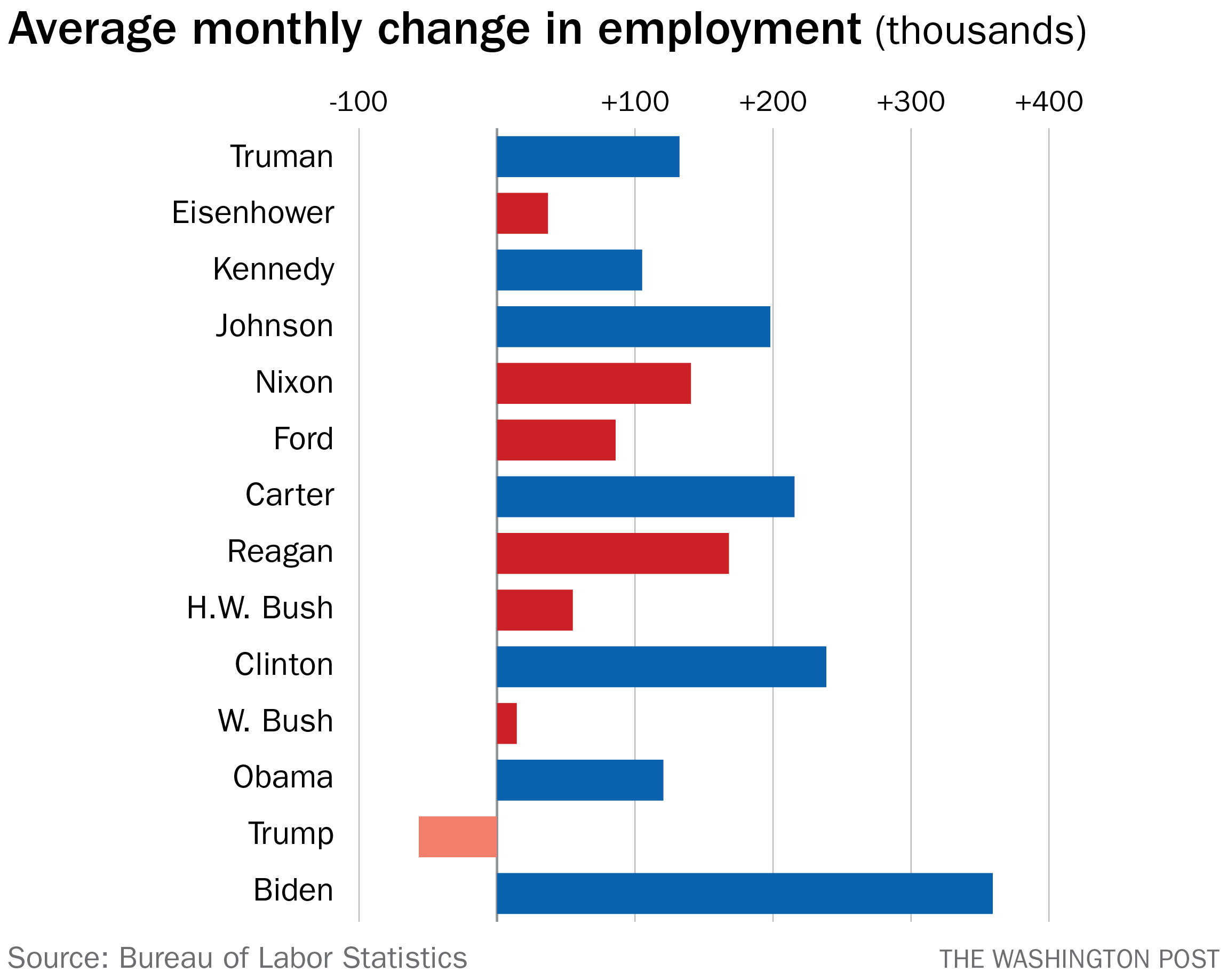
https://arc-anglerfish-washpost-prod-washpost.s3.amazonaws.c...
https://en.wikipedia.org/wiki/Accumulation_by_dispossession
Don't know why you're downvoted, that such possibilities are allowed in a completely made up system that can be changed at any time to better society, and not just ~10,000 people across the world, is a gross indictment of the current system.
All neoliberalism has done is made us more alienated, privatized the public commons, destroyed the environment, and hasten income inequality to levels that were worse than the gilded age.
If something doesn't change soon... we'll you can use your imagination to fill in the blanks.
The United States does similar and we also have a nice twist on the concept. We have $38,000,000,000,000 in national debt which increased $2,500,000,000,000 in 2025. Which is like $111,764 per citizen with ~$3,000 in interest payments a year each, all going to a handful of families (and Japan) who hold most the debt as an investment.
The US government borrowed the money, gave the money back to people the government borrowed it from in form of kickback contracts, subsidies to oil companies and farmers who vote for the politicians who increased the debt by $2,500,000,000,000 in 2025, and every citizen is responsible for paying the interest on it.
As an American, all of this is insane to me.
https://en.wikipedia.org/wiki/U.S._economic_performance_by_p...
For the most part the correlation between administrations and the economy is arbitrary. But in this case I would make a case that it is causative.
In addition, it's the circles that person runs in and the circles that person's people run in. Do you think judge or cabinet appointments are decided on by one person? Sure, the President is a figurehead in this position and ultimately has to say yes or no, but there's a large pool of candidates out there and it's up to the staffers, maybe friends, maybe people in the know to propose those people to the President.
So while on paper the President doesn't, or shouldn't have that much power--in actuality with our current political process it's certainly much more.
Now, that said, just like the billionaires--they can only control so much. At least in the United States, there are competing interests even among the wealthy class, and sometimes shit just sort of happens--like a meteor killing the dinosaurs....or the release of decades of e-mails, videos, documents, and communications surrounding their pedophile behavior on a secret island in the Caribbean.
I do believe that there could be a small causative effect, but there is usually a very long delay between cause and effect.
GOP is the fun dad party and Dems are the mommy party.
Republicans run economy hot until it blows, then Dems get voted in to clean up. People get annoyed about taxes and regulation when economy is ok again, fun dad promises ice cream and pizza for dinner forever.. rinse & repeat.
I'm happy to see many Democrats now supporting free trade, but that's traditionally been a conservative position.
The Tarifs and the way trump acts, for example, massively disrupts markets.
If it's a Dem president in office? 100% the Dem's fault.
Why try to make it as if it was the "opposite side" doing it while I'm reading it?
But, the way pundits and journalists write about it makes, the way discpurse goes systematically pretends literal opposite of reality.
They cut taxes and debt-financed war, which forced the US further into debt.
It's also very hard to assume that Reagan being elected in 76 would've avoided the oil-driven inflation at the end of that decade.
But of course, we've decided as a country/media to generally blame Biden for non-policy factors that put the economy on a wild bullwhip ride from 2020-to-2023ish, soooooo... maybe Reagan can deal with getting the blame for the inflation too!
Why? What if constantly launching foreign wars, leveraging up the financial system and running up deficits isn’t sound economic policy?
Eisenhower had two terms = 8 years - did poorly.
Kennedy + Johnson two Democratic terms in a row = 8 years, did well.
Nixon + Ford, two Republican in row = 8 years, did poorly.
Carter 1 term, did well.
Reagan Bush - 3 terms Republicans 12 years, did poorly.
Clinton 2 terms 8 years did well.
Bush the second, 2 terms 8 years did poorly.
Obama 2 terms 8 years did well.
Trump, 1 term did extremely poorly
Biden 1 term did well.
So this 4 years thing you're talking about you mean that we can't be sure about Biden, Trump, or Carter. Fair enough, is the 8 years good enough or is that also too short to draw a conclusion?
Correct. But across repeated administrations, some of which held power for two terms, one can identify patterns. Post-Reagan Republicans have been a consistent trash fire for the American worker.
Conservative approaches tend to be…. Conservative. Which is the opposite of growth.
Of course everything is nuanced; the trend is merely interesting especially juxtaposed against people consistently voting for republicans for "economic" reasons.
The Fed seems to be the big driver of the economy. Other than that, the government is moving things at the margins. Even Trumps tariff shenanigans don't seem to have rocked the boat much.
Many now talk like they work for the president.
JOLTS is where stress shows first. Openings fall,[1] hiring slows,[2] quits drop,[3] and layoffs rise later.[4] Biden in particular shows the weakness of your provided stats.
[1] https://fred.stlouisfed.org/series/JTSJOL
[2] https://fred.stlouisfed.org/series/JTSHIL
The charts paint a much more precise picture on what is happening, and I actually don't see anything that strongly support it being a partisan effect.
Can you explain why? Given that it's presumably averaged over the president's entire term, doesn't that provide a good measure of how much jobs were added under a given administration?
Also think of average populations under constant growth, as under Obama and Trump I pre-COVID: Trump's average would be higher in absolute terms than Obama, despite no fundamental change, and Biden higher still, and Trump II higher yet. Absolute populations and jobs go hand in hand. Averages without normalization are statistical theater.
Us Wikipedians have done a poor job on the federal statistical system (FSS or NSS), and this one of many results, this HN thread. I am working on it with the help of chat bots, but progress is slow given my focus on US healthcare and welfare systems. Fundamental laws have been documented, but the actual systems they enable are poorly documented.
The question you should /really/ be asking, since taxes are involved, is, was that hiring actually effective? Did we create jobs that actually provided lasting value to the world? Or did we just juice the numbers for the polls?
Democratic administrations also engage in and promote discriminatory hiring policies which flagrantly violate the civil rights act (Title VII specifically).
https://www.bloomberg.com/graphics/2023-black-lives-matter-e...
This seems to confirm that Joe Biden created the most jobs of any president in recent modern history.
Here we're looking for a change in the slope of that job creation line
You've just helped explain that job creation was necessary due to the disaster performance of his predecessors.
Over the last few decades, neither party has really cared about deficits anyway. Everyone’s been spending, just at different speeds. The real question isn’t “who creates more jobs,” it’s whether the spending is efficient, sustainable, and actually creates long-term value. Eventually the bills come due, interest costs rise, and priorities shift from growth to just keeping the lights on.
So yeah, Democrats tend to show stronger job numbers, but spending more will almost always do that. Whether it’s good spending is a separate debate. Budget discipline isn’t partisan, it’s just basic economics.
Thats not necessarily true. During Bill Clinton's presidency he cut the deficits and the debt and yet the economy saw very strong job growth.
https://www.factcheck.org/2008/02/the-budget-and-deficit-und...
https://en.wikipedia.org/wiki/Jobs_created_during_U.S._presi...
You're confusing rhetoric with policy.
For example, the housing crisis and bubble were largely driven by legislation passed years earlier, including the 1999 repeal of Glass Steagall under Clinton. That was passed by a Republican controlled Congress, and the crisis eventually exploded under Bush. So I do not think either Clinton or Bush can be directly blamed for the housing crash. It is the repeal of the glass steagall act.
And was the dot com bubble crash in early 2000s caused by Clinton or by Bush? Or some legalization passed a long time ago? Or it just a business cycle?
More broadly, I would argue that presidents, and even legislators, have limited control over the actual health of the economy. Are we going to say Trump is responsible for the AI boom? And if this AI boom collapses into a massive bubble burst under the next administration, will that president be blamed instead?
One party develops, the other party cracks down on potential economic wins for the working class.
Both parties make sure the capitalist class stay in power.
Both these times were plausible ways of entering the middle class.
What does economic theory say should happen to labor when scarcity ends but capital is strong? Does the economy expand until there’s more labor demand? Or will structural and monopolistic problems cause capital to benefit while suppressing wages - making us all serfs?
"War begins to be presented as the heroic alternative, the last hope, the “way out” from the unending nightmare of economic crisis, misery and unemployment. Fascism, the most complete expression of modern capitalism, glorifies war. The filthy sophism “War means Work” begins to be circulated by the poison agencies of imperialism, and filters down to the masses. ... War is only the continuation and working out of the crisis of capitalism and of the present policies of capitalism. It is inseparable from these, and cannot be treated in isolation. All the policies of capitalist reorganisation, all the policies of Fascism, can only hasten the advance to war. This is equally true of the line of a Roosevelt, a MacDonald or a Hitler. War is no sudden eruption of a new factor from outside, a vaguely future menace to be exorcised by special machinery, but is already in essence implicit in the existing factors, in the existing driving forces and policies of capitalism."
- R.P. Dutt, Fascism and Social Revolution, 1935
But if there were a healthy public discourse, there would be little acceptance of the slop economy, absurd lies, and repulsive rhetoric.
The rise of the alt-right took weaknesses in the right and left and amplified them to engineer the situation where there was a populist takeover of the Republican party. Epstein met moot. 4chan took a turn from being the asshole of the internet that was the original source of the concept of memes and a lot of other internet culture and turned it political and the conspiracies and thought processes jumped from 4chan to your dimwitted fox news loving uncle.
All of this is taking and molding stupidity and weaknesses in order to achieve outcomes: international conflict and weakening America on the world stage with both its allies and adversaries. Not outright commanded by foreigners but shaped by them taking advantages of the post-9/11 fear and general stupidity and anti-intellectualism and fear of immigration.
But who knew?
Institutional longevity is largely an unsolved problem. Seems having checks and balances like the US does helps slow it down to some extent, but is far from a guarantee.
That makes no sense...unless the economy is an a sort of death spiral where companies layoff employees, then stock goes, then companies layoff more, then stock goes up, so on and so forth.
Ouroboros. The economy is eating its own tail.
The price of stock is based in dollars. The value of the dollar goes down due to inflation, so the stock goes up, while not actually changing in value.
If it’s federal government employment that is dropping, or illegal alien jobs dropping, then some will view it positively (I’ve seen this perspective advanced on x.com).
[0] https://www.cbsnews.com/news/layoffs-unemployment-jobs-econo...
Eventually the protected industries will be totally disconnected from global markets causing them to lose global competitiveness, to the point they cannot even compete with the black market markups. And then you are maga, er mega, fucked.
What markets do you have in minds? Can retail investors invest there?
So basically, everywhere else, proportionally. Even markets that have worse import/export restrictions, will still have relative changes in their attraction.
For a rough approximation non-US world index ETFs, which are available to retail investors.
What does "priced right" even mean? For whom? When a public company makes billions in profits by selling insanely overpriced hardware, then that's "priced right" for the shareholders.
When a supermarket gives out 25% discount stickers to use, then the price of the good is closer to being priced right for the consumer, as long as you apply the sticker. There is, of course, no reason to assume that the supermarket would operate at a loss or close to cost. These 25% are already priced in and anyone not using the stickers is paying extra.
Nothing has been priced right ever since they've (the collective of anyone willing to sell something) figured out that they can ask for however-much people are willing to pay, which is quite more than what MY FELLOW HUMANS would need to pay.
For everyone else, who aren't willing to pay deliberately inflated prices, there's usually always some form of discount for some product, somewhere to be found.
However if everyone is deluded about what the future payouts of different insturments will be, you can get $10 for $1 in one place and $0.001 for $1 in another (given that in both cases the influence weighted participants think they're selling you a dollar). That invalidates the picture of reducing the unknowns to the discount rate.
In your examples, you're talking about goods and services, which have different values to different people. They have an equilibrium price but as you say, that's not the "right price for everyone," like there is for say a bond.
This doesn't make sense though. The only reason I would buy an investment is if I believe it will grow in value from the point that I bought it. That means I'm pricing it at its future ccost.obviously other people are doing the same, so the actual cost of the investment will always rise above current value if people believe its a good investment.
So you have a self selecting system, that have (over time) proved itself. Whatever you might think of the effect of certain effects (such as immigrant labors) you can end up reflecting in your investments, as others do - and if you end up being correct, you'll have more power to influence the price in the future.
I agree that randos on twitter are a bad source of information.
Looking at salaries, senior developers working for the government get paid about the same as entry level software engineers who get return offers at BigTech. Well actually senior developers in government only about 10%-20% more.
And even if you did work in pub sec, if you were good, why would you want to work for the government when you can get paid a lot more working in the private sector and consulting for the government?
I know how much senior cloud consultants working at AWS make working in the WWPS. I was there as an l5. Amazon is a shitty place to work. But I doubt it’s any worse than the government right now. GCP and Microsoft (not just Azure) both also pay their consultants a lot more than government employees make.
I’m not saying the government isn’t needed. But the best and the brightest aren’t going to give up the amount of money they can make in the private sector - especially now that government jobs are far from a secure paycheck
Healthcare.gov was primarily developed by private contractor firms, not government employees.
> And even if you did work in pub sec, if you were good, why would you want to work for the government when you can get paid a lot more working in the private sector and consulting for the government?
Some people are motivated by factors other than pay, a concept that seems to be foreign to many FAANG corporate mercenaries.
https://www.businessofgovernment.org/sites/default/files/Vie...
And you are going to tell me that some people would rather work for the government now where they are constantly insulted, had to desk with DOGE and every year there is a threat they might not get paid?
Plenty of people will also earn their chunk of change as an l5 at Amazon or whatever, then transition to a lower paid job with more impact.
In fact, I know almost nobody who makes their employer decisions based on the pay factor alone.
Myself personally, I worked on the other side of the consulting - government divide. I saw a lot more people jump on the consulting side than the government side. I never heard one person say “I would love to take a 40% cut in pay and go into the office and deal with government shut downs. Sign me up!
But why in the heck would anyone want to work for a government that constantly insults them, forcing RTO and making people move to South (where I am from).
I'm ex Lockheed, where I worked alongside the NASA software engineers building and testing and verifying software for human spaceflight in the ITL. 70 to 80 hour weeks happened quarterly, and people worked with it. Because an important thing is actually being built and deployed and billions of dollars and human lives depend on it. I jumped ship because things progressed slow AF, but there was no shortage of people who wanted to build cool things at reasonable salaries (yes low for software, but not low salaries generally).
This same thing is what has driven SpaceX and Blue Origin in the private sector. The same thing drives the whole nonprofit sector. The government is a similar employer, though in the past couple of years obviously not as good.
Big Tech self selects for money grubbing and willingness to chase it at expense of everything else in your life. Many others are happier at smaller companies with lower pay scales and healthier work/life balances, or where they get to work on interesting problems with huge scales and they are paid enough to not worry about money anymore (this is possible in most non VHCOL places).
sigh If only the department of education was as well funded as the department of war.
Estimates of criminal activity, for example, are frequently counted as GDP in places like the UK. And even if you’re working in violation of visa rules, the IRS will still expect and enforce taxes.
The larger point that they may be omitted on reports like this may still stand, but it’s not because every single one is unable to be tabulated in the count by definition.
Trump had a booming economy right before Covid, and took the brunt of the jobs cuts in 2020. Biden next year "created" the jobs per the numbers there.
Also, what's the breakdown between public & private sector jobs? Spending taxes on government jobs in not something to celebrate.
We need all these monopolies and cartels broken up so that there is a dynamic competitive environment in all sectors of the economy
JOLTS data for January 2026 has been delayed, but don't expect those tea leaves to change your opinion about what the future holds.
Otherwise, if so many jobs have disappeared, does that mean that my garbage company no longer needs to employ a staf on every truck to drive it and empty my trash recepticle into the truck?
Do… do you not want them to do this?