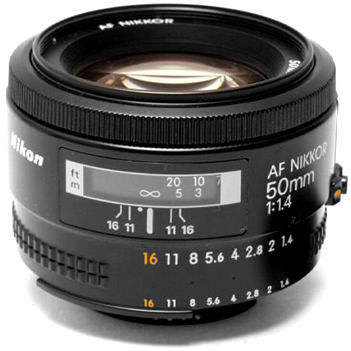
The extent of this effect is very lens dependent. It also occurs in different colours of visible light too, depending on how well the lens design accounts for it. Optically, the term is "Chromatic Aberration" - lens designers try and account for it in the visible spectrum with optical design and lens coatings, and modern designs are generally extremely well corrected in the visible spectrum. _Usually_ designers aren't worried about the design correctly handing convergence into IR and UV, so how well designs focus them to the same point as the visible spectrum is hit or miss. There's specialist lenses out there that are designed specifically for wide spectrum apochromatism, but they tend to be special purpose and very expensive - especially if they handle UV.
The author mentions it at the bottom of the post as something they're interested in trying out, but I've found it very fun to play with dual bandpass filters - they pass a part of the Visible Spectrum + IR, which creates some interesting options in editing for visual display. There's an example in this set I shot with different filters - https://www.reddit.com/r/infraredphotography/comments/1dnki0...
On old school manual focus capable lenses you'll note a small (often red when colors were used to indicate f stops) dot to the left of the focus indication line.
https://commons.wikimedia.org/wiki/File:AiS_Nikkor_85mm-2.0_...
On more modern lenses, is simply a dot. https://www.mir.com.my/rb/photography/companies/nikon/nikkor...
This was the offset for IR photography. You'd focus normally, and then make note of the focus distance and then line up the focus distance with the red dot for IR offset.
---
The UV photography often was done with other glass since the glass used by most lenses does an ok job of filtering UV light.
The 105mm UV lens for example - https://www.mir.com.my/rb/photography//hardwares/speciallens...
It's an oddball enough lens that others don't often make that it keeps getting special runs.
https://www.nikon.com/business/industrial-lenses/lineup/uv/
Costal Optics did a run of of the lens too - https://diglloyd.com/prem/s/DAP/Coastal60f4/Coastal60f4.html...
---
One of the photographers I've stumbled across from days of old who did UV nature photography (what do bees see?) http://www.naturfotograf.com/uvstart.html
Beautiful shots you have with your own full spectrum camera. Originally I somewhat dismissed the Kolari IR Chrome filter because the suggested combination with a channel swap and custom LUT felt a little too heavily edited for me and I prefer to stay close to the dry camera signal. The shot with the Tiffen Deep Yellow filter is gorgeous, how does that one look on the camera LCD without the channel swap?
The IR Chrome does not need a channel swap, just setting the white balance in-camera is enough to get a usable image.
The deep yellow looks mostly like a purple and yellow mess straight out of camera. Intent is for the yellow filter to block blue light, and a UV cut filter, leaving the blue channel to have ~almost solely IR, then subtracting that from the other channels to leave you with "clean" Red, Green, and IR as your three channels you can swap around. Probably the least dry camera signal approach of the bunch, unfortunately.
https://petapixel.com/2019/07/13/shooting-high-res-thermal-p...
Does your IR camera give you access to raw temperature data? I've briefly played with a cheap thermal camera and it seemed to assign its own colours varyingly depending on the dynamic range of temperatures in view.
Here's a basic script that converts them to greyscale uint8 with a fixed linear mapping, making them compatible with GUI panoramic stitching software.
https://github.com/dheera/iceland-thermal/blob/master/script...
Side note: have always loved this image https://imgur.com/NZjWfWT of rainbows with UV and IR visible.
People way smarter than me have been able to achieve DIY spatial imaging with x-rays via compressed sensing [1] and with microwaves via phased arrays [2].
Optical wavelengths seem to be at a sweet spot of good angular resolution, varied natural sources, and harmless to humans.
However, the amount of light from the sun drops off exponentially away from the peak at green-blue (yellow-green, after atmospheric filtering). You'd also have to really fake the dynamic range a lot to get it to look any different from IR+Vis+NUV. (If there was 0.001% as much x-ray light as there is, say, red light, DNA could only exist in the lightless depths of the ocean.)
So, it would look like an IR+Vis photo (light falls off pretty fast in the UV, too), except the ones you've seen oversell the IR.
So it would look like a Vis-light photo, with slightly shinier objects in it.
Sorry.
If anyone is interested in some technical aspects of the "full frame" HSI I worked with, it's quite interesting. It had a 20MP Monochromatic Sensor that captured single-band 12-bit data behind an array of lenses that split the incoming spectral range (350-100nm) into 164 individual 4nm wide bands of light that hit 410x410px squares on the sensor. The sensor can capture from 350-1100, but the QE drops of really fast past about 850nm and the product limited the upper range to 1000nm. I'm sure I munged something there, but you should get the general idea. I highly recommend researching the space of HSI, it's fascinating.
Last thing to point out, when working with an HSI like this, one thing you can do is capture a "spectral fingerprint". Since you've gone from three bands on spectral intensity information to, in our case, 164 bands you have the ability to turn that high-density spectral data for each pixel into essentially a line graph. Using that information you can do matching against a database of known spectral fingerprints and identify materials and material properties really well. In the multi-spectra world you'll see this capability used to identify crop health. In the hyperspectral world you can identify so much more. For instance, it can see skin anomalies that aren't visible to the human eye. You can identify specific minerals in a picture of a bunch of rocks (you need up into the 2500nm range for this though). You can easily spot foreign objects on a conveyor of food items. Overall, it's a long list of capabilities and I'm certain there are many more uses we could discover if the imagers were cheaper. And if you are into the wider ML world (not just focused on LLMs I mean), you'll see ML Classification Models being trained on these spectral fingerprints as well.
Anyway, the "full-spectrum" is fascinating, especially when you are able to slice it thin.
I've seen some examples in document forensics where a page that looks blank (or at least the ink is unrecognizably smudged) because of water exposure is completely legible with an infrared photo illuminated by UV.
I suspect there must be a hidden world only visible in IR and UV (and long-wave IR, e.g. "thermal").
With that setup, each pixel on the line sensor would effectively record the full spectral content of the light at that scanned position, all in a single acquisition.
You would reduce the time required by the root of the number of pixels you want (assuming a square image).
(This is what we do in momentum-resolved electron energy loss spectroscopy. In that situation we have electromagnetic lenses that focus the electrons that have been dispersed, so we don't have as bad a chromatic aberration problem as the other response mentions).
I would love to see e.g. a butterfly image with a slider that I could drag to choose the wavelength shown!!
Here[1] are some 31-band hyperspectral images of butterflies. Numpy/pillow can unpack the .mat files into normal images. Then perhaps vibecode a slider, or just browse the band images?
[1] http://www.ok.sc.e.titech.ac.jp/res/MSI/MSIdata31.html (includes 8 butterfly 31-band hyperspectral visible-light images). These butterflies are also in their VIS-SNIR dataset, and others.
I knew of the site having explored "First-tier physical-sciences graduate students are often deeply confused about color. Color is commonly taught, starting in K... very very poorly. So can we create K-3 interactive content centered around spectra, and give an actionable understanding of color?"
Given that regular phone cameras have sensors that detect RGB, I wonder if one could notice improved image sharpness if one had three camera lenses (and used single-color sensors) next to one another laterally, with a color filter for R, G and B for each one respectively. So that the camera could focus perfectly for each wavelength.
The Coastal Optical 60mm is a frequently cited one. UV in particular is challenging, because glass that works well in the visible light range can be quite poorly translucent in UV. Quartz is better, but drives up the cost a lot, and comes with other tradeoffs.
Shoot a checkerboard at both wavelengths each focused properly and then compute the mapping.
If you're shooting macro stuff then maybe you are changing the effective location of the camera slightly depending on the exact mechanics of the lens and whether the aperture slides with the focusing, but the couple of mm shift in camera location won't matter for landscapes.
Alternatively, use cine lenses which are engineered not to breathe, but they are typically more expensive for that reason.
I'm thinking of the beautiful cloud detail in the one IR shot where the visible light photo had lost all of that. Seems like some compositing (sort of like HDR) you could try to pull in the best of both worlds.
E.g. this photo (looks quite HDR'd but it's not, it's barely edited): https://rjones.photos/gallery/photo/20251207-img9638
.jpg)